The Designer’s Toolbox: THING
August 6th, 2026
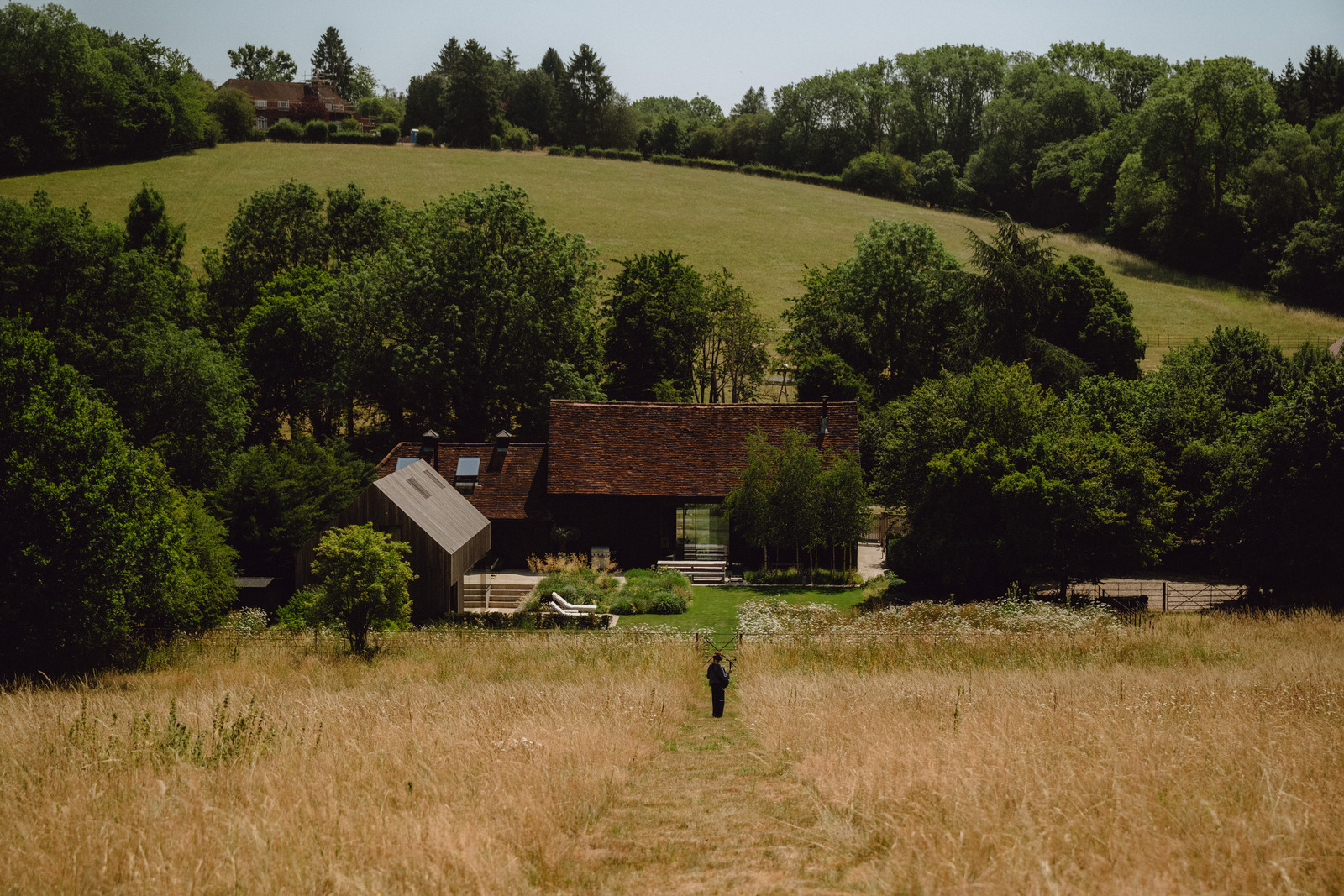
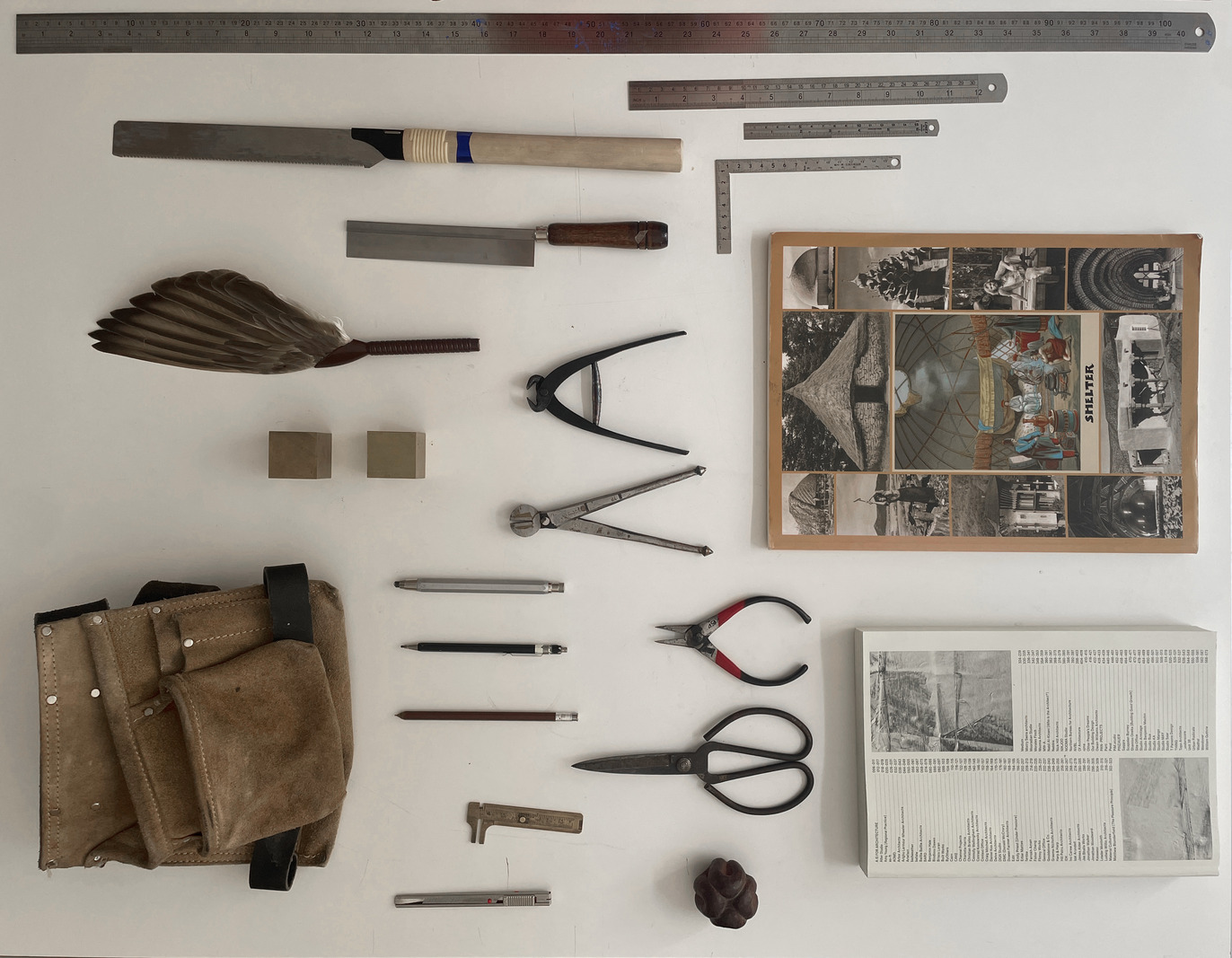
In the latest instalment of The Designer’s Toolbox series, we asked Thomas Randall-Page, architectural designer and co-founder of THING, to share some of the items that colour his working life. From indispensable reference books to a Japanese feather brush, Tom talks us through the tools and objects that are among his most treasured possessions …
Words and photography Thomas Randall-Page
Shelter by Lloyd Kahn
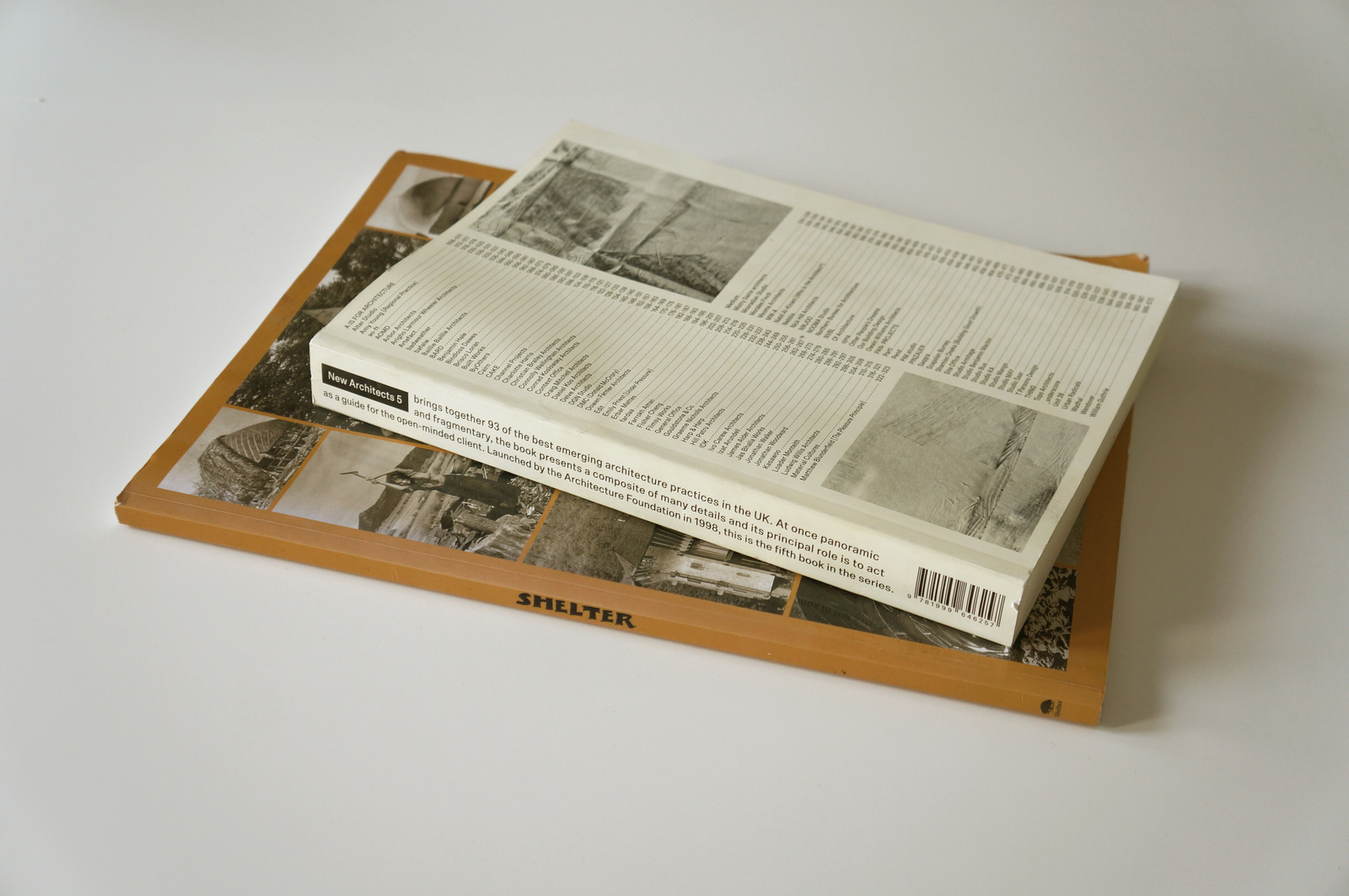
At the beginning of a project I always do lots of research. Whether it’s wandering around the internet or wandering through the library, it’s like filling yourself with ingredients. This book was written by Lloyd Kahn in the 1970s, and it’s full of inspiration. It looks at the way humans have afforded themselves shelter, from cave dwellings, earth huts and tents through to the plastic geodesics and inflatable architecture of the ‘counterculture’, without any judgement or hierarchy. The way it’s made makes it almost feel like a manual, and it encourages you to build and try things yourself. My dad bought me this book when I was young, and it’s been a lifelong companion. It’s rare for me to work on a project without picking up this book at some point.
New Architects 5 by the Architecture Foundation
The latest edition of this book has just launched; it’s an edited digest of the best architectural practices that have been founded in the last 10 years in the UK. Thumbing through it serves as a good reminder of the competition, and also highlights how many talented, brilliant people there are in this generation, who have the right kinds of concerns when it comes to design. It feels like an optimistic book to pick up, and it’s full of good ideas that you can use to feed your creative juices. Our architecture and design studio THING features in the new edition, and we’re currently participating in a series of events at the Zaha Hadid Foundation to celebrate its launch.
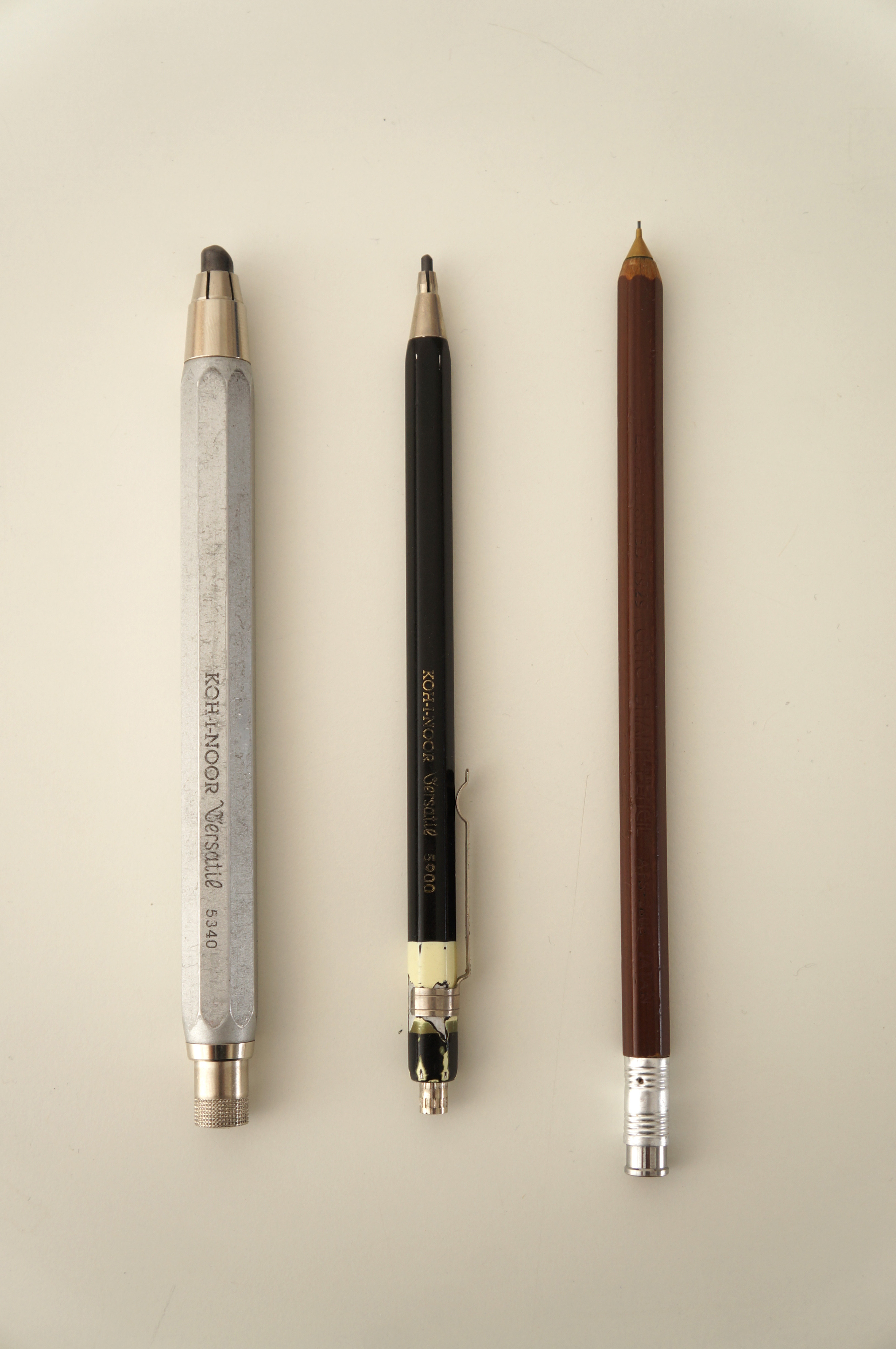
Mechanical pencils of various grades
The progress of a project can often be marked by the different grades of pencil used at different stages. At the beginning, I’m usually sketching in a rough way, using a thicker grade of pencil. Sometimes these are the most exciting drawings, because of their imprecision; there's so much potential in them. As you move through the project and things get more and more pinned down, the pencils get finer.
I work a lot with my laptop as well, but there’s no replacement for hand-sketching in terms of immediacy and looseness. I think it’s really important to be able to draw as a designer – not necessarily to make drawings that are going to be framed up or used to build something, but as a mode of communication and a way to convey ideas quickly and effectively. I’m not particularly fussy about which pencil I use, but two of these are by Koh-i-Noor, and they are very nice to use.
Cutting tools
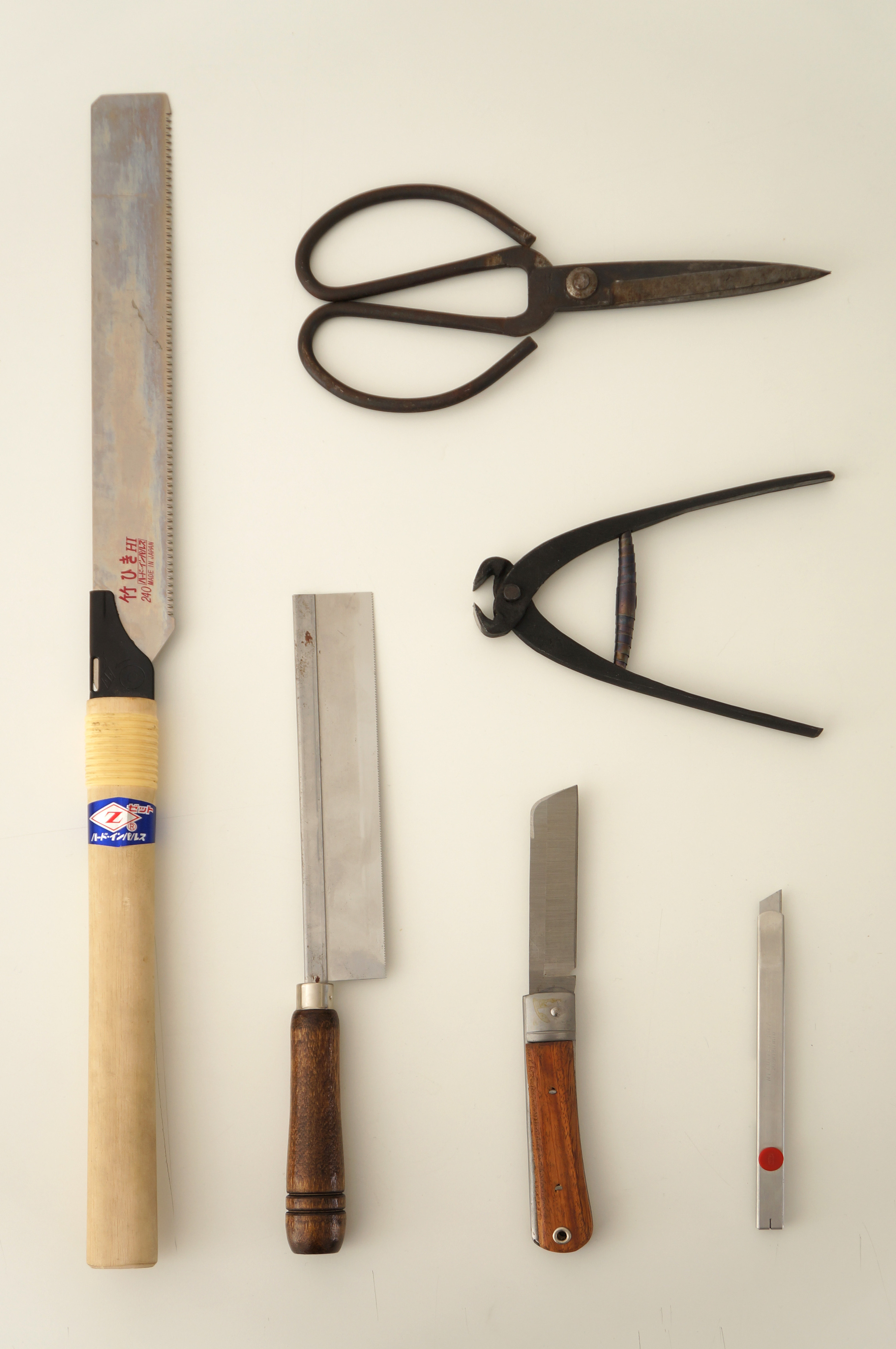
Whenever I travel, I'm very drawn to the hardware shops and markets. I think that there’s something lovely about looking at tools from different places, because the fundamentals of what tools need to do is quite similar wherever you are in the world. And then people have found just slight tweaks to the way that’s achieved. It almost feels like they’re all life forms and they’ve evolved in slightly different cultural conditions.
A good example is the Japanese saw (pictured far left); like a western saw, it’s for cutting wood, but it has found a different solution to the same problem. Most western saws cut on the push stroke, but Japanese saws cut on the pull. This means that the blade can be much thinner and slimmer, and more flexible. You can cut up against a surface, and cut something completely smooth. This one is designed for bamboo, but I use it for all kinds of model making. I also have a western saw with incredibly fine teeth, a Japanese craft knife, cutting pliers, and mild steel scissors from China.
Measuring tools
Whether it’s surveying a site, estimating the size of a façade, or measuring the thickness of a sheet material in microns, architects are concerned with the size of things, and the appropriateness of the size of things. I’ve got an array of measuring tools; at the larger end of the scale is a heavy steel ruler and a German wooden folding tape, while smaller tools include a steel set-square and a pair of callipers I bought in India. They have a very smart design that measures down to a tenth of a millimetre, or perhaps even finer. I bought them in a jewellery market in Rajasthan, and they’re designed for measuring the thickness of sheet material or wire. They’re also an incredibly satisfying thing to fiddle with, almost like a fidget toy.
Solid brass cubes
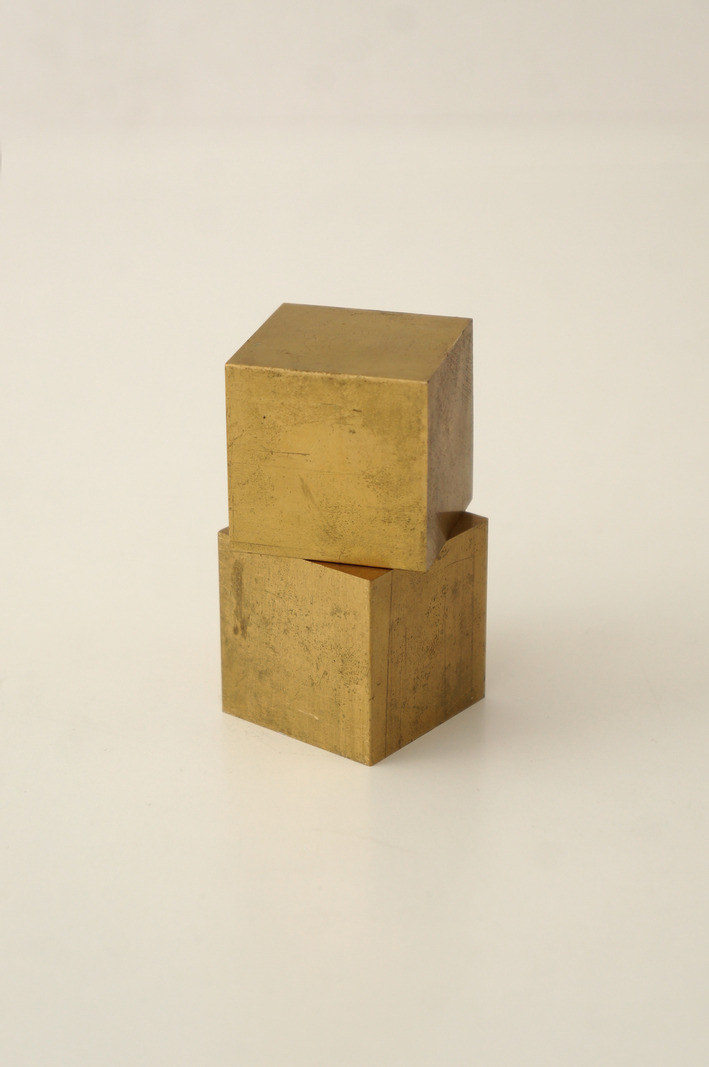
I bought these brass cubes in Hands in Japan, which probably puts any other hardware shop in the world to shame. It’s like a hardware, craft, art, anything to do with making shop. I think it’s about seven storeys high, and you can buy pretty much anything you can dream of in terms of tools and materials there. I picked up these 40 mm brass cubes in their metal section, and they’re incredibly precise and satisfying. I use them for model making, as an extra pair of hands – similar to how you would use a clamp. I love them because they’re intrinsically beautiful, as well as being fantastically practical tools. There’s a famous quote by William Morris, who said, “Have nothing in your house that you do not know to be useful, or believe to be beautiful,” and I think good tools should be both of those things.
Japanese feather brush
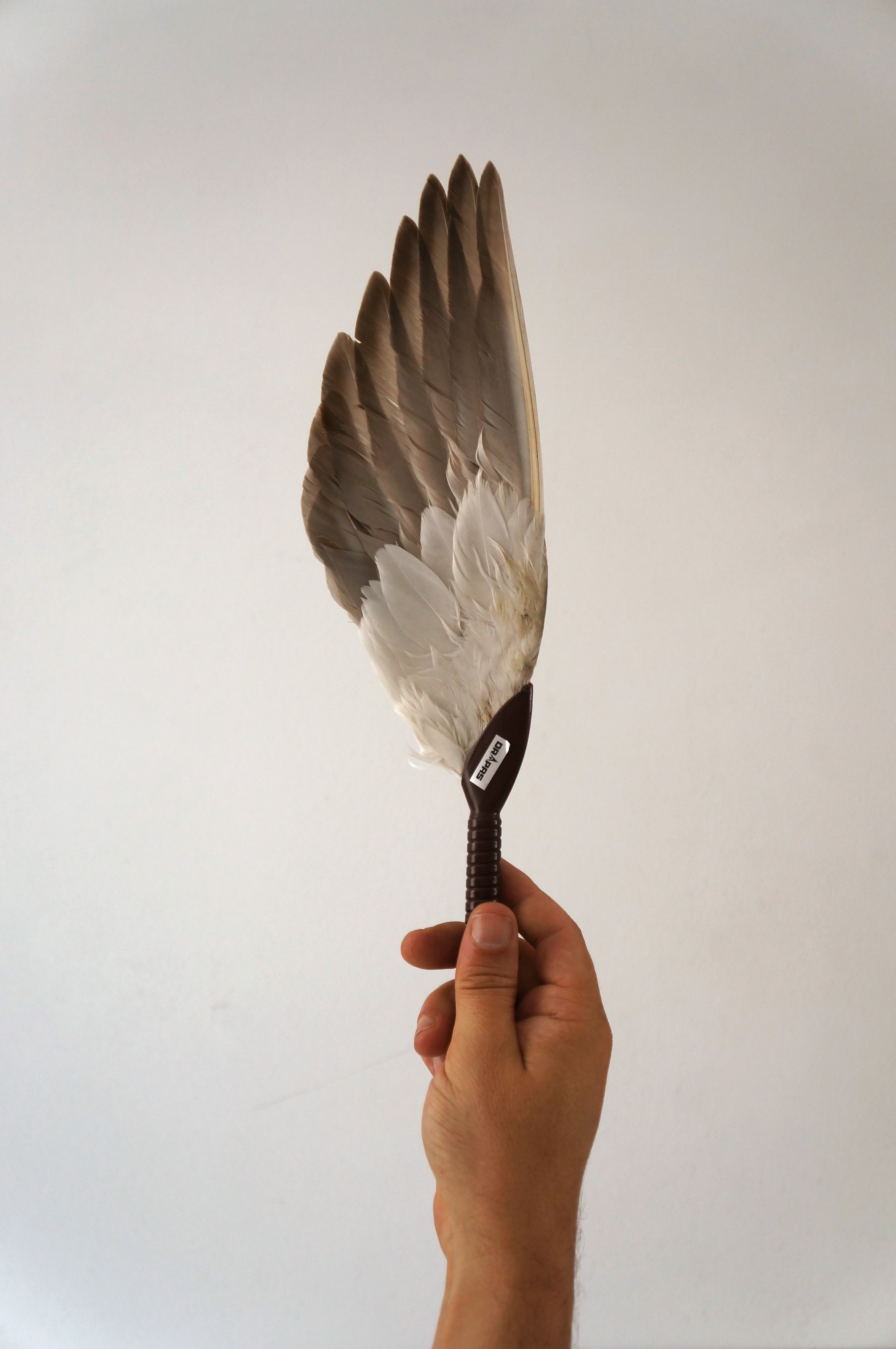
This feather brush is also from Hands, and it was in the calligraphy section. I believe it’s some sort of duster, made out of a duck’s wing with a handle. I use it for cleaning drawings when they are completely covered in rubbings out, or when I’ve made a model and there are pieces of sawdust on it. It’s also a beautiful object to look at.
A small sculpture by my father, Peter Randall-Page
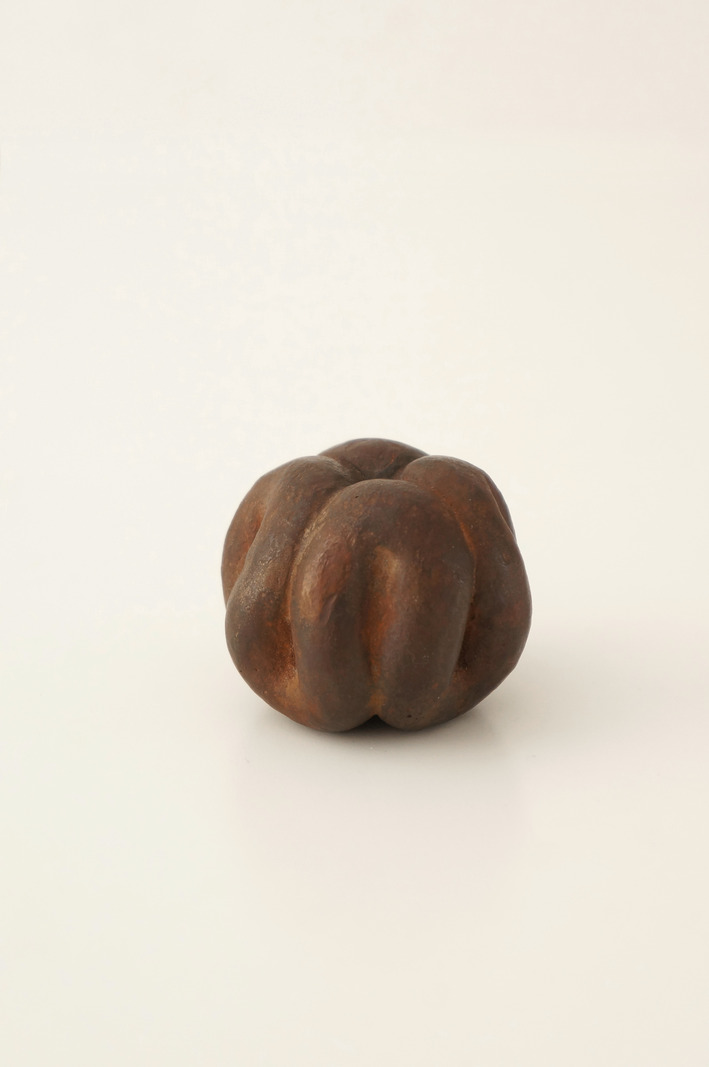
My father is a sculptor, and this piece is called Little Secret (based on a larger work called Secret Place). Sometimes you just need to stop and think and fiddle with something and contemplate, and this is a very heavy, satisfying thing to hold in your hand. I’ve got a very personal connection with my dad through it, and I have a good creative connection with him too. He is a great person to talk to about ideas, because he is always looking for the potential in something, and it keeps you going because creativity is fragile and easily knocked. It’s good to have those people in your life who can get excited about stuff with you, rather than finding potential problems.
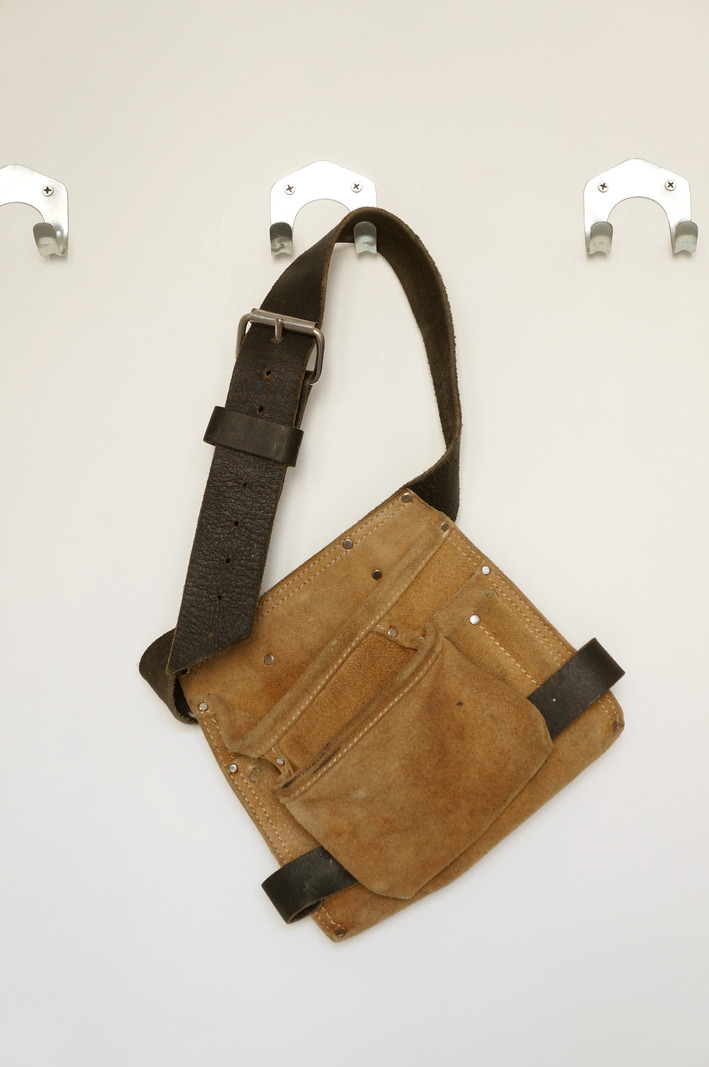
Tool belt
I run a build team at Glastonbury for a stage which I co-produce, and I bought this tool belt from a hardware shop on my way to the site when I first worked there, probably about 15 years ago now. Nothing makes me happier than being on site, practically making stuff with my hands, preferably with an impact driver in one hand and a tool belt full of screws. It’s brilliant for carrying a small selection of useful, important, things – and it saves your pockets from getting holes. When you put it on, it’s like clocking in for the day, and the moment when you take it off and have a beer is when you clock out.
Thomas Randall-Page is an architecturally trained designer working across multiple disciplines. He is the co-founder of THING, an architecture and design studio whose practice is rooted in regenerative design, low-carbon construction, imaginative repair and re-use of what already exists. Current projects include the conversion of a six-storey grain warehouse in Ipswich into a cultural institution centred around ceramics and clay, and the creation of a small live venue, bookshop, record shop and recording studio in Clapham.
Follow THING on Instagram
Photo credits: © Dom Moore; © THING