Surround sound: a sensory, hand-crafted timber sanctuary, designed by Benni Allan
January 2nd, 2026
Words Kate Jacobs
Film Divided by One
Photography Nick Ballón
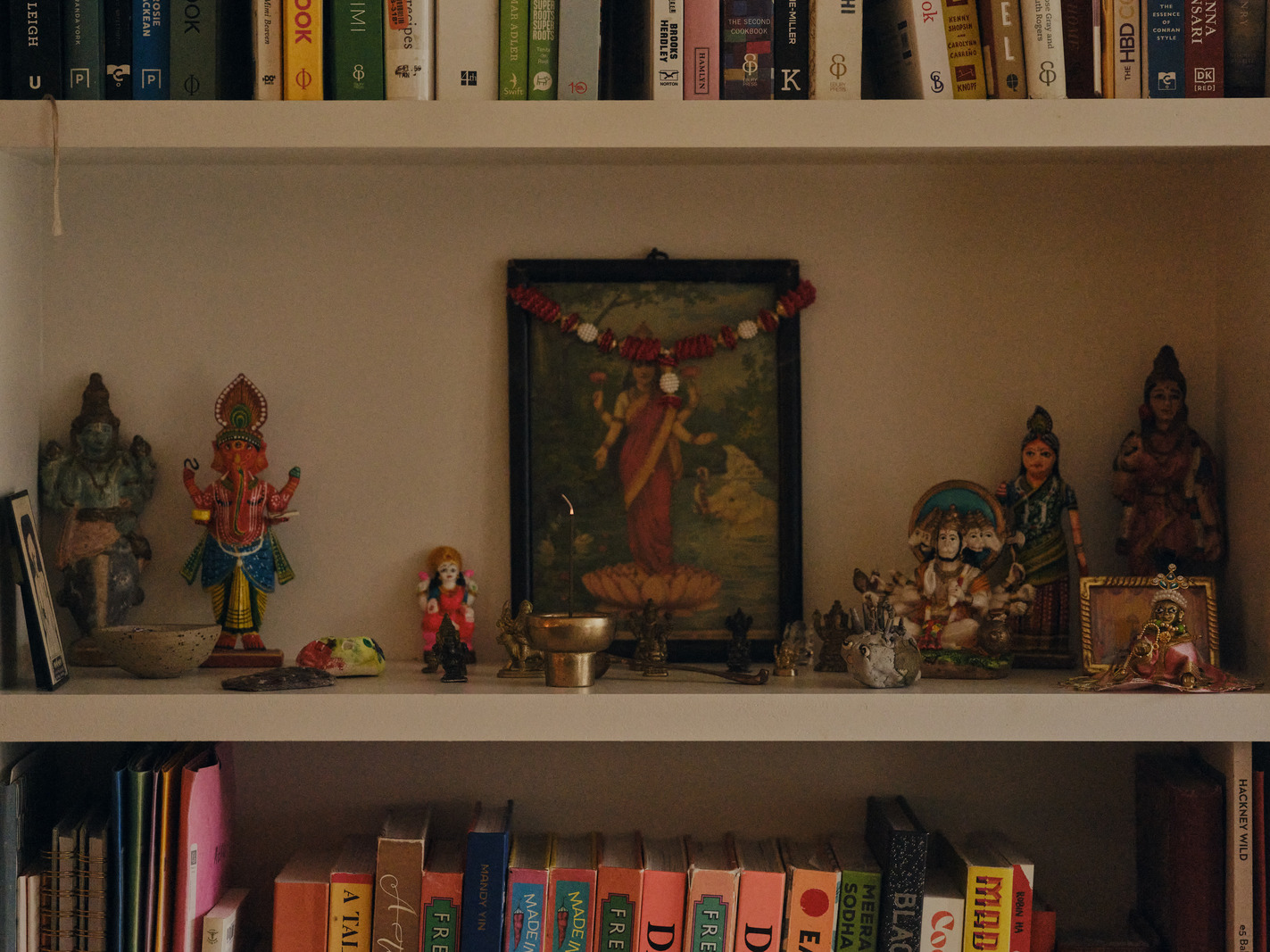
In collaboration with Aesop, we’re exploring what home and hosting means to different people. Here we speak to architect Benni Allan, founder of progressive architecture and design practice, EBBA. As someone who is constantly evaluating how we live and how that can be refined and improved, it’s no surprise that his own home is a space to experiment and pursue innovative ideas to their fullest. His Hackney apartment is enveloped in warm, textural Douglas fir, encompassing walls, floors, furniture and even the music speakers for his vinyl collection. This immersive environment provides a much-needed sanctuary away from the demands of his professional life. He opts to share his space with just a few close friends, with time together focussed around enjoying food and music together.
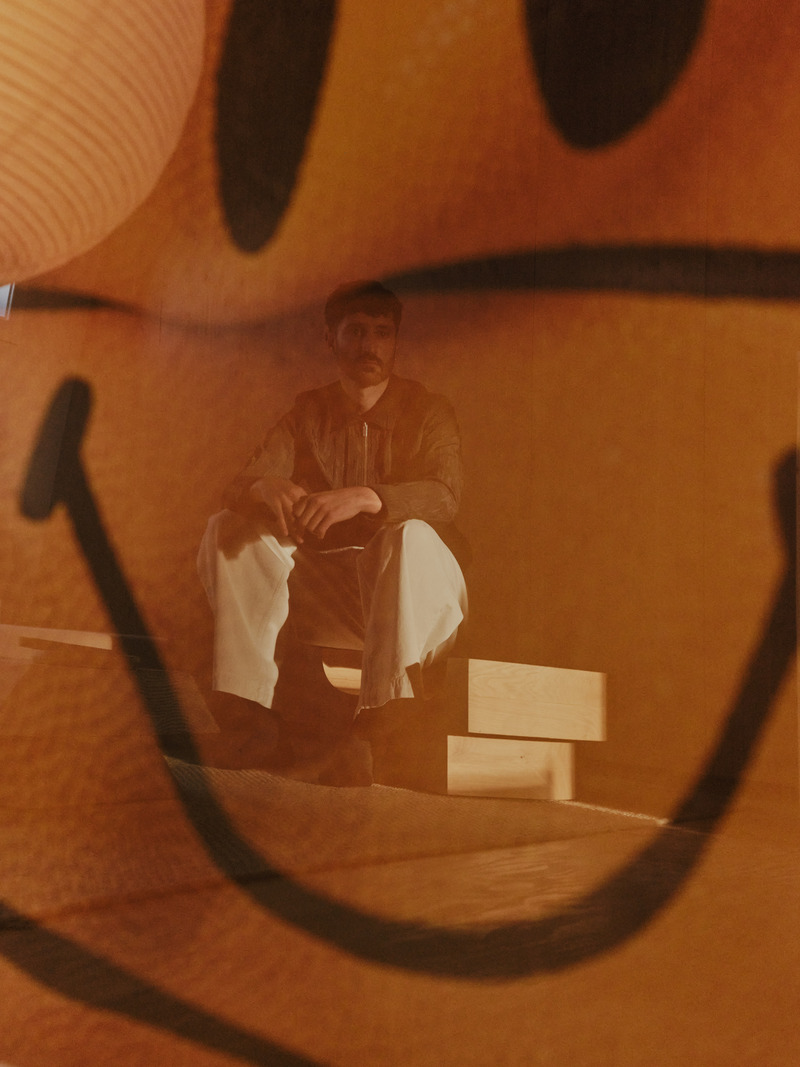
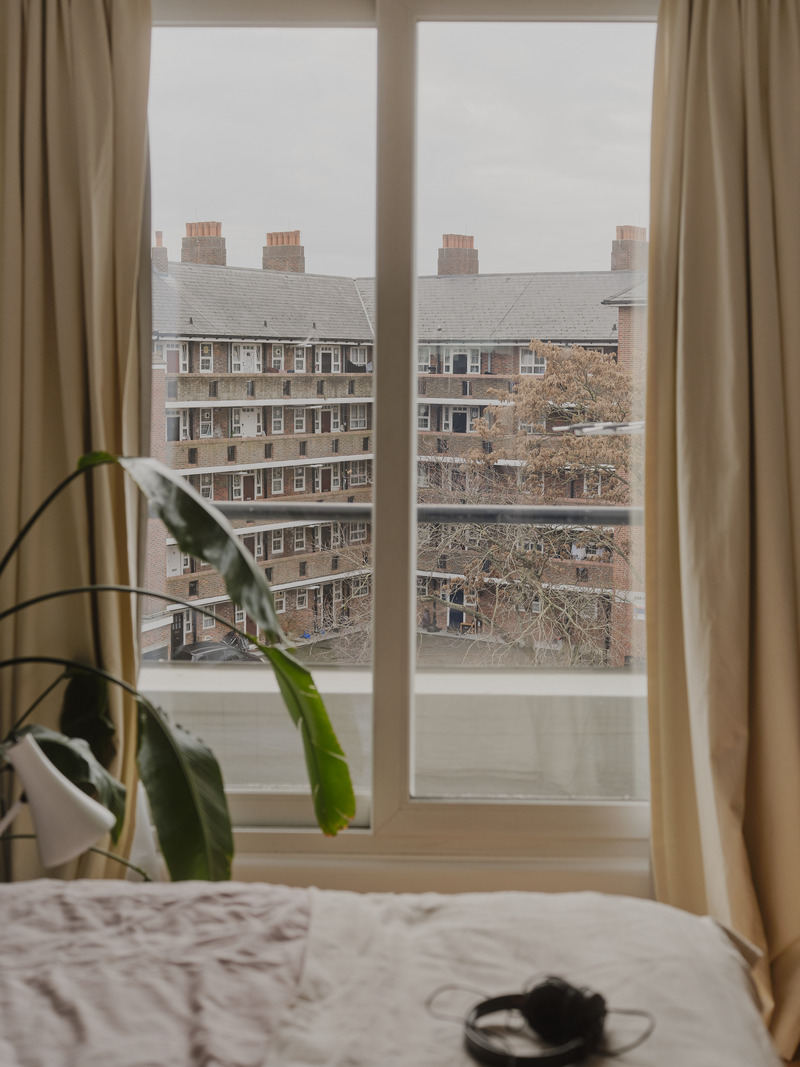
This apartment is on the top floor of a converted tea warehouse on the canal - a building that Benni had lived close to and admired for many years, before snapping this place up when it came on sale last year. “Every few months I would spend a day looking at properties, seeing what was possible, getting a bit obsessed,” he recalls. While the building’s exterior, with its huge windows and mellow old London stock bricks, had lost none of its character, inside it had been carelessly chopped and changed. But as an architect, Benni felt that with the right interventions, it could become something special. “EBBA designs spaces as a backdrop to modern ways of living and here, I saw the potential to do something unique. It definitely piqued my interest.”
“As a practice, EBBA is all about experimentation, so I wanted to explore ideas in my own space, that’s a designer’s dream and I feel lucky to be able to do that at 35 and bring together all the things I really enjoy. In your own space you can really push ideas and learn from your own mistakes.” Benni began here by rationalising the ill-conceived layout. “The floorplan offered the opportunity to open everything up and let in the light. In most homes, especially conversions, so much space is wasted with corridors.” He removed the wall between the bedroom and the kitchen, replacing it with a full height pocket door that merges the spaces, letting light in, and allowing the bedroom to become a private retreat as needed.
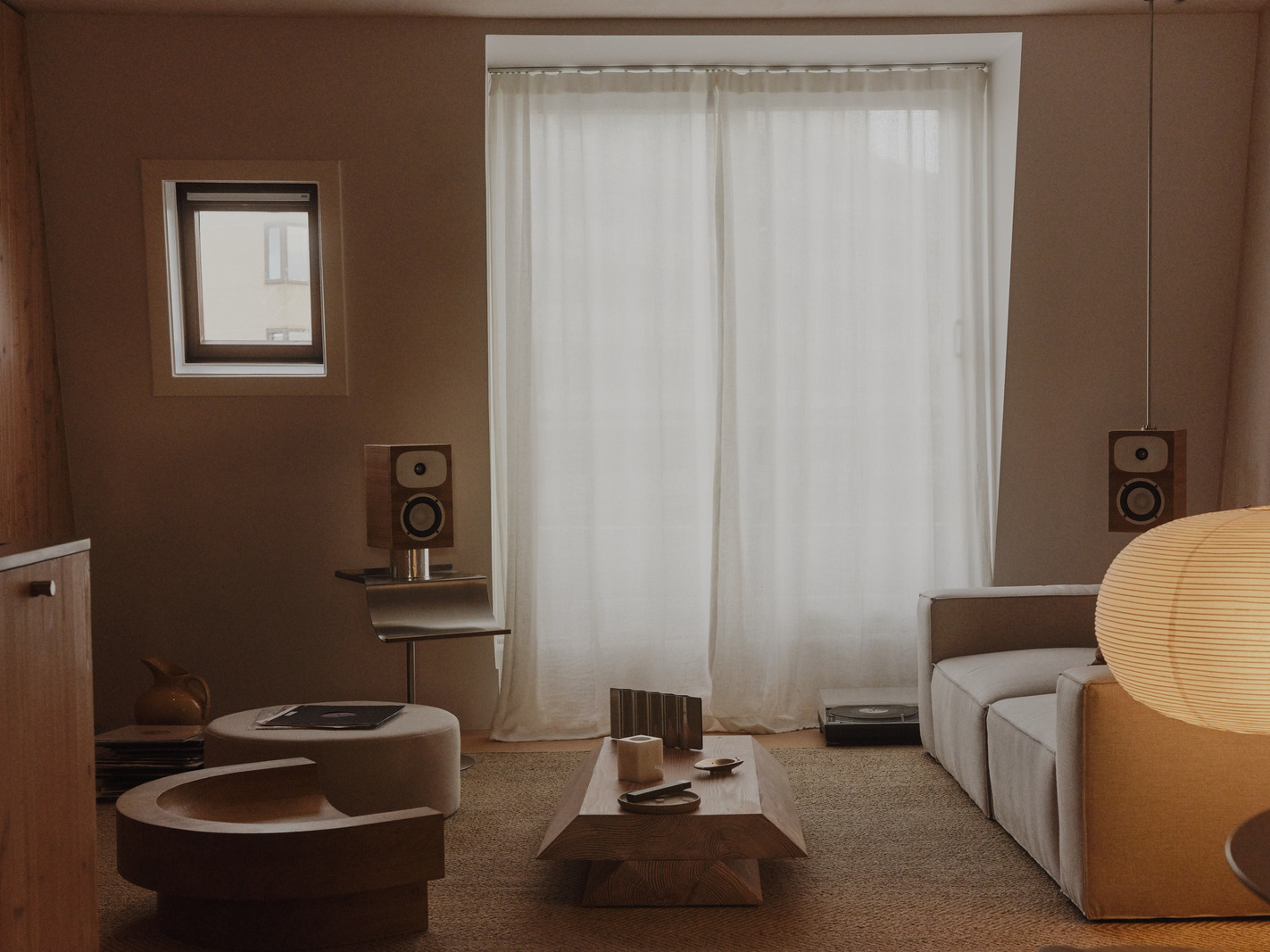
With a generous 25% of the floor plan devoted to storage, the space feels larger and grander, because everything is out of sight and there is no visual clutter. Where the building presents an awkward angle in one corner of the apartment, Benni has added joinery that effectively eliminates this, creating and concealing the boiler and laundry area. “The fridge and oven are also hidden, guests can never find them. But this allows it to feel calm and peaceful when it’s not a kitchen,” he says, referring to the times when the focus shifts to the adjoining living area.
Benni has long had a dream to create a space that celebrates timber as a material. The architect opted for Douglas Fir, with Douglas Fir plywood on the floors. “Timber is an amazing material that we sometimes take for granted. It brings in so much character and warmth to a space. I chose Douglas Fir because it has one of the most beautifully patterned grains. The ply on the floor has an incredible waviness to it. I cut every sheet in half to create a subtle patchwork effect that brings a sense of continuity to the space.” Benni protected the wood using a subtle white wash with a very light sheen, to stop the wood from yellowing, “It makes the wood a little bit pink which I particularly love.” This ties in with the soft pink tones in the walls that have been left in unpainted plaster. “I like the idea of spaces that feel quite raw.”
The timber element continues with the furniture, many pieces are part of a new collection that the studio is developing, including the centrepiece stacked coffee table. Spending time here has also inspired Benni to use the timber offcuts as the jumping off point for a new series of paintings, a timely move, given that EBBA is opening a new gallery space, ALL PROJECTS, alongside their studio. Another key design feature here are the speakers, which were created in collaboration with Friendly Pressure and Our Department. “Music has been hugely influential, a big part of my life, whether that’s playing instruments or making electronic music. I don’t have a TV so music is my way of relaxing. I play vinyl at every opportunity I get, it might be electronic music, jazz or house. Home is my sanctuary but a few of my closest friends share it with me, it’s nice to come together to listen to music in this shared, considered space.”
It feels as though the all-encompassing aesthetic of the apartment is aligned with the immersive way that music is enjoyed here, with a focus on sound quality, recalling the Jean-Michel Basquiat quote, "Art is how we decorate space; music is how we decorate time." As Benni explains, “I try to create environments that are both calming and inspiring, to make a space to connect with the senses.”
In terms of influences here, Benni draws on elements of Scandinavian and Japanese culture. “It’s about more than the design of both countries, it’s a way of life; the influence of nature, the importance of surrounding oneself with natural materials. When I’m here, I feel those influences, a sense of warmth and wellbeing that really improves my quality of life.”