Table talk: cook and food writer Meera Sodha on the welcome ritual of the mid-week family meal
January 8th, 2026
Words Kate Jacobs
Film Divided by One
Photography Nick Ballón
Food is at the heart of pretty much everything Meera Sodha does. She burst on the food writing scene in 2016 with her first book, Made in India, encapsulating her upbringing within an Indian Hindu family in rural Lincolnshire, anchored by food and family rituals. She has gone on to forge a career as a cook, food writer and author, with a column in The Guardian, The New Vegan, and a new book, simply titled Dinner. Meera lives in east London, with husband Hugh and their two young daughters, Arya, 8, and Yogi, 5. Home is a Victorian terrace. “A very well-lived in home, every room contains a little piece of each of us, it’s suffused with objects that reflect our personalities.”
At the front of the house is a living room, “a jewel box of a snug”, although it’s no surprise to learn that the kitchen, at the back of the house, is where Meera and the family spend most of their time. “This kitchen is the cornerstone of the house, our ‘everything room’, where most of our life as a family happens. It’s where I write my cookbooks, where the girls do their craft projects, draw or play the keyboard. It’s where we come together at the end of the day and where we lounge around, as well as having family and friends over.”
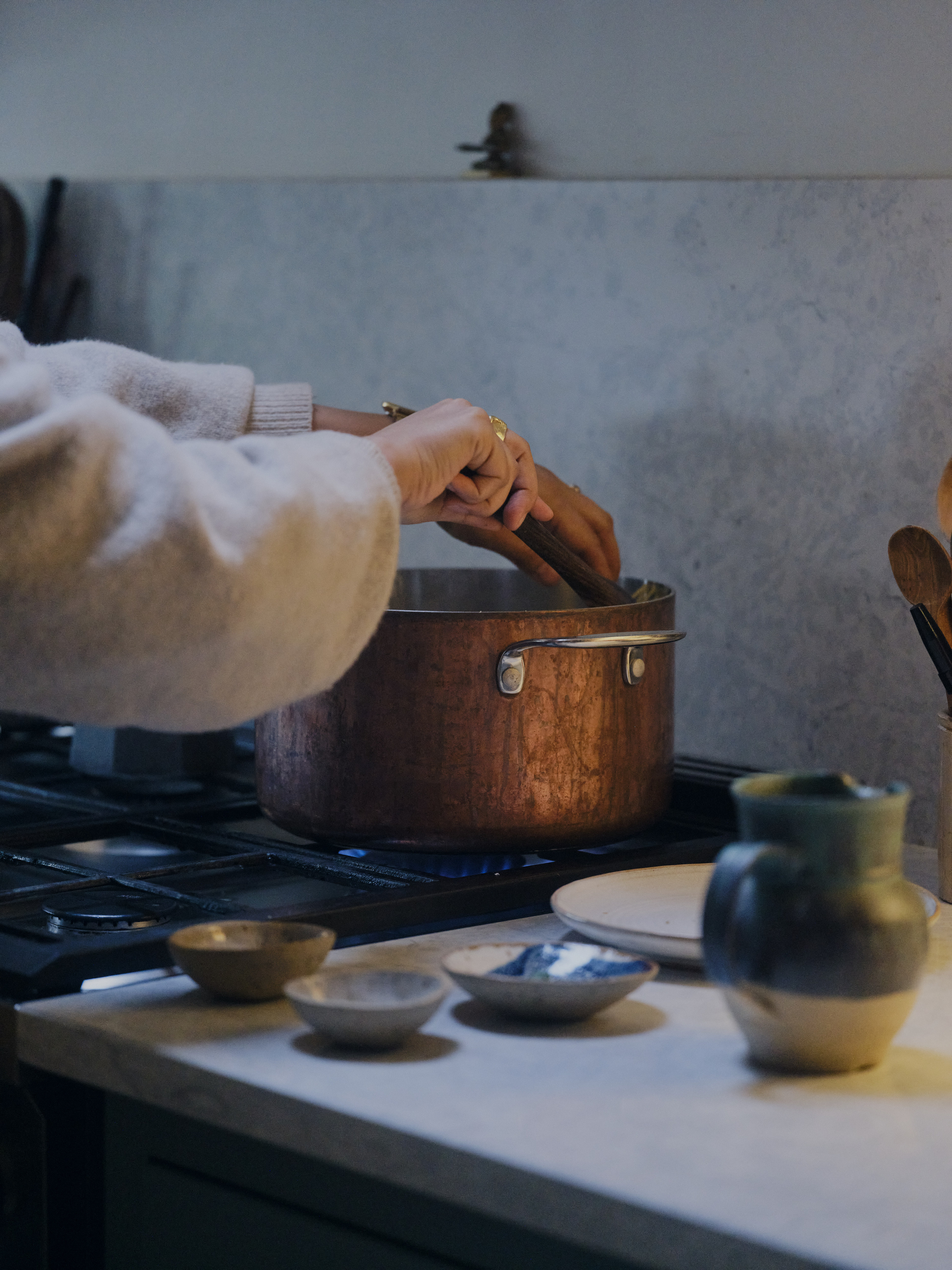
It hasn’t always been quite like this though. Working relentlessly, combined with the onset of the Covid lockdowns and the birth of a new baby, meant that Meera hit a major low point and lost her love for cooking. Husband Hugh ably picked up the slack, alongside his own demanding career. Eventually though, Hugh began to struggle with the workload. When he asked Meera to cook something for dinner one evening, it was a turning point for her. “Over time food had become work, separate from everyday life. I hadn’t cooked for the family for months, but that evening I went into the kitchen and grabbed coconut milk, red lentils and made a Malaysian dal curry, something that Hugh and I had eaten buckets of when we spent time in Singapore. I felt a release in my body and mind, it cracked something open in my heart. I started cooking again and promised myself that in the future I would only cook for joy and pleasure.”
Making notes on her new kitchen endeavours in a vibrant orange notebook, Meera quickly found herself drawn specifically to making dinner. “Breakfast is often rushed, lunch can feel squeezed by the working day. But making dinner can be a way to unwind and reclaim the day for yourself. Planning that meal felt new and grounding to me, and then there’s the coming together to connect and talk about whatever’s going on in life, good or bad, whether that’s commiserating over someone’s bad day or celebrating Yogi coming home with a learning badge.”
The orange notebook was the jumping-off point for Meera’s latest book, Dinner, by turns intimate, practical and funny. “It’s my most personal book, there’s a lot of comfort food in there and perhaps it’s my most helpful book too,” she explains. Each recipe is prefaced with Meera’s own ruminations: “As sometimes happens with things you disliked as a child (antiques, Neil Diamond and my sister, for example), they come full circle.” Meanwhile, Meera’s recipes are interspersed with her thoughts on ‘kitchen essentials’ including knives, pans, condiments and, more unexpectedly, ‘kitchen gods.’
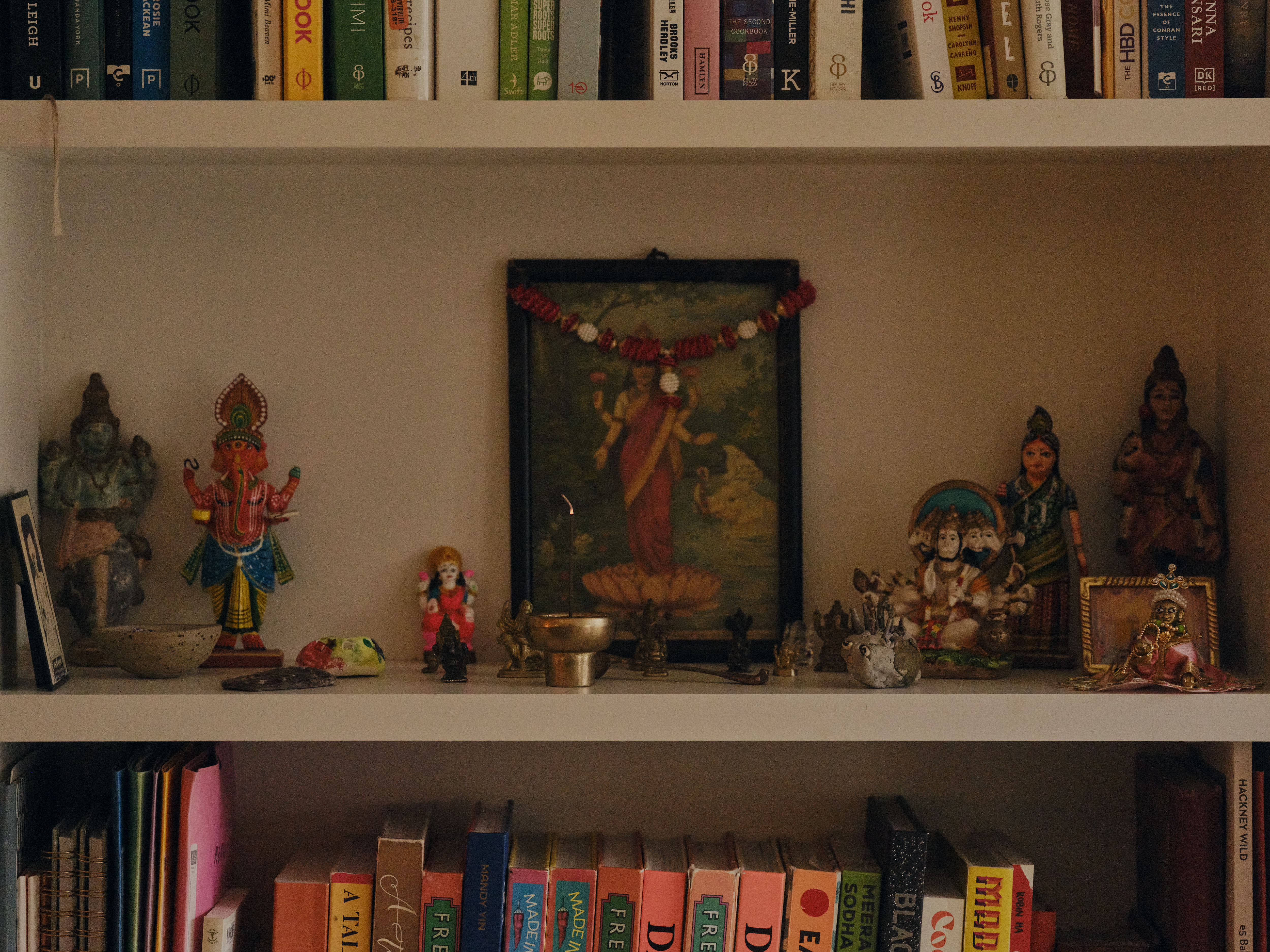
“In every Hindu house you’ll tend to find a shrine in the kitchen. I grew up with one and wanted to build my own, so I made some space on my wall of built-in bookshelves.” Here she’s placed vintage prints by celebrated Indian painter, Raja Ravi Varma, featuring deities including Lakshimi, goddess of spiritual and monetary wealth and Annapurna, goddess of nourishment, who holds a spoon in her arms. As Meera says in her book, “The more I thought about my kitchen gods, and spent time in friends’ kitchens, the more I realised that everyone has their own kitchen-based talismans, objects that represent happiness and reassurance, whether it’s their grandma’s old recipe book or a mum’s Sunday-best platter, it’s not the gods per se that are important, it’s the feeling they give and what they speak for.”
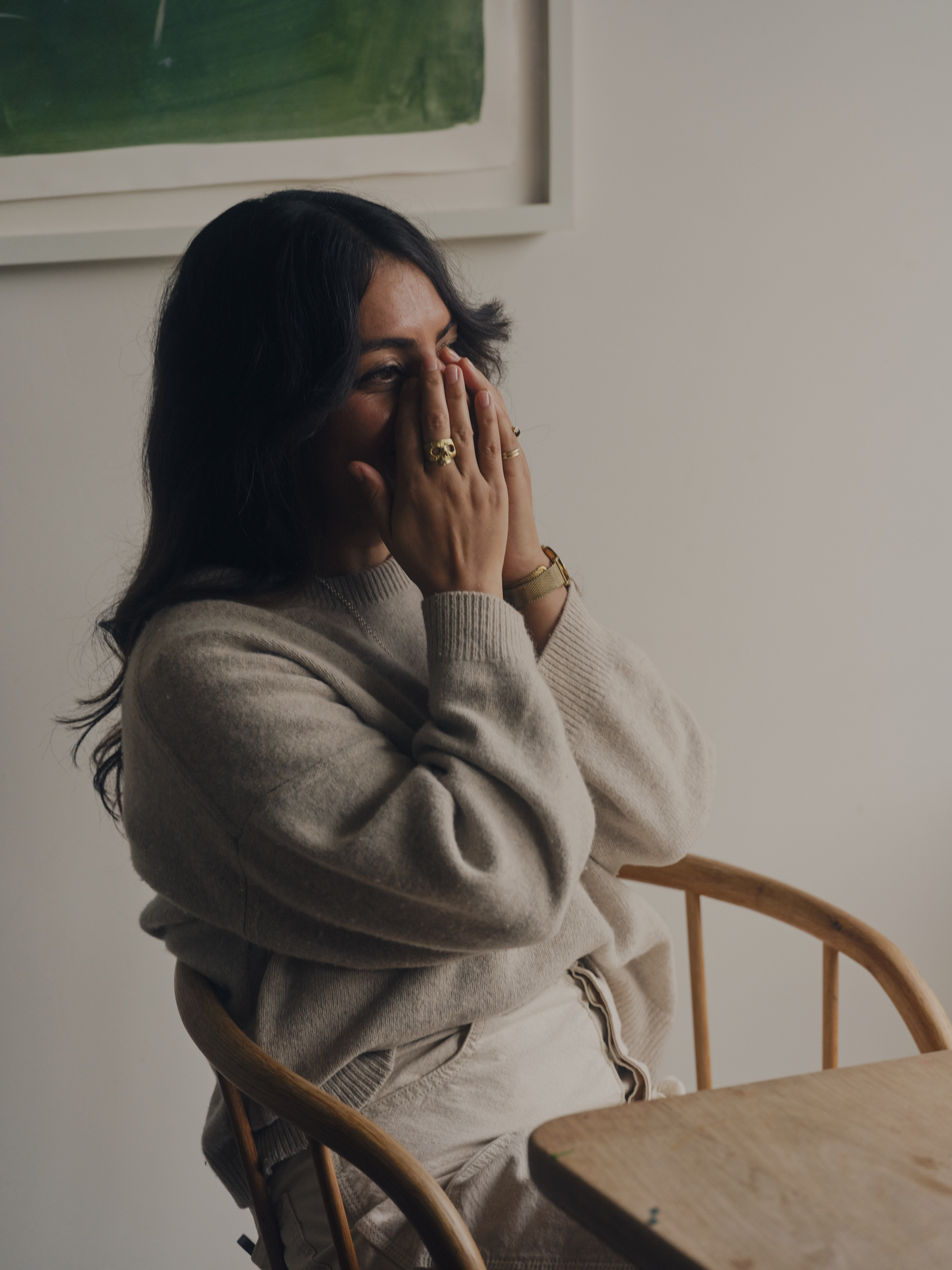
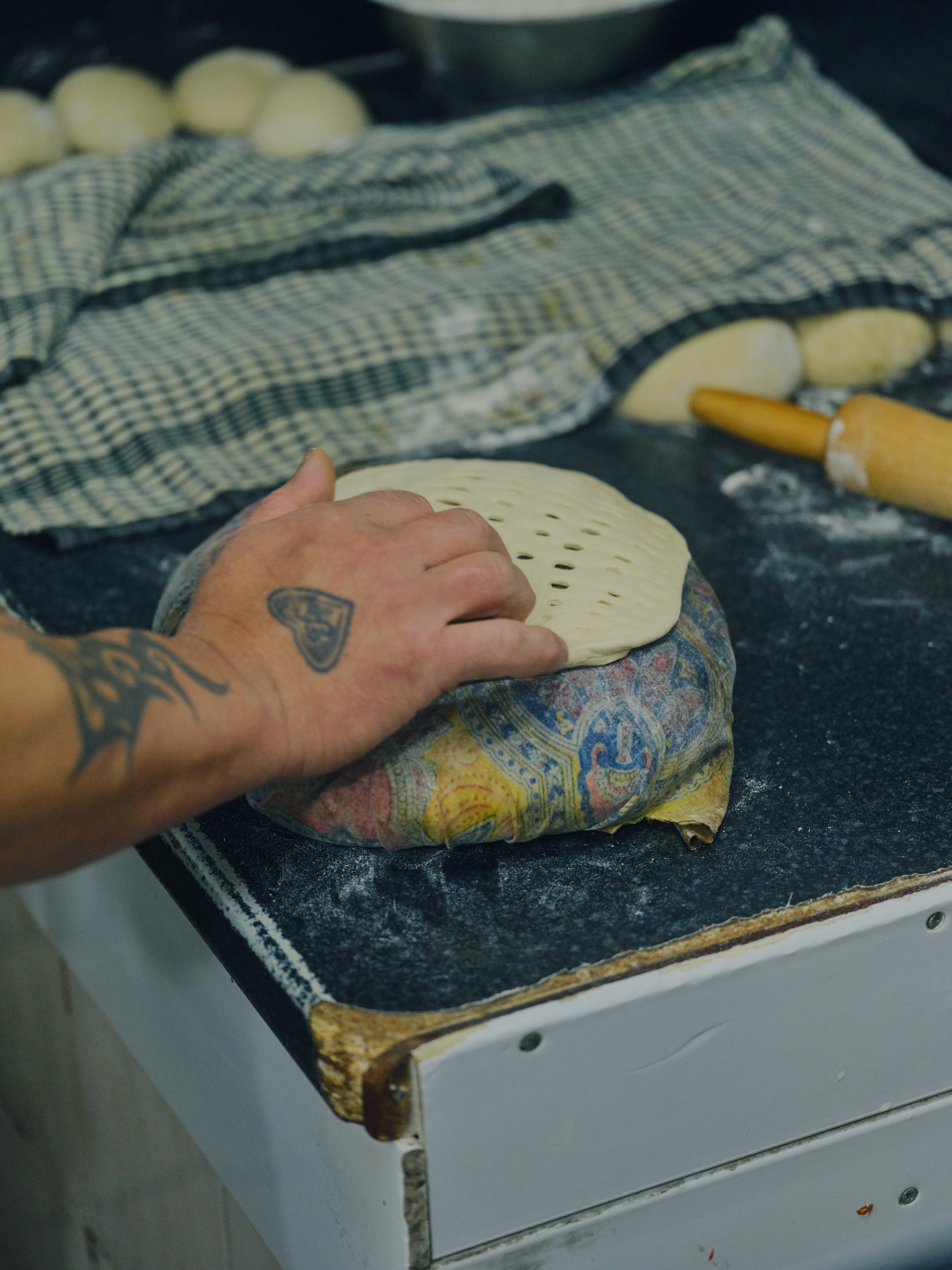
Meera’s other kitchen essentials include her store cupboard go-to's. “Growing up in the countryside, there was fresh produce but we did have to exist out of the pantry. It might be too grand to call it a pantry now, but I keep my spices in a large walk-in cupboard with nice wooden racks, stored in Kilner jars and old tins. I use them so much, they each have their own personalities and characters. I prefer ground versions of the go-to's that I use all the time, and whole spices for everything else, so that I can grind them up and they’re still quite fresh.” It’s a delight to hear Meera real off the contents of her pantry with such evident relish: "My dried red lentils, my dried brown lentils, my puy lentils, my mung beans, my split mung beans. I keep jasmine rice, basmati rice, arborio rice, short- grain Japanese sushi rice, and all the pastas that we all love, from your rigatoni to your tagliatelle, to your spaghetti and your macaroni. I love Mutti Pomodoro tinned tomatoes and big vats of olive oil and salt, collected from camping holidays in France. The girls love making pancakes and baking at the weekend, so there’s self-raising flour, light brown soft sugar, yeast and vanilla paste. And loads of booze ...”
Life here is full of rituals and routines. Meera starts her day by lighting incense. "I love the smell of incense in the kitchen. It's a moment to myself, to stop and reflect. In summer I'll do it before the girls are up but in winter I find it harder to get up so it's normally once the girls are at school." The sensory element continues through the day too, with Meera lighting a scented candle and listening to music while she works.
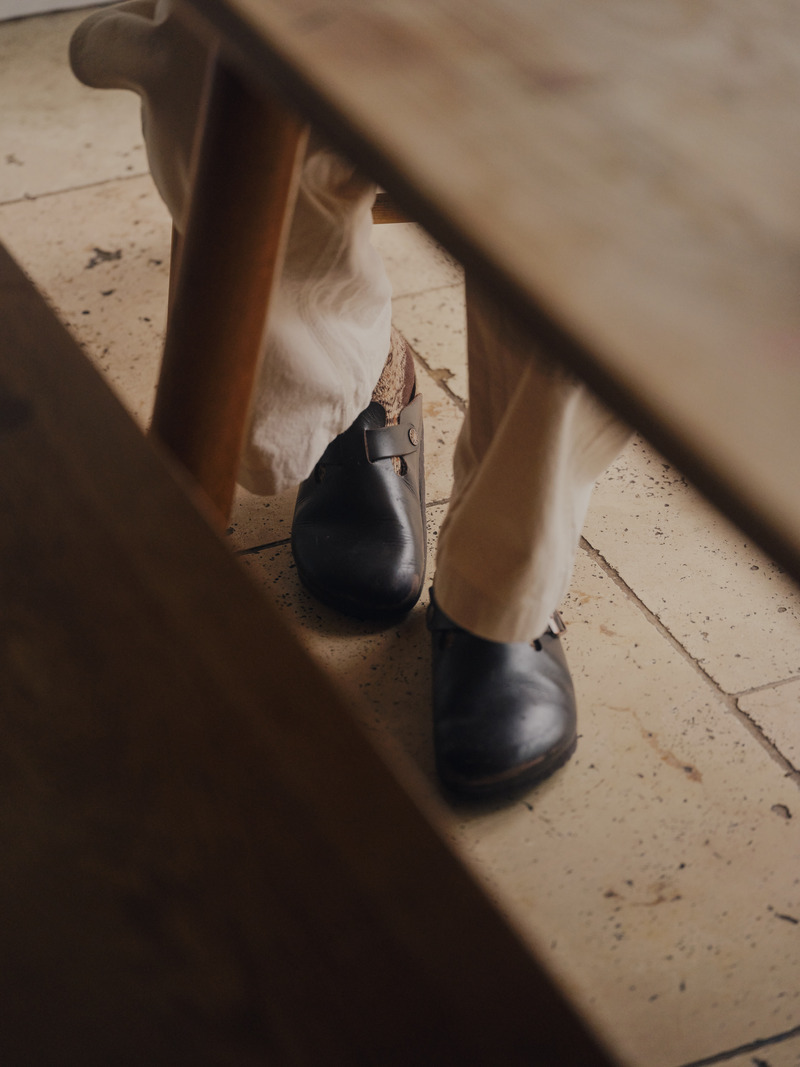
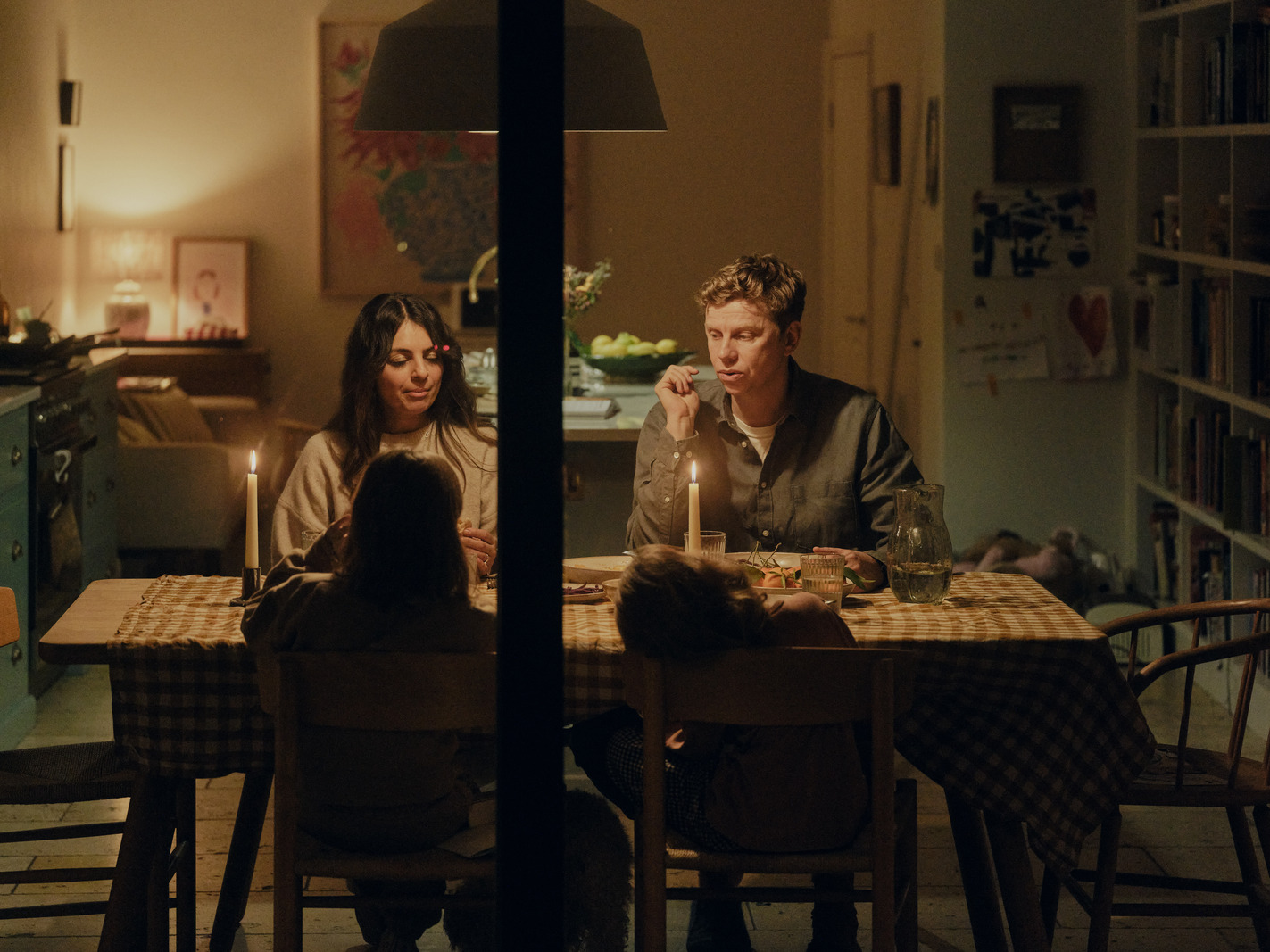
When it's time to gather for dinner, the family start by washing their hands: "It's another ritual and so important, especially if we're going to eat anything with our hands." They gather around the kitchen table – the ultra-simple Table 1 by Another Country – once it has been cleared of work, homework and craft projects. To avoid any distraction from shared food and family time together there's no music at dinner, while Meera likes to burn unscented candles, normally Price's votives. "Stubby little church candles that you can look at each other over. I always like to light candles for dinner, it creates calm."
Since she regained a sense of joy through cooking and sharing food, Meera again takes pleasure in inviting friends and family over for dinner, but in a more laid-back and low-key way than before. “I stripped back all the fussy stuff, the idea that the house must be perfectly tidy or that I must cook three courses from scratch. Now I’ll just start with lovely crisps on a nice platter, then cook one main dish, and either buy pudding or ask someone to bring it along. It’s really all about being with people and sharing in something together.”
This film was made in partnership with Aesop and is the second in a series of films that explore the shared, sensory home.