How an ingenious flat-pack system of spruce ply boxes helped transform a dishevelled Victorian villa
October 1st, 2025
This article is more than a year old and may contain information that is out of date. Sorry about that.
Words Kate Jacobs
Photography Jim Stephenson
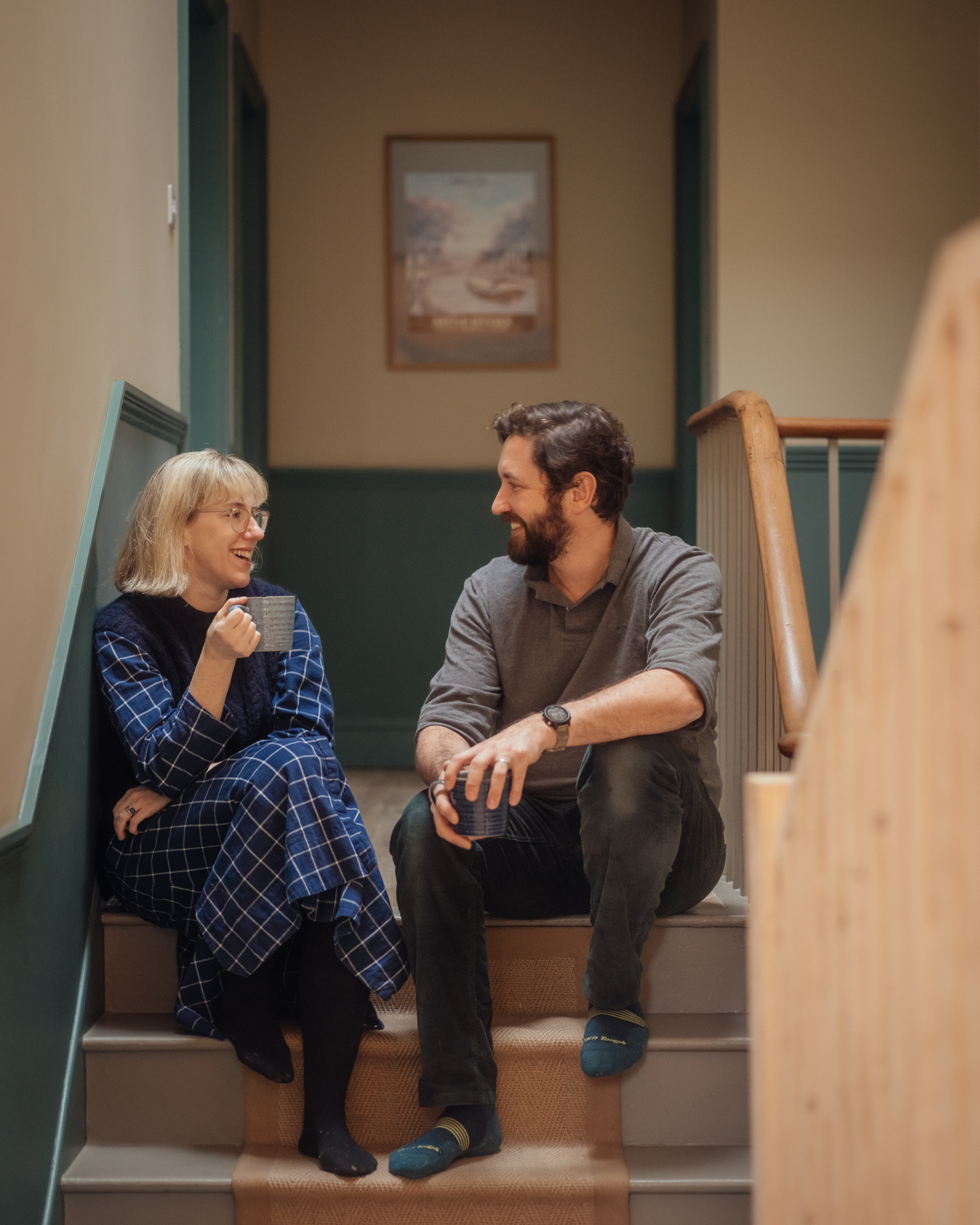
Grace and Colin’s brief to Studio Bark for their award-winning Tunbridge Wells home was less of a specific wish list and more like a manifesto for modern family living, encompassing their desire for comfort, connectivity, privacy and sustainability. They wanted to achieve "a feeling of generosity" while tempering that with an understanding of what is "enough".
As parents of two young boys – Bertie, 6, and Wilfred, 4 – they wanted spaces that allowed the family to be together, to be apart, and something in between; for the house to serve as a hub for the extended family to come together.
The couple felt the need for their current house to work harder, to enable them to live here easily and effortlessly. “That means having places for the things we have, and the flexibility to accommodate the things we don't yet have," says Grace, a partner in a law firm. "It means not tripping over one another, or one another's things. It means not having to squeeze past dripping wet coats or store a buggy in the dining room as there's no other space.”
They bought the house in 2020, “knowing that it needed a root and branch overhaul,” recalls Colin, a biotech executive. The double-fronted Victorian villa featured a square, four-room layout on each floor. While it was inherently generous in its proportions, it was in desperate need of modernisation. Two toilets had been tacked onto the back of the house at some early stage – “Just single skin brick so we had ice inside the windows in the winter,” says Grace.
The couple came to Studio Bark through the architects’ sister business, U-Build. “It’s a bit like Lego meets Ikea, for buildings – the idea being that almost anyone can create a building envelope,” explains Tom Bennett, the director of Studio Bark.
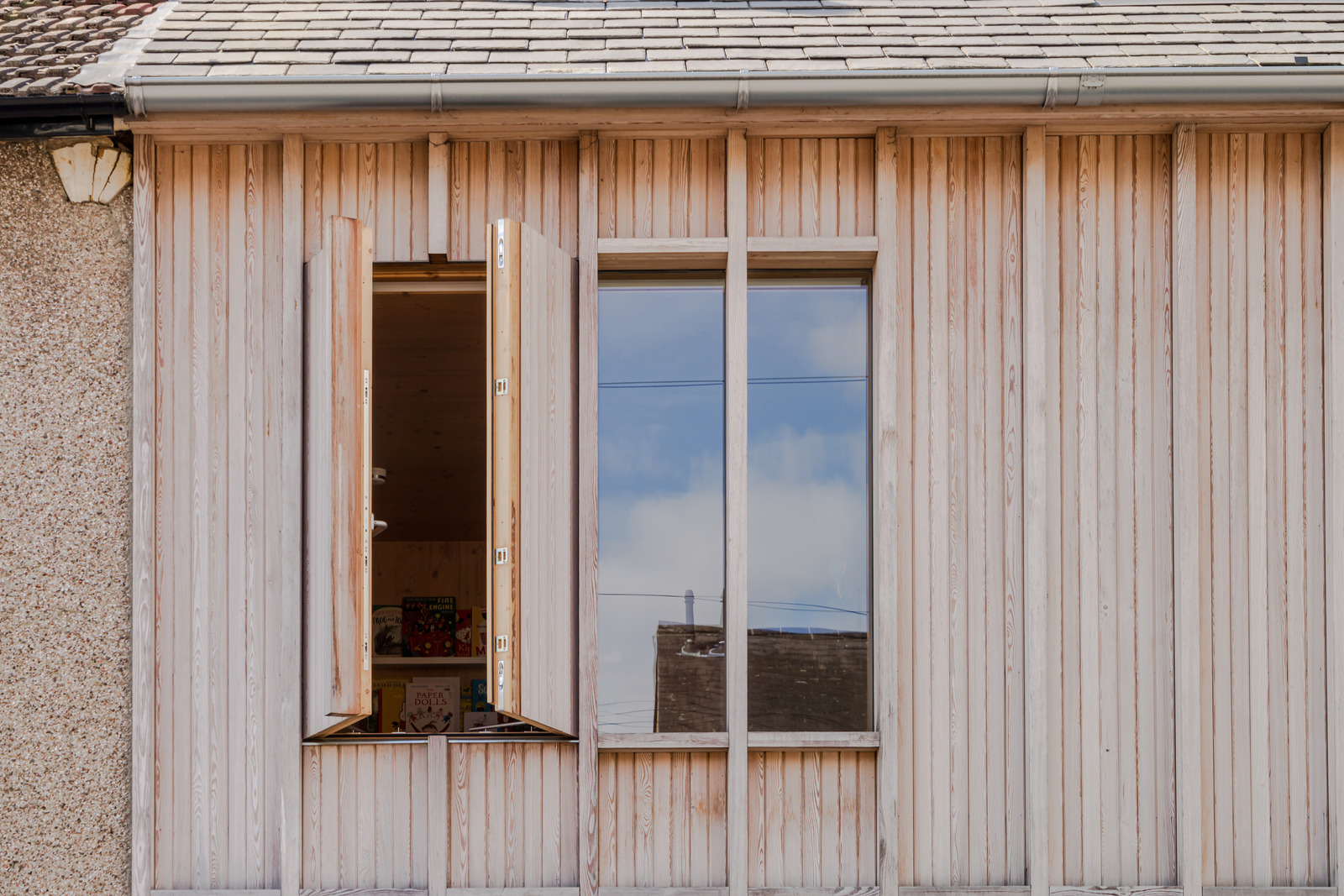
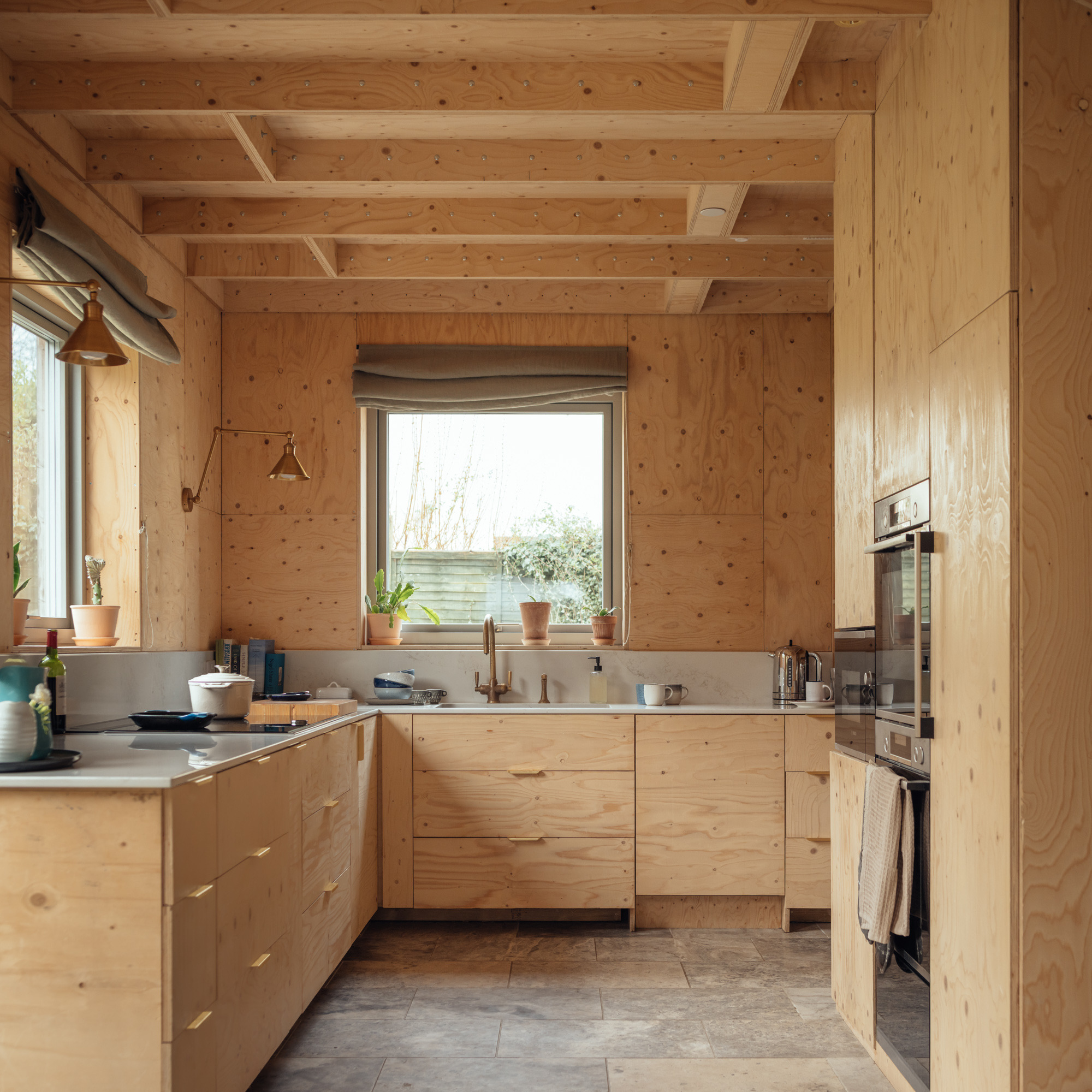
The U-Build flat-pack system is ordered in kit form, allowing the owner to assemble a series of boxes, which in this case, were made of spruce plywood. These bolt together to create the building envelope of a home or, for Grace and Colin, a two-storey rear extension.
While they were drawn to the simplicity of the U-Build concept, it was Studio Bark’s level of understanding of their needs that solidified the partnership. “Bark was transformative in their approach," says Grace. "They started at a conceptual level but they really ‘war-gamed’ the functionality of the house – considering how we’d bring shopping from the car to the fridge and what it means to be comfortable."
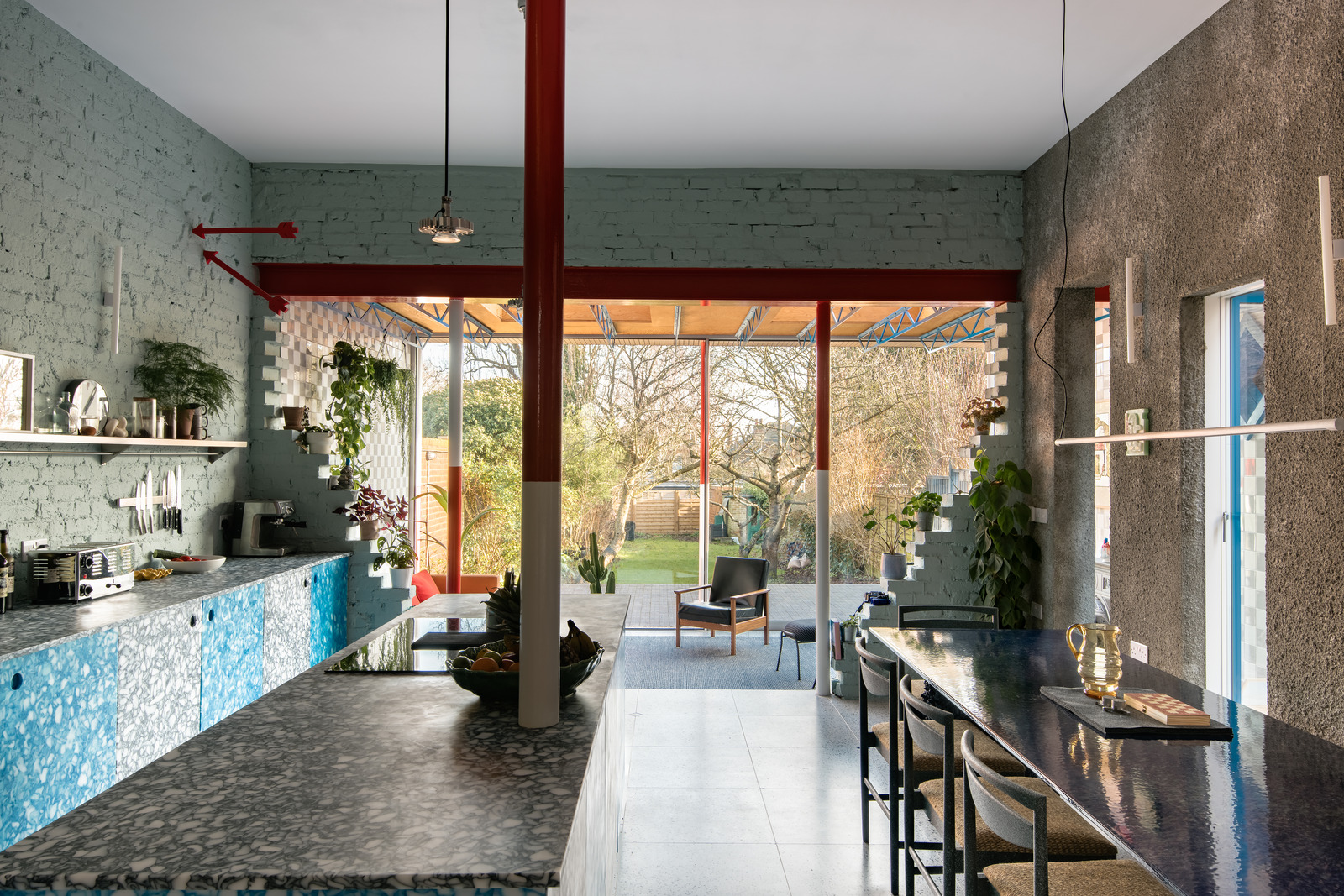
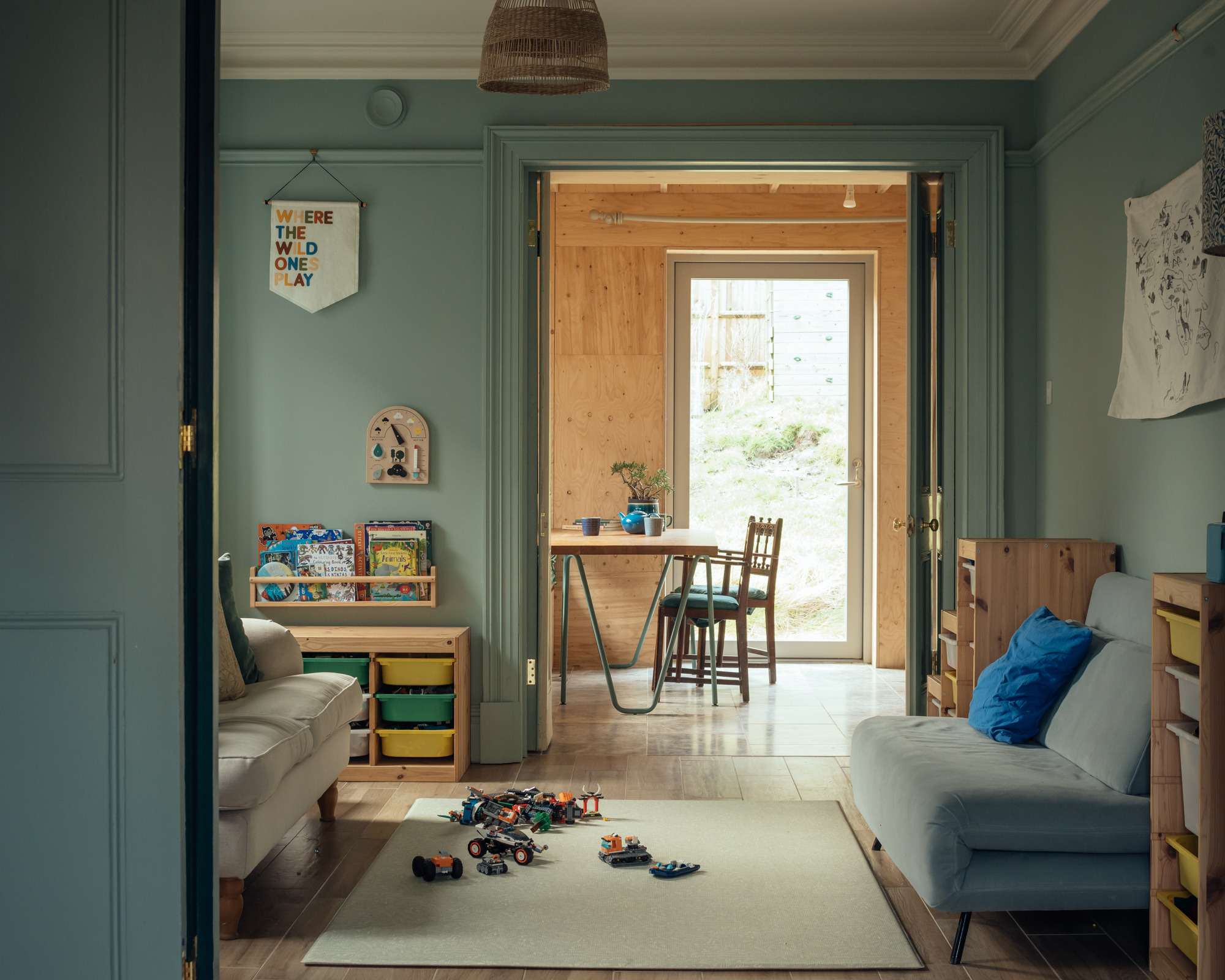
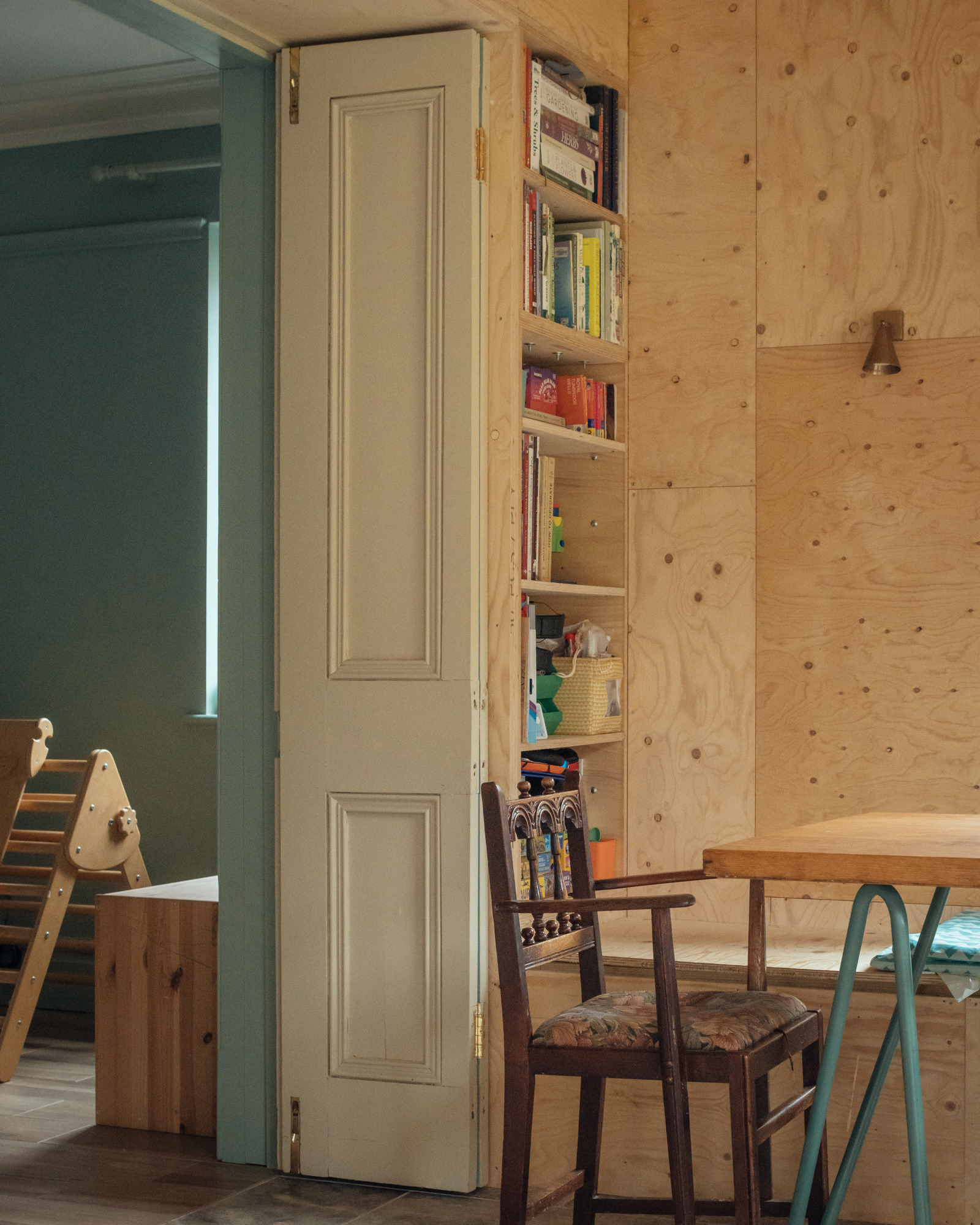
The new layout includes an entrance hall with sight lines through the house to the garden beyond, enhancing connectivity to the outside. At the front, there’s the dining room on one side, with a large enough table to assemble the whole clan. On the other side is the cosy living room, which opens, enfilade style, via reclaimed double doors, into the playroom. This leads into the kitchen, which runs the length of the new extension.
In what was once the fourth room of the ground floor, Studio Bark created a functional zone, including a new side entrance into a ‘mud room’, perfect for coming back from walks with two young children; a downstairs toilet; a laundry space; and a pantry featuring enough storage for dry goods and kitchen gadgets.
Upstairs, in the same quadrant of the house are the generously-sized family bathroom and the guest bedroom’s en-suite. “It made logistical and economic sense to put all the services in one quarter of the house, then we didn’t have to worry about pipework everywhere,” explains Tom.
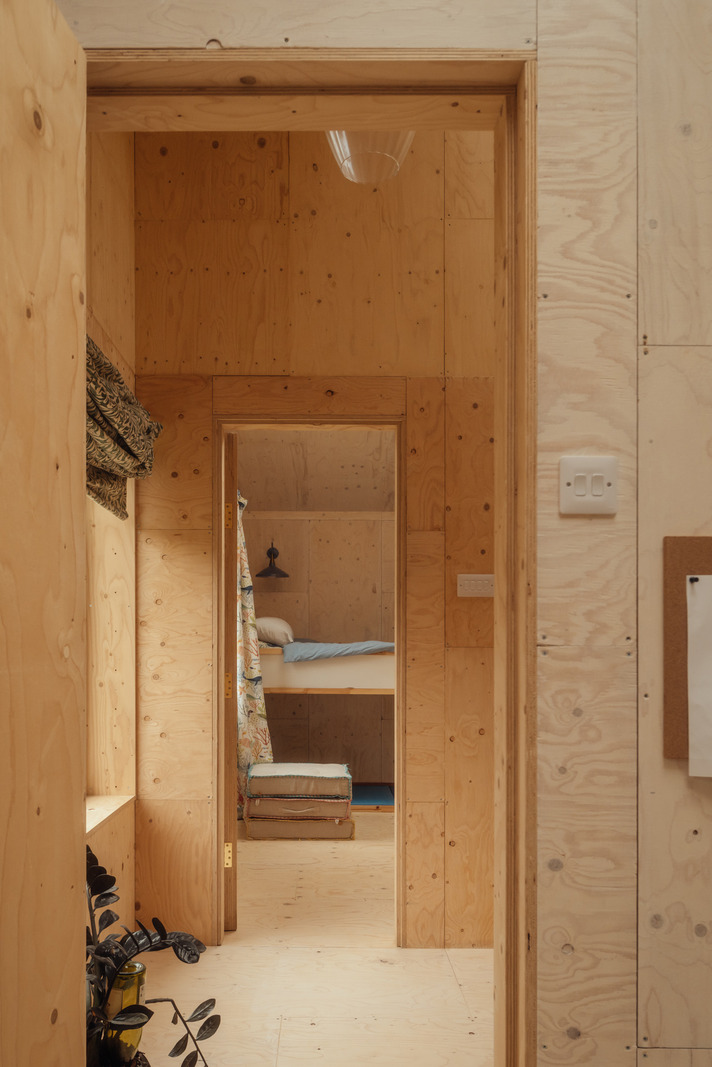
The home has five bedrooms, including Grace and Colin’s with another en-suite. One bedroom doubles as their dressing room and office when guests aren’t staying. The boys’ rooms, in the new section of the house, are wrapped in spruce ply, bringing warmth and texture.
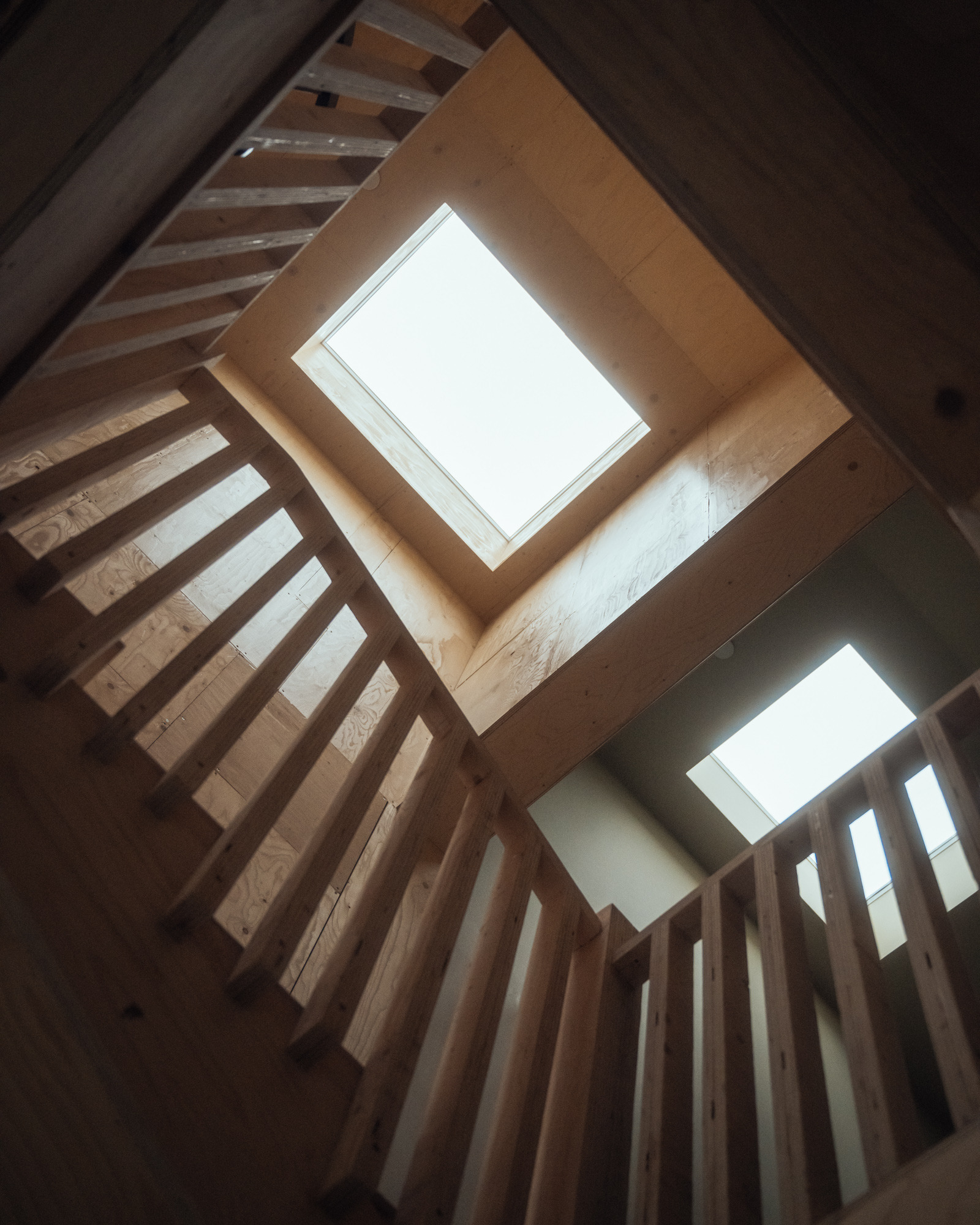
At the heart of the home is a triple-height space that lets daylight pour down through the house from the new roof lights, capturing the element of generosity that the couple envisioned. An unexpected benefit of this open space is that it allows the family to communicate from whichever room they’re in. “We wanted some kind of triple-height space and to have viewpoints through the house, horizontally and vertically. Being able to look up and see the clouds from the ground floor, that’s really important in terms of our experience of the house,” says Colin.
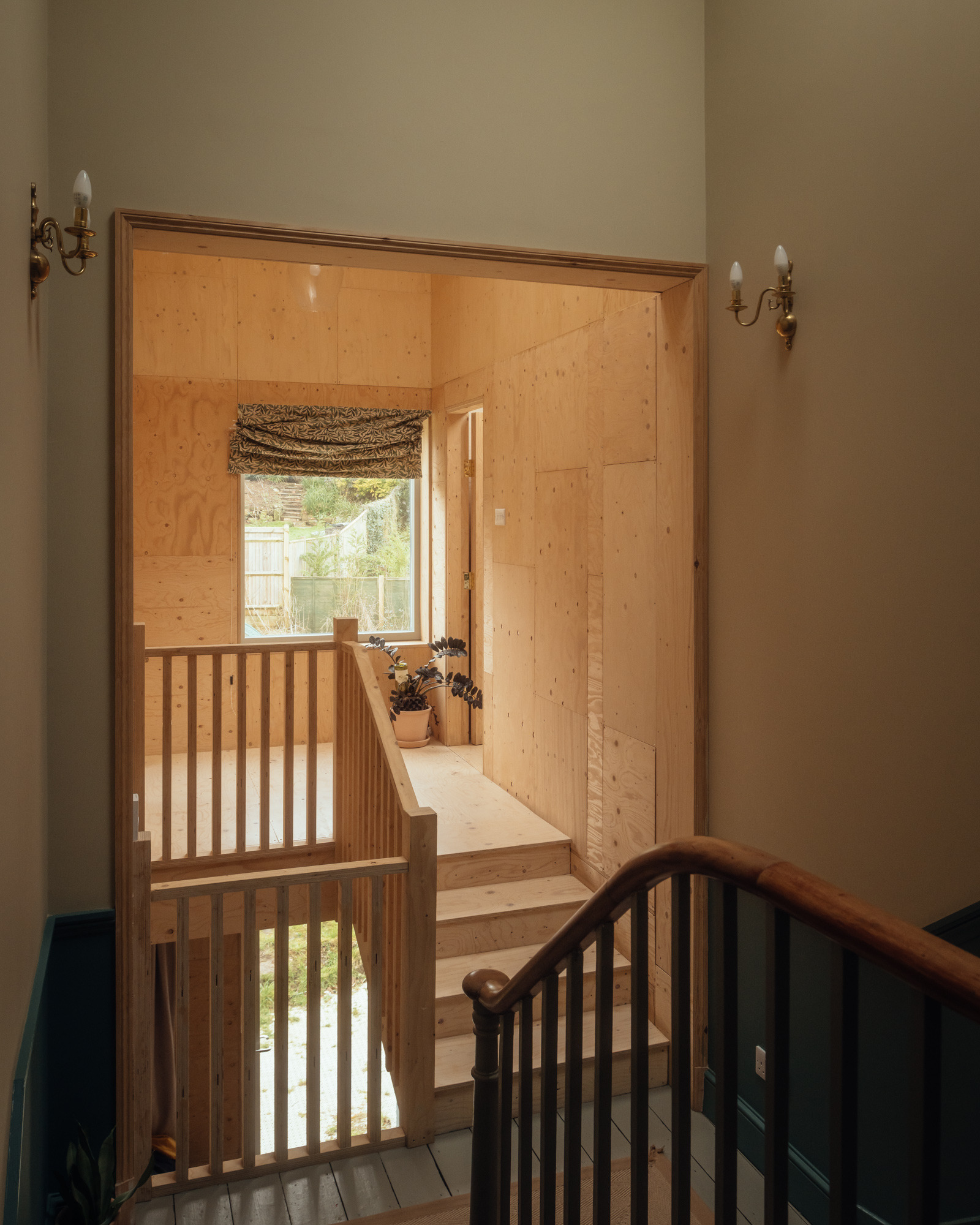
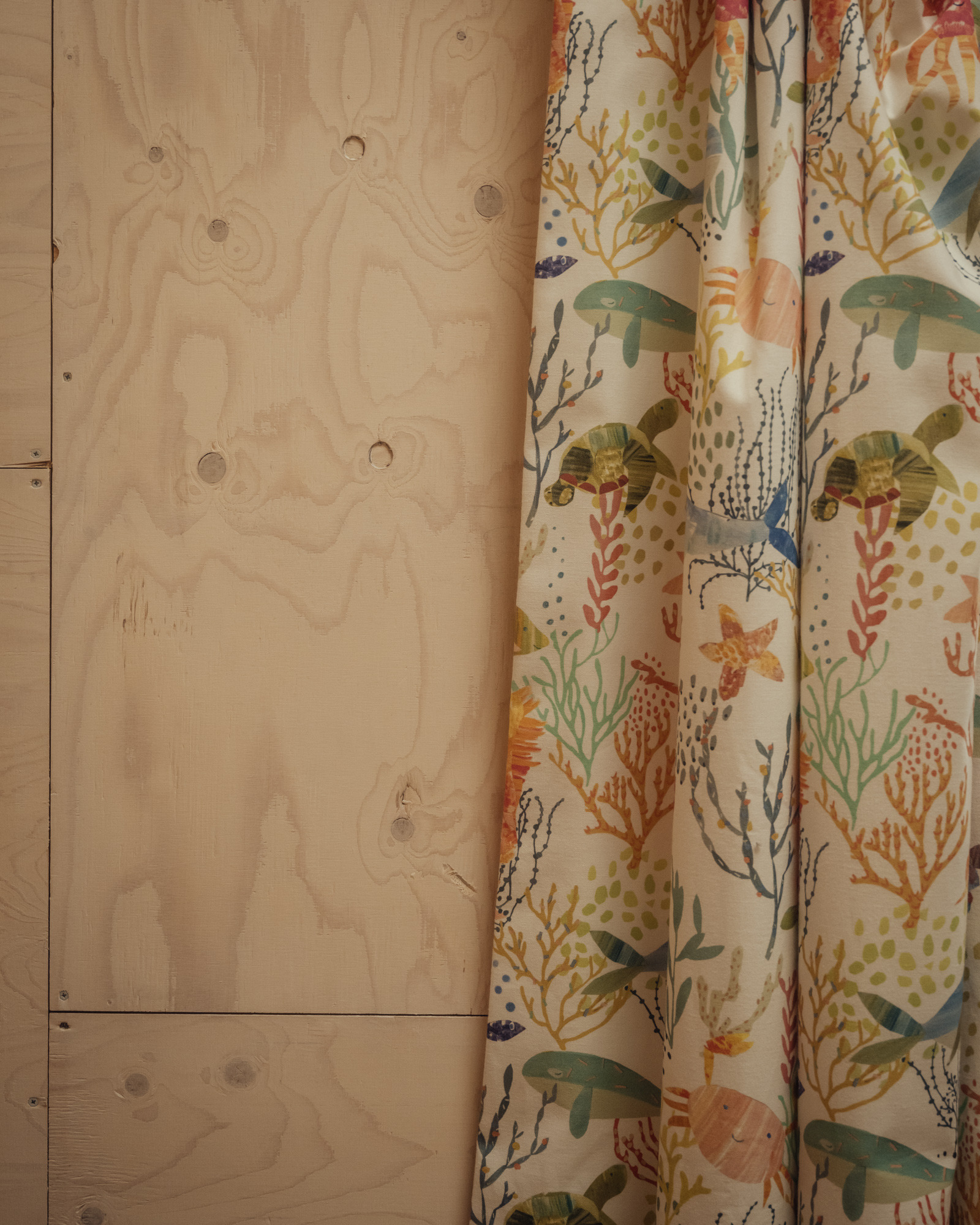
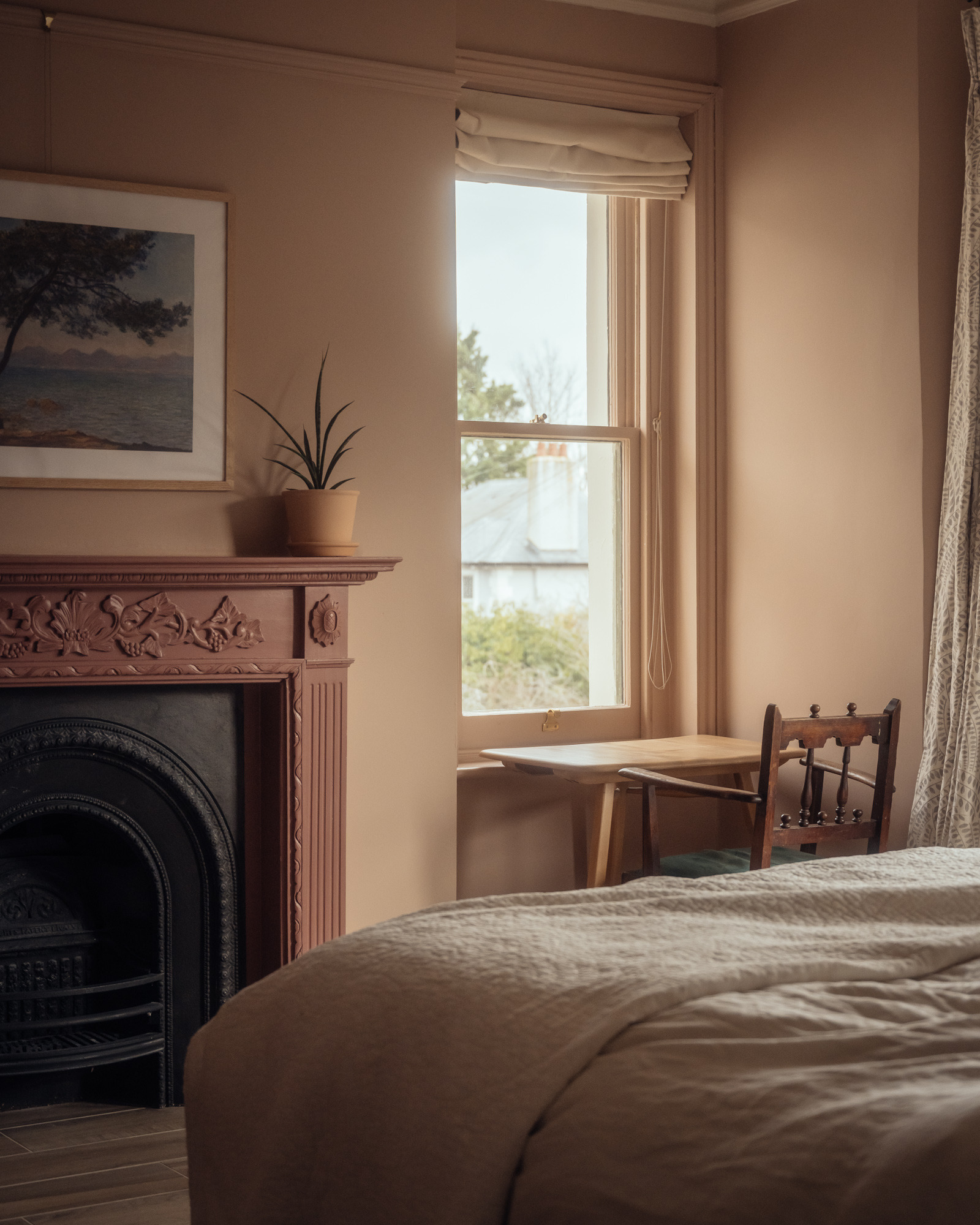
The couple were keen to be hands-on with the U-Build process, and not just to save money. “It’s about the interweaving of our story with the house’s. Wilfred was born here just three weeks after we moved in, so as a family, we feel invested in the place,” says Grace.
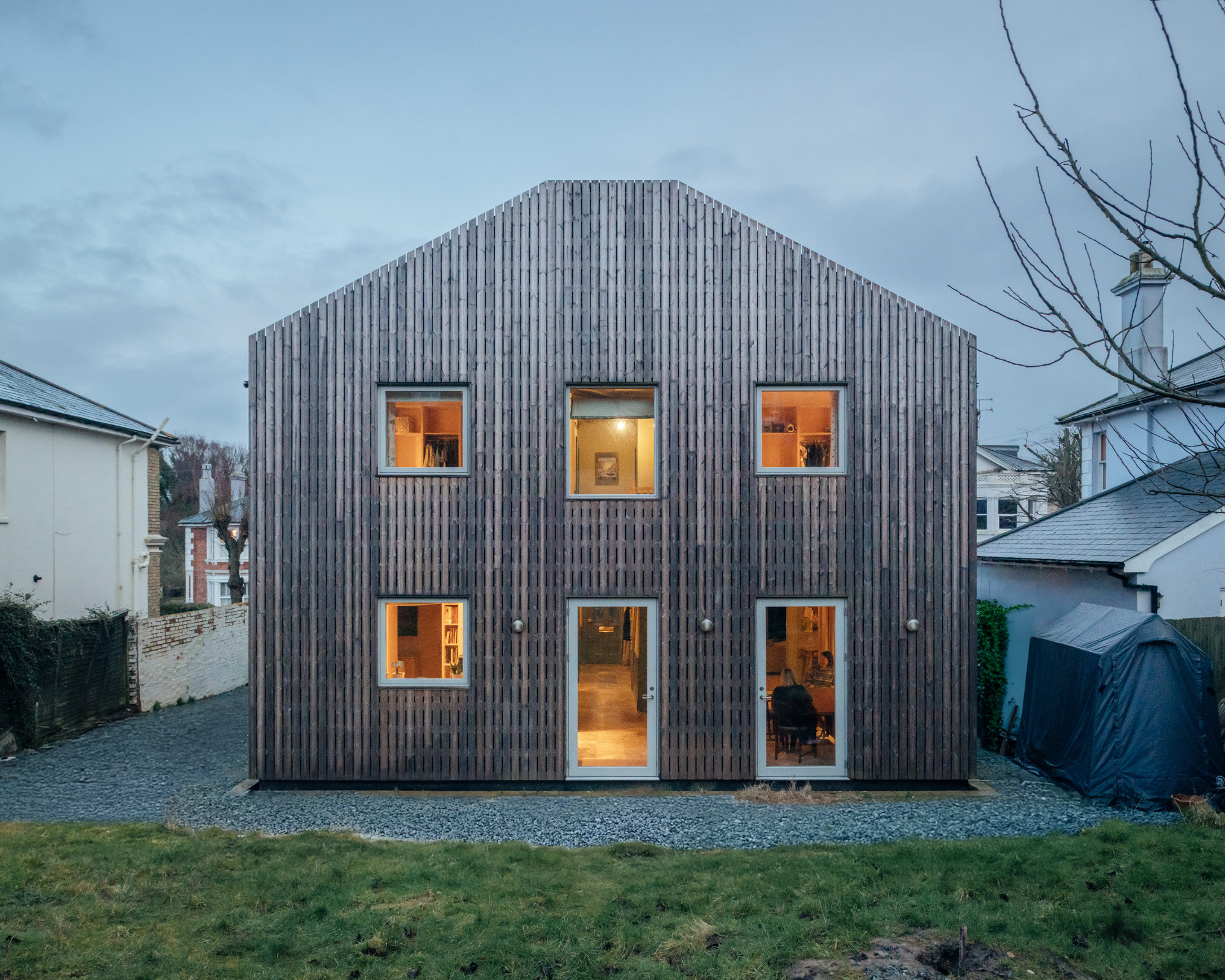
Colin found it straightforward to construct and build with the box-like components. The main problem was finding space to make and store them all as the process went along. The boxes ended up being stashed under tarpaulin in the back garden, until the time was right to put them together, bolt them to the main house, and stuff them with sheep’s wool insulation –before wrapping them in a membrane and fitting the exterior rain screen lattice of Thermowood Pine.
“If I can do it, anybody can," says Grace. "And the boys enjoyed helping too. The holes are all pre-drilled, so you can’t get it wrong." The couple always intended to leave the spruce ply exposed inside the house, “We love the character, texture and visual interest,” says Colin, so much so that they asked U-Build to create the kitchen cabinets in the same way – a first for everyone.
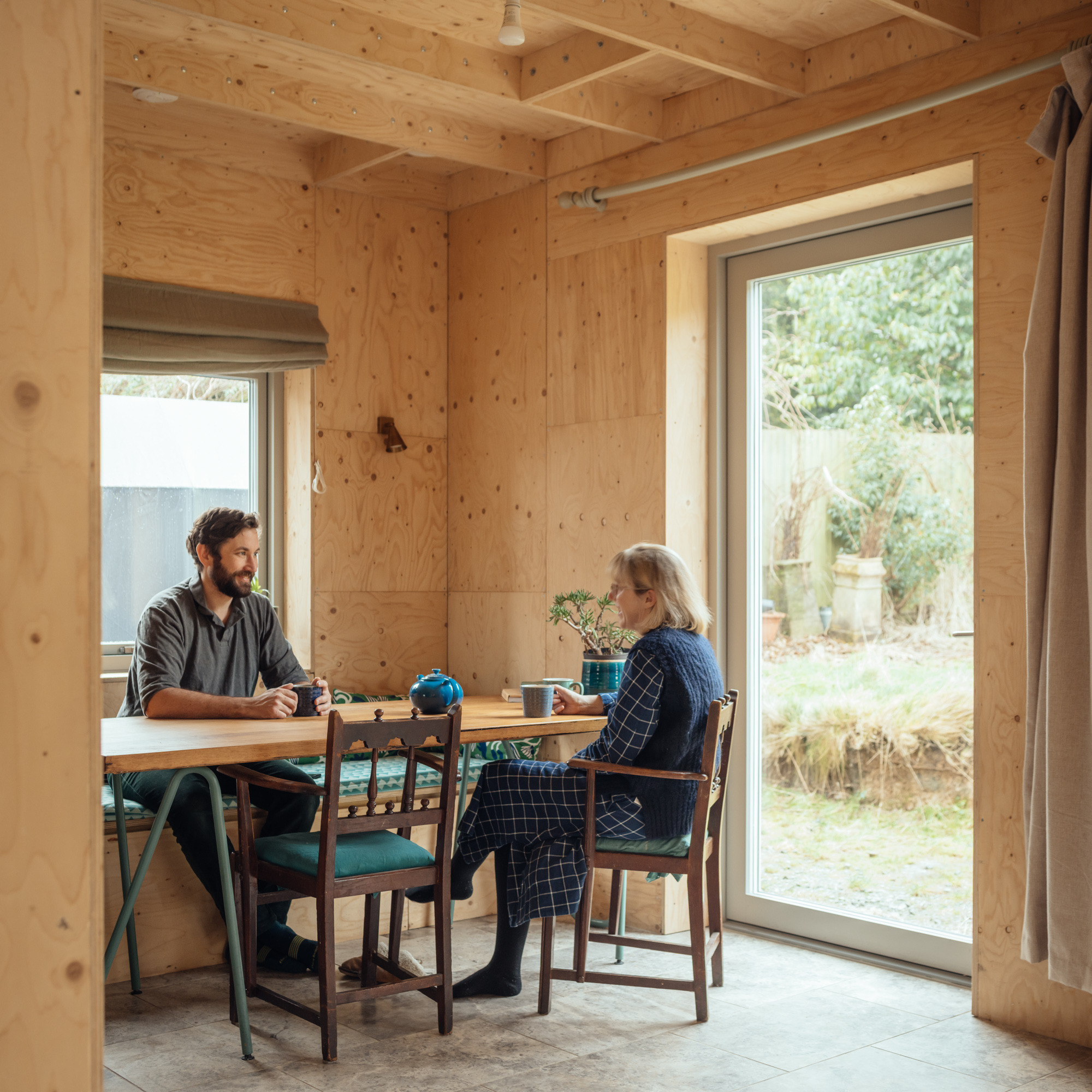
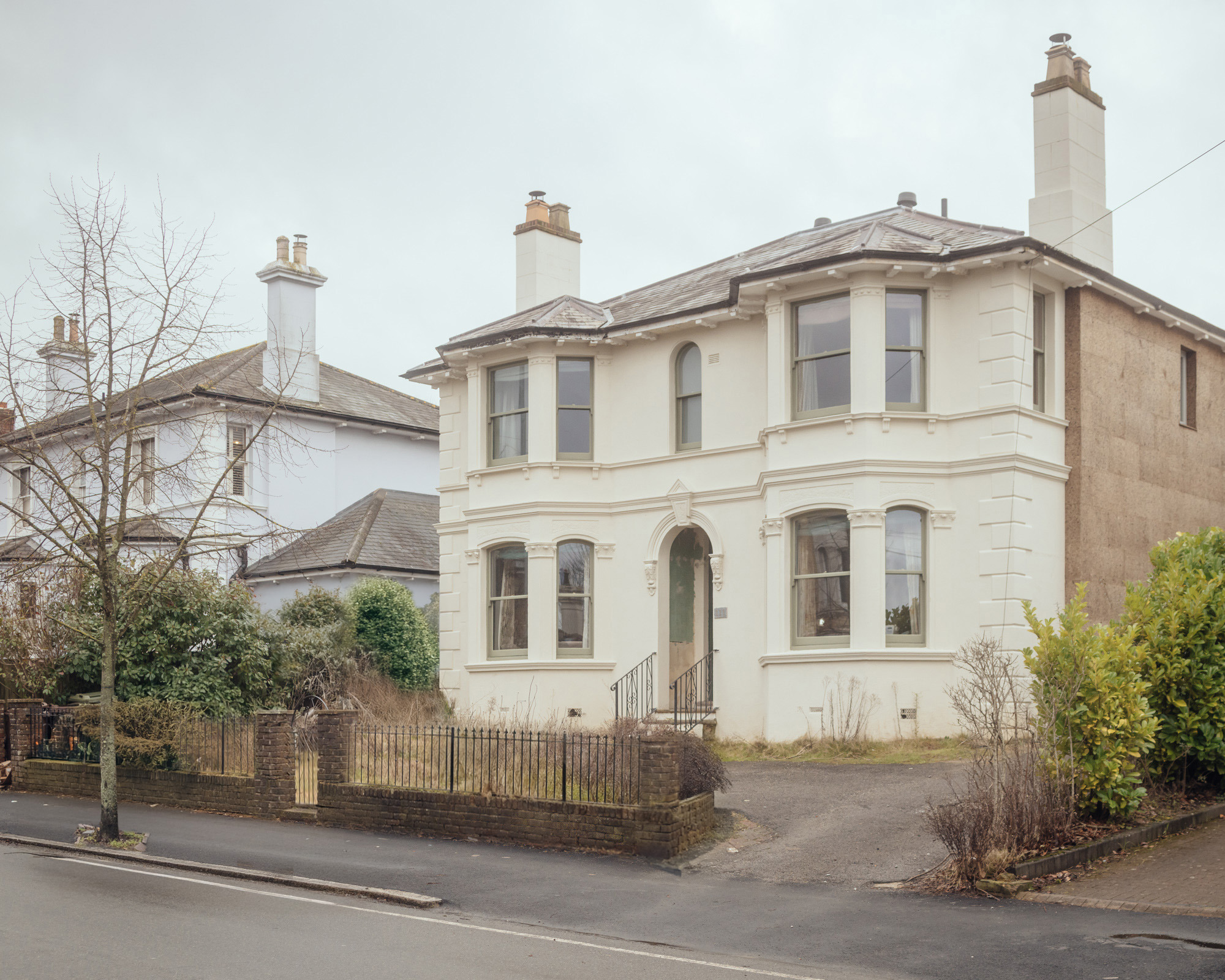
Meanwhile, the main house got a deep retrofit, with an emphasis on sustainability. The side walls were externally insulated in wool and faced with cork, while the front was internally insulated with wood fibre, with slimline double glazing fitted into the existing sash window frames. Sheep’s wool insulation was laid in the loft and under the ground floor, with underfloor heating everywhere.
“Not having radiators makes it much easier to lay out each room,” says Grace. “Basically, we’ve given the house some nice warm slippers, a woolly jumper and fluffy woolly hat,” says Colin. Add to all of this an air source heat pump and an MVHR (Mechanical Ventilation with Heat Recovery) system and the house – once cold, damp and draughty – now remains consistently warm throughout the year. “So much of my headspace was taken up with how to keep everything warm, especially for the boys. Now I never have to give it a thought,” says Grace.
There’s a clear differentiation between the Victorian and the contemporary parts of the house, the old and the new. “We wanted to be respectful of both, with no muddling of styles or languages – having that clarity was important,” says Grace. “Because of the open layout, you see and experience both parts of the house from many rooms. The challenge was how to stitch them together,” says Colin. There are visual themes running through the whole space – the same cloud-like Travertine floors, the same brass taps and hardware, the same natural textures.
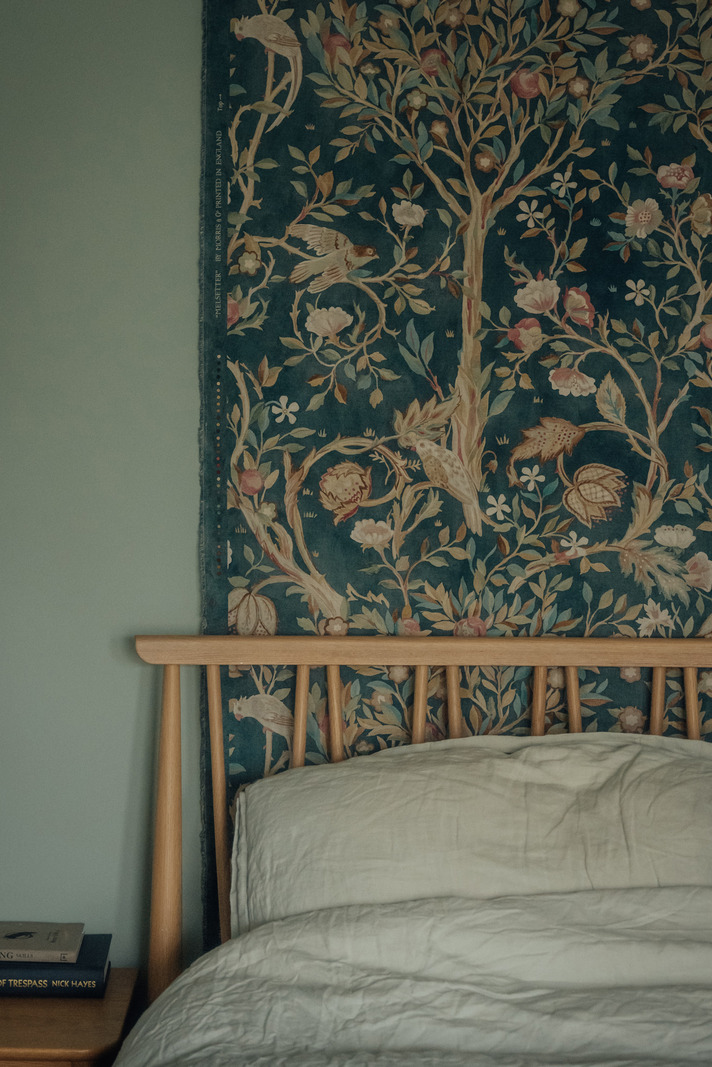
Continuing the sustainability focus, new fixtures and fittings have been reclaimed wherever possible and no brand-new furniture has been bought for this house. “I was looking for texture, patina and character – pieces with a story. When furniture has come from a factory, it doesn’t have those things,” says Grace. The house features just five paint colours, all by Little Greene, including ‘Travertine' that references the beige tones within the spruce ply; shades of green “reminiscent of the colours of the English Channel,” says Colin; and a plaster pink, “a warm thread that pulls everything together”, explains Grace. “I love using colour; I don’t believe that white has any place in a decorating scheme.”
Grace and Colin love their home, which has recently won the Positive Addition category at the AJ Retrofit & Reuse Awards 2025 for demonstrating the value that a retrofit can provide. But their chief joy is how it works for them all as a family. “It’s beautiful but living in it is awesome. Before, there were so many pinch points, chaotic spaces and wasted spaces,” says Grace, “Now, there’s no tripping over anything or anyone, no awkward bits at all.” Colin agrees. “The house gets out of the way, enabling us to live our lives.”
The Modern House are currently selling Pivot House, designed by Studio Bark.