Spruced up: the remarkable redesign of a former Victorian shop, now for sale
June 1st, 2026
Words Kate Jacobs
Photography James Tarry
If someone were to describe this recently listed house without context – timber-clad, with front door and windows veiled behind a screen of spruce battens – it might sound distinctly out of place on a street of charming Victorian terraces in east London. But, for architecture studio ao-ft, context is pretty much everything. As a result, Spruce House slots in rather brilliantly alongside its more conventional counterparts. It surprises and delights, but it does not jar. For ao-ft practice founders and life partners, Liz Tatarintseva and Zach Fluker, architecture is deeply rooted in context, history and sense of place. That and championing beautifully honest, sustainable materials across this and all their projects.
The pair met while studying at the Architectural Association and founded ao-ft in 2017, around the time that they first saw this house, such as it was then – an ugly 1960s infill on a street that was once full of Victorian shop fronts, long since converted into houses. Today, the adjoining and much-celebrated Orford Road ably meets the needs of Liz, Zach and the rest of the lucky local community. “We’re two minutes from all the shops and cafes (and The Castle pub) and our road is a pedestrian street, which makes a big difference. It’s a fantastic place for young families; we know so many of our neighbours and it’s super welcoming,” enthuses Liz. “That sense of community is so important because that is the part we can’t design,” adds Zach. “We love the balance here too. In 30 minutes we can be in Euston, or we can be completely immersed in nature in Epping Forest.”
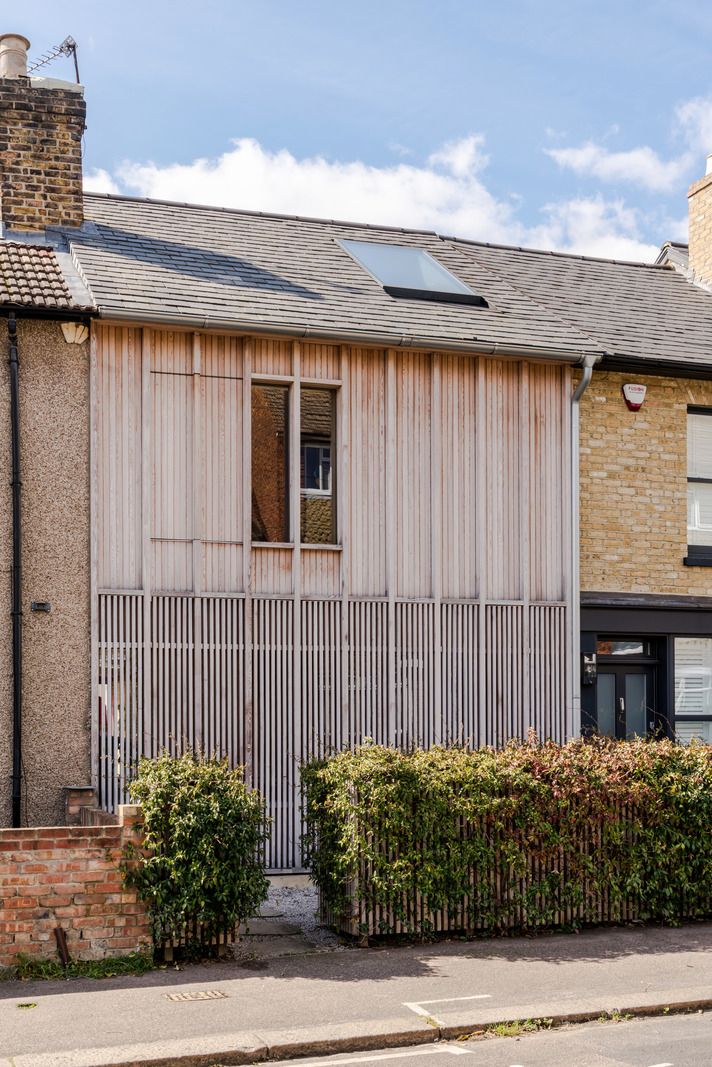
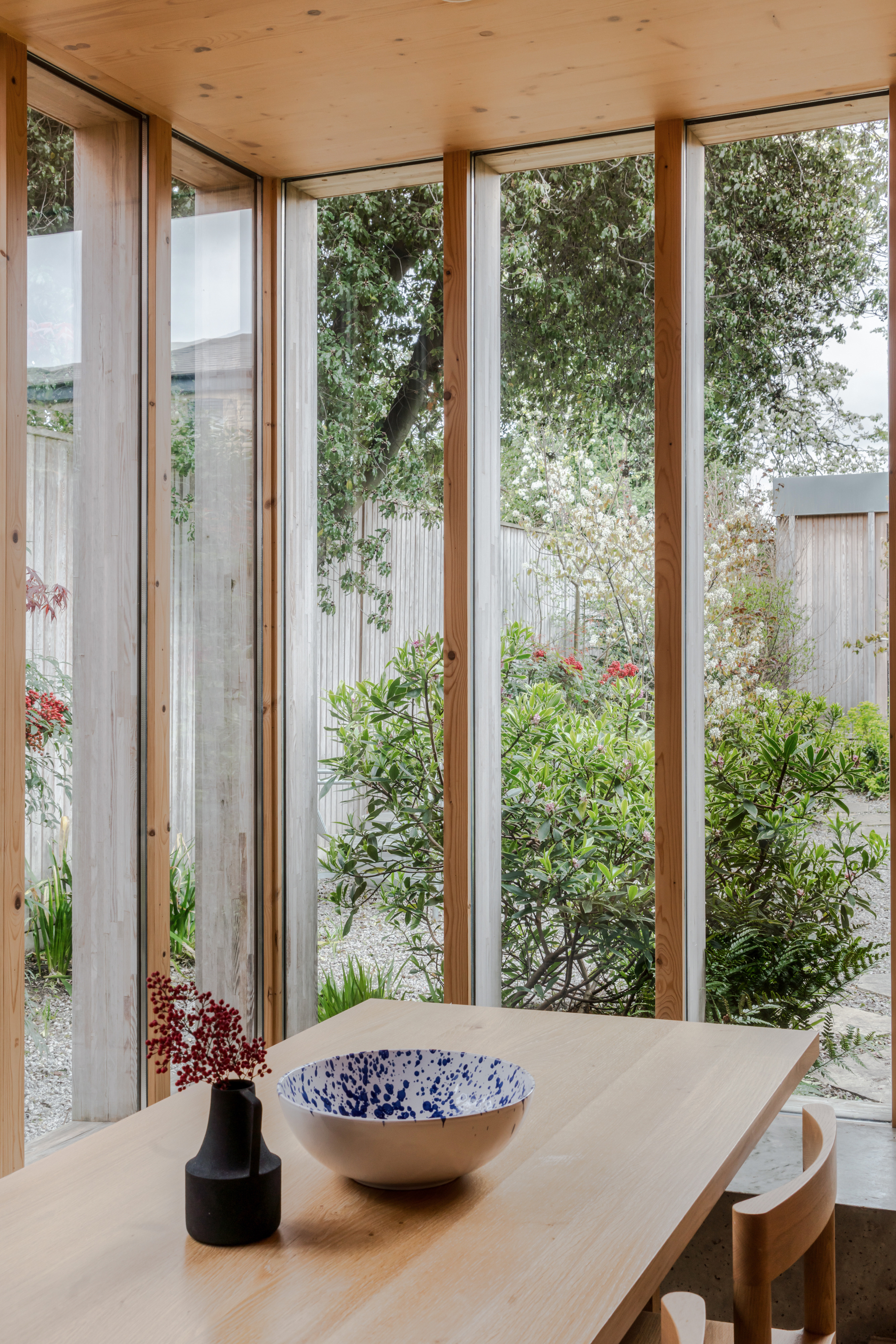
With the character long since stripped from this particular building, Zach and Liz were able to make a bold new beginning, using sustainable Siberian larch over a cross-laminate timber frame (eliminating the need for steel supports). Their decision-making was firmly anchored in the context of the area. “It was about what we could pull from the history of the street, creating a contemporary façade, but one with a relationship to the proportions and rhythms of a Victorian shop front,” explains Zach. The layering of battens and mullions is aesthetically pleasing, of course, but also works to create both vistas and privacy for the house’s inhabitants, while flush-fitted automatic blinds descend at night in every room.
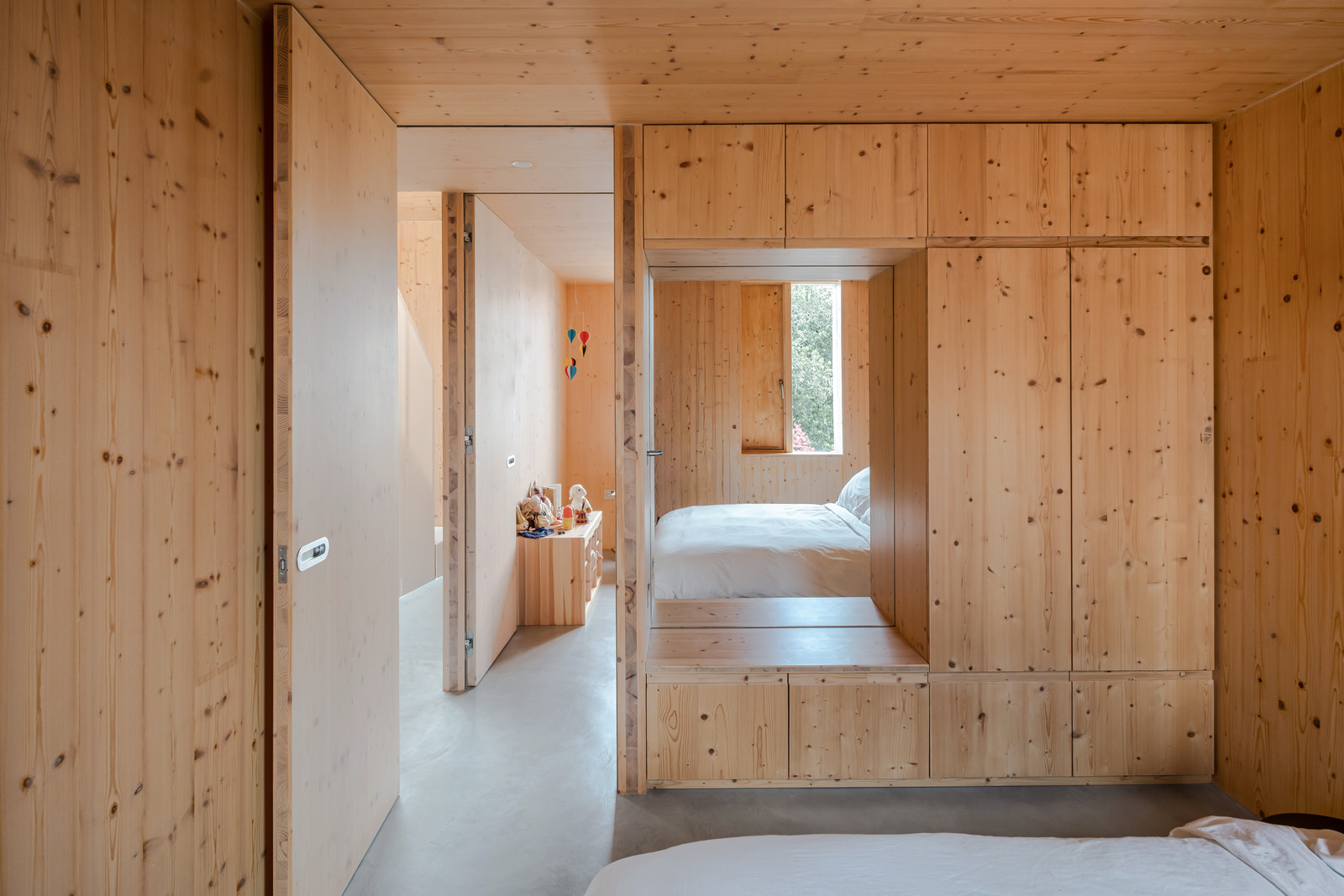
Inside, all is easy, calm and tranquil, with a natural sense of flow, belying the complex decisions that informed every aspect of the design. Open-plan spaces are carefully zoned according to function, creating rooms within rooms. Whole walls of hand-crafted cabinetry effectively become invisible but conceal all the essentials, from a downstairs bathroom to appliances large and small, as well as huge amounts of storage, enabling the interiors to stay beautifully fuss free, aided by thoughtfully integrated furniture such as the dining bench.
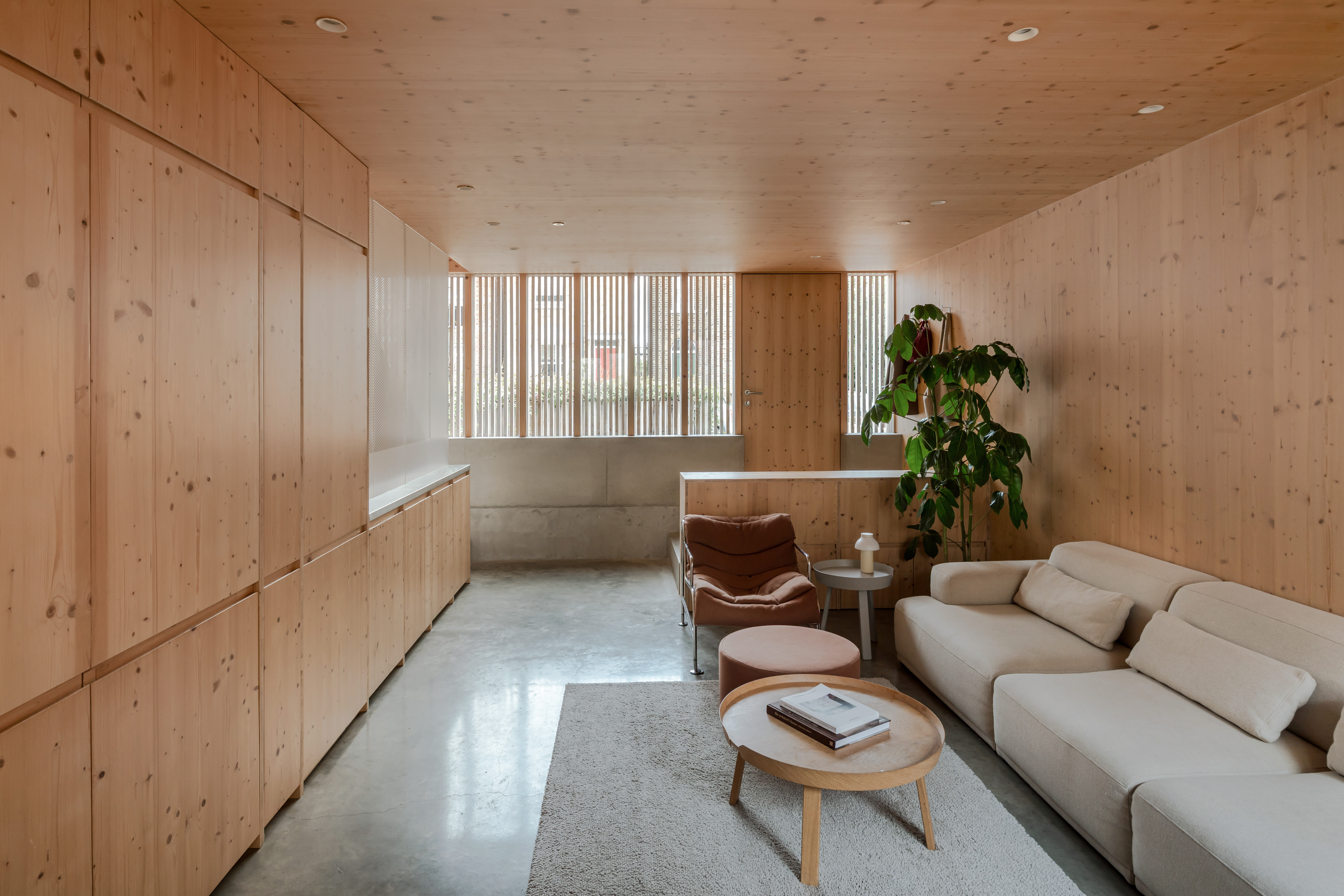
In designing the house, Liz and Zach were guided by a spirit of generosity with simple, gestural details such as full-height doors that fold flush against the wall, allowing the spaces to take on a monumental quality. This sense of flow is enhanced by the ultra-pared-back material palette. Cast concrete floors have been polished to a soft sheen, encasing storm cloud-like swirls within the material. (On the two upper floors, microcement is a lighter but seamless stand-in.) Across the 2.5 bathrooms, one on each floor, a pleasingly speckled terrazzo picks up the same moody grey tones, as does the low-key stainless steel detailing used throughout the house, across everything from switches to tapware. “It’s a durable material that lasts well. And we don’t like shiny things!” admits Liz with a wry smile. “We’re always interested in the rawness of materials; their honesty and authenticity help to make a home feel calm and legible, especially in smaller spaces,” Zach agrees. “It’s that coming together of function and aesthetic, celebrating structure and materiality.”
Spruce timber is the material at the heart of this project, in every sense. Protected by a raw-white finish, it takes on a luminous, amber-like glow that contributes to the warm, cocooning atmosphere. “The spruce represents our interest in honest, sustainable construction and fabrication, in creating a home shaped by natural materials and connections with nature,” says Zach.
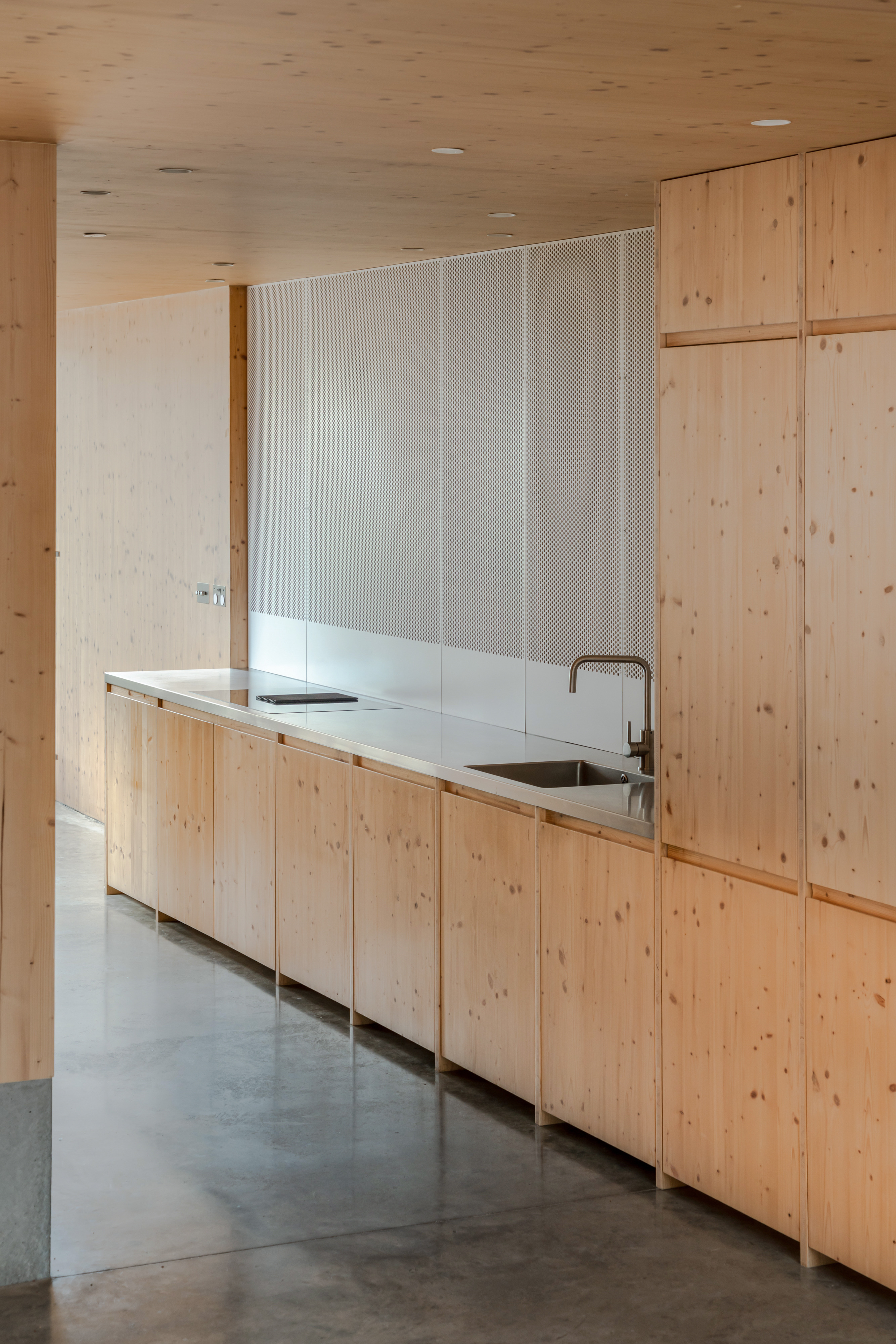
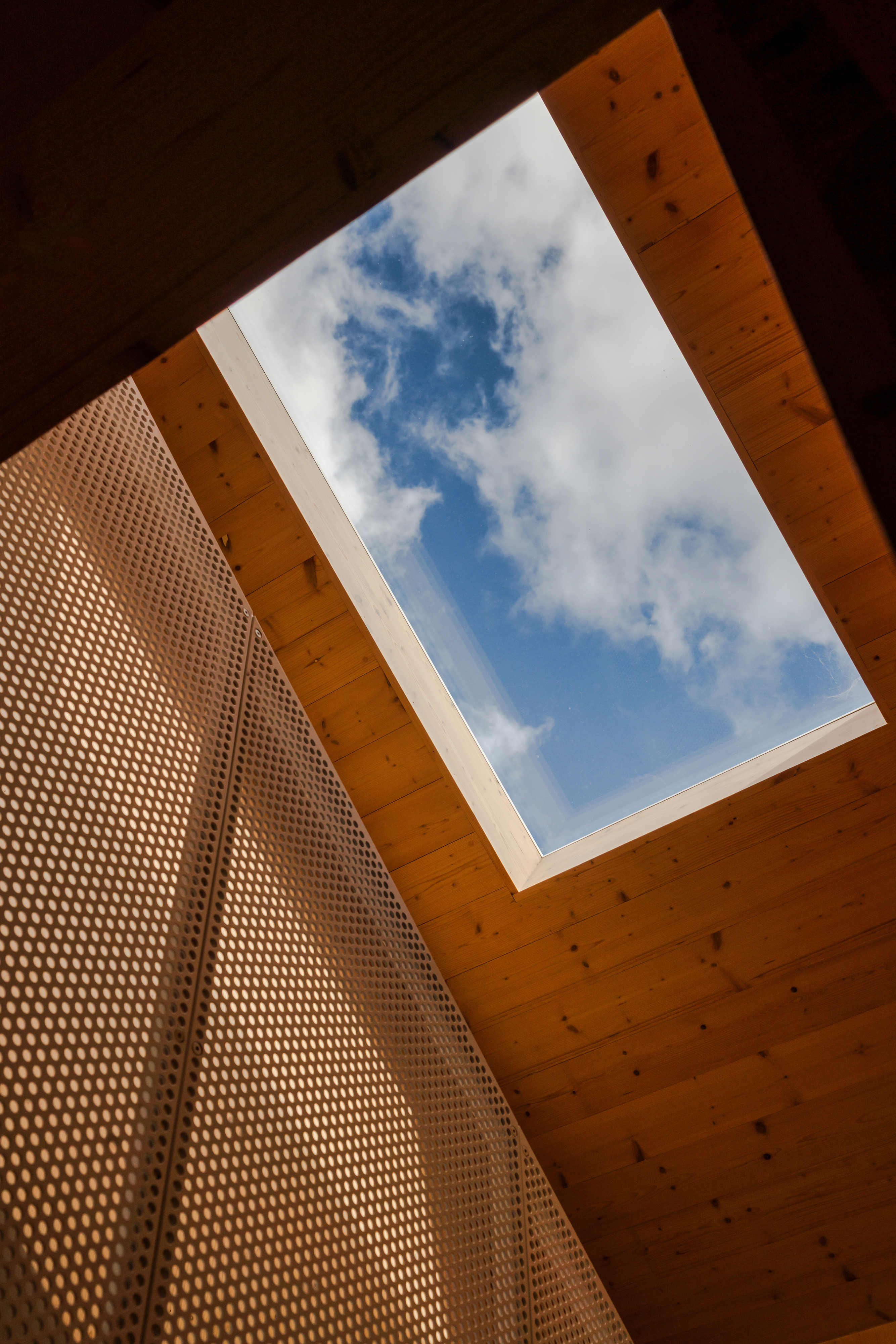
Rising up through the house, a white perforated metal staircase allows light to cascade down through the space from a generous skylight and enables a cooling airflow through the house during hot weather, used in tandem with generously sized ventilation panels in each room.
The original footprint of the house was small, so Zach and Liz followed the form of a typical Victorian terrace, including the side return, which plays a surprisingly crucial role in the design. Lushly planted with acers and ferns, in a loosely Japanese theme, it brings light and greenery into the heart of the house. “What started as a pragmatic decision now connects us to nature and the seasons in a way that is so important, particularly in the city,” says Zach, gesturing to the sunlight filtering through green leaves, as we sit and chat at the kitchen table.
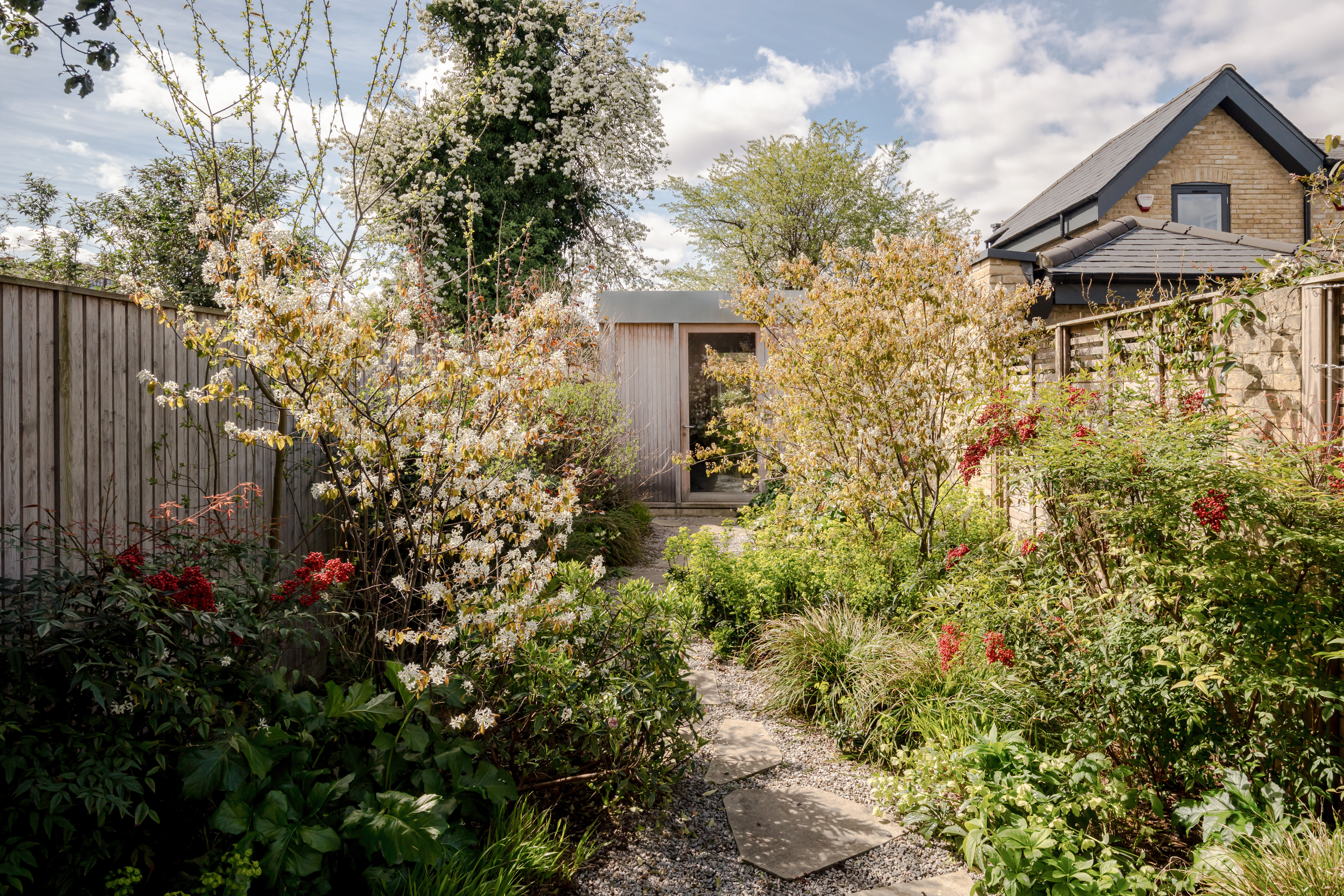
The garden, designed with Meeuwsen Muldoon, is rambling and naturalistic, a deliberate contrast to the linearity of the house. A neighbour’s conveniently placed evergreen shrub provides green vistas for the bedrooms, while a white-blossomed Amelanchier has been carefully positioned to align with the glazing at the back of the house. Thoughtfully planted to hold the attention with a succession of plants throughout the year, “the garden is like a piece of art, a focal point that we can enjoy from so many places in the house,” explains Zach.
A path of reclaimed limestone pavers meanders down to the couple’s garden studio. The design here echoes that of the main house, with a wealth of thoughtful touches, including a row of clerestory windows that allow sunlight to create striking patterns on the exposed beams. A door at the rear frames lush architectural planting, while the unseen side areas are useful for garden storage. From this vantage point, meticulously plotted sightlines lead all the way back through the house, giving glimpses of the front garden and the street beyond. “When we’re sitting in the house with the shutters open, we can sometimes hear people in the street talking about the architecture,” recalls Liz “They’re curious, they’ll say things like ‘it’s interesting, it’s doing something different, but it totally fits in on the street.’ And that, for us, is the biggest compliment.”
There is a viewing day at Spruce House on Saturday 6th June. Please call +44 (0)20 3795 5920 for more details.