The house that art built: Paul Huxley and Susie Allen invite us into their west London home and studio
December 20th, 2024
This article is more than a year old and may contain information that is out of date. Sorry about that.
Words Sophie Barling
Photography Elliot Sheppard
“I’d be terrified if I met that boy now. Such attitude!” Susie Allen is referring to her husband, Paul Huxley, in a photograph taken by Lord Snowdon in 1963. Posed with one denim-clad leg slung over the arm of a Vico Magistretti chair, the 25-year-old artist sports-scuffed Converse All Stars, a buzz cut and a decidedly unfazed look. The shoot was for the book Private View, a survey of the London art scene produced by Snowdon with the art critics John Russell and Bryan Robertson. In it, Robertson described Paul’s large, abstract paintings as “among the most original inventions coming from his generation”.
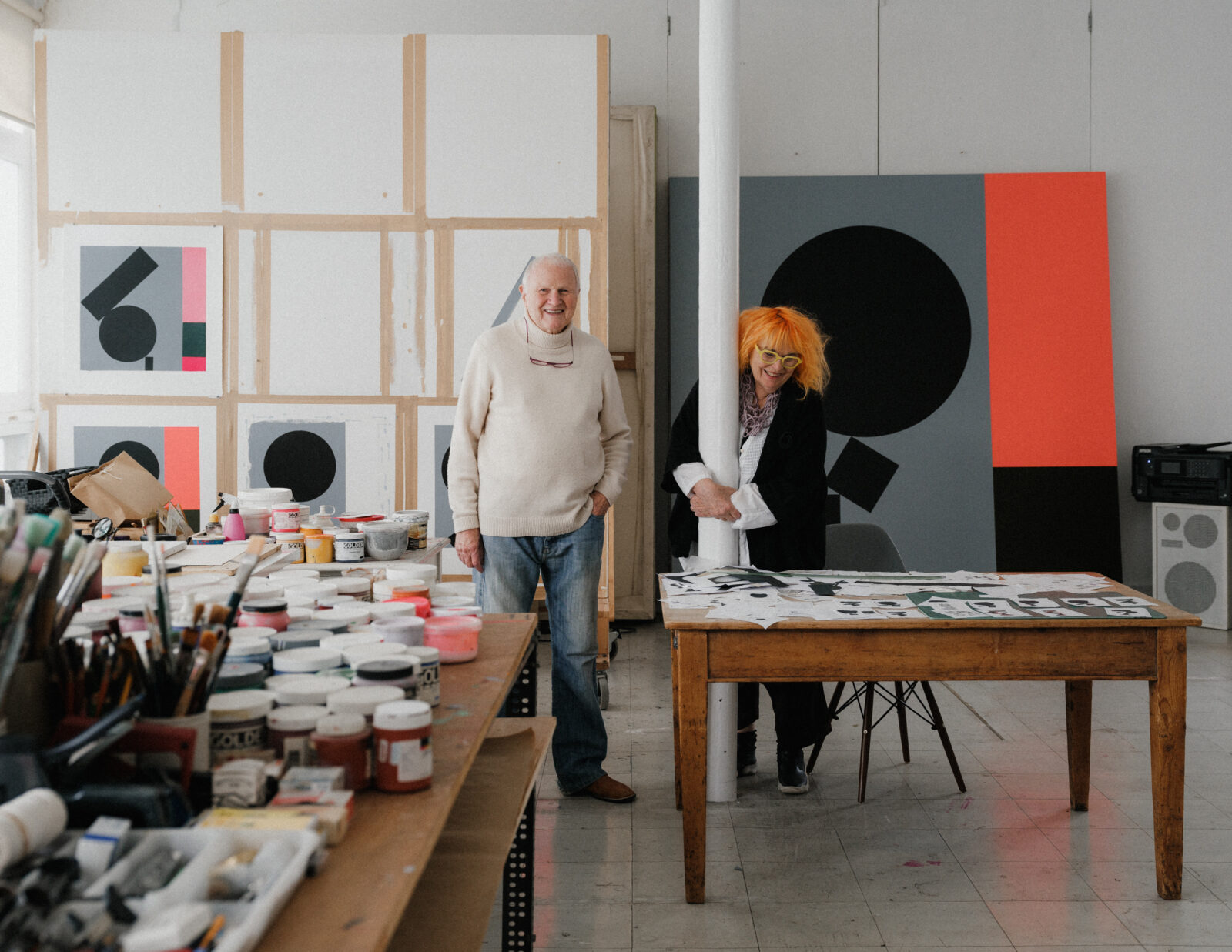
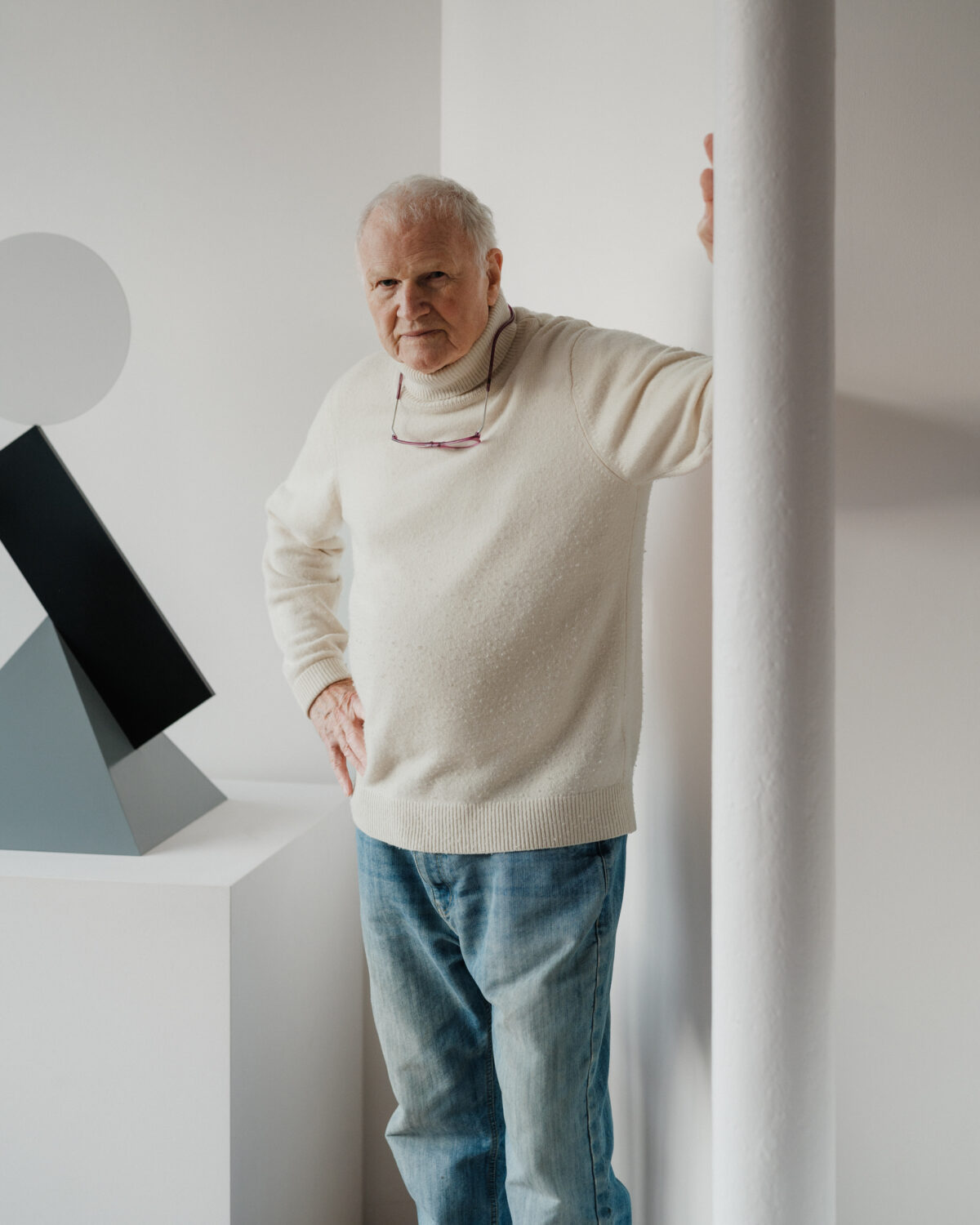
Now 86, and sitting more formally at the couple’s long kitchen table in west London, Paul has in front of him a recently published monograph on his 60-year career, whose frontispiece features Snowdon’s photograph. He and Susie met nearly two decades after that portrait was shot, he explains, when they were fellow tutors at the Royal College of Art. In 1988, they themselves commissioned Snowdon to take artists’ portraits for the catalogue of an exhibition they curated to mark the RCA’s 150th anniversary. It was the first of many projects the couple would work on together – the most personal being the house and studio that has been their home for the last 30 years.
For more or less the same amount of time before that, Paul had had a studio in Primrose Hill, an industrial building shared, over the years, with artists including Phillip King, Barry Flanagan and Michael Craig-Martin. “When Susie and I decided to get married it was ridiculous to keep going backwards and forwards – she was a painter then and had a studio somewhere else – so we did what people say not to do and put all our eggs in one basket.” The basket in question was a roomy one: a former hardware store backing onto a defunct builder’s yard in Hammersmith. Their fellow artist and friend Peter Blake had found the site, and suggested Paul and Susie go in on it with him and the painter Ben Johnson. By extraordinary coincidence, Susie had known the place as an art student when it was still doing business. “I would come here to buy nuts and bolts for making crazy jewellery,” she says. “They used to call me ‘the nutty lady’. And then we come and live here!”
The group brought in the architect MJ Long to convert the old hardware premises into a studio-cum-living space for Paul and Susie, and the buildings across the yard into studios for Blake and Johnson. At the time, in the early 1990s, Long and her husband, Colin St John ‘Sandy’ Wilson, were nearing the completion of their most important project, the British Library. Meanwhile, Long had already designed several artists’ studios, including those of RB Kitaj, Frank Auerbach (who called her transformation of his Camden space “a sort of miracle”), and Blake. “Paul had been a trustee with Sandy at the Tate,” Susie explains, “so he knew him very well – and then Peter introduced us to MJ, and we totally fell in love with her.”
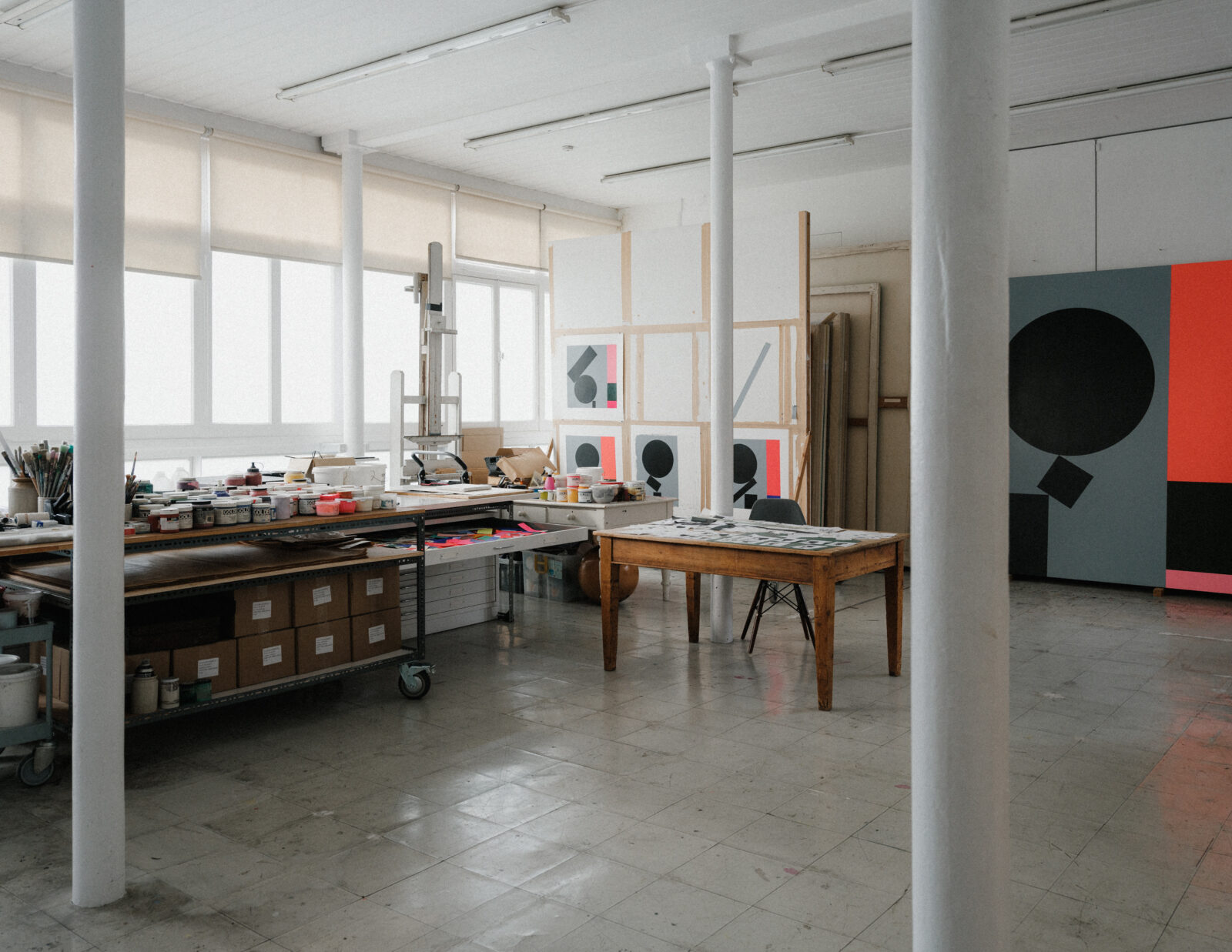
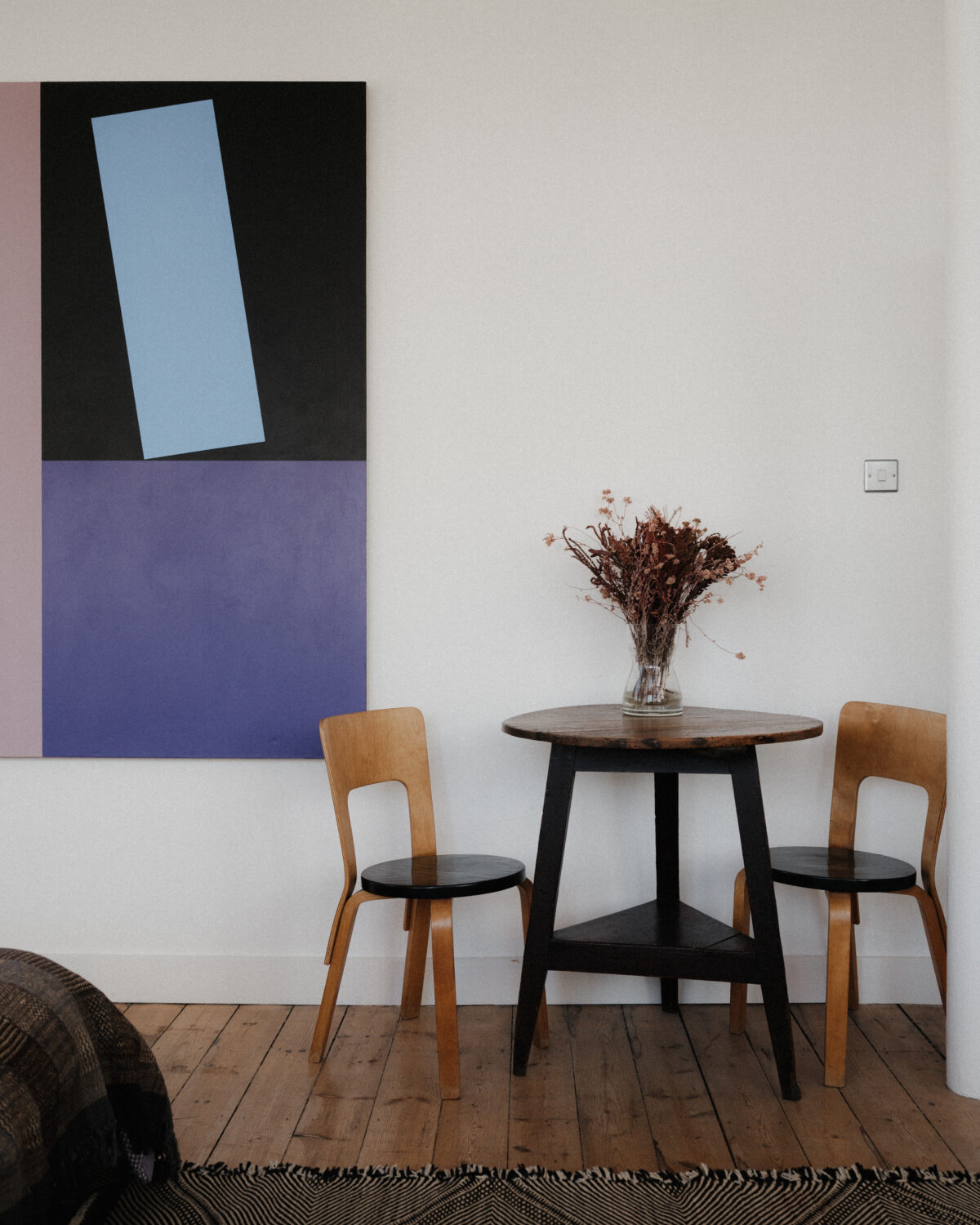
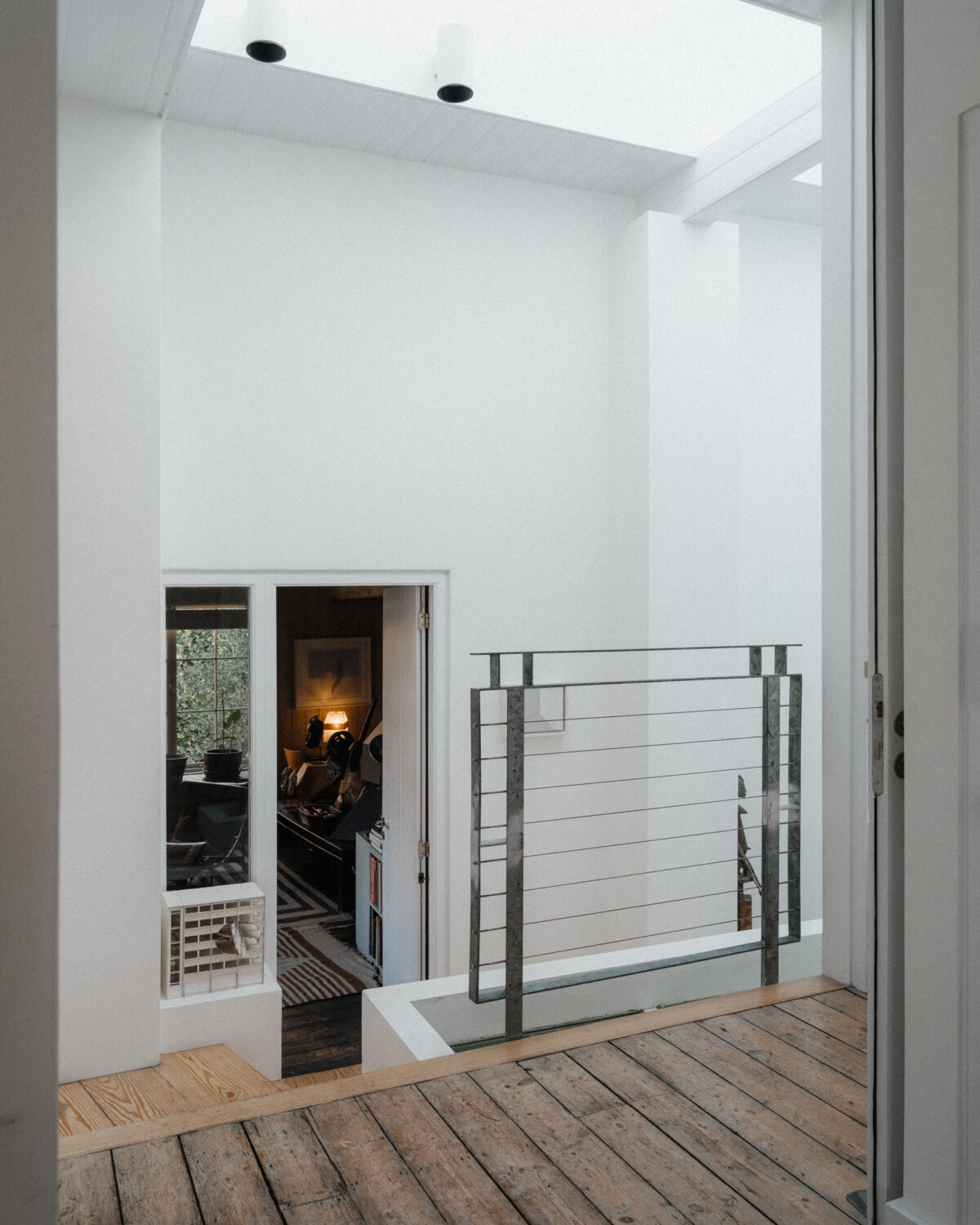
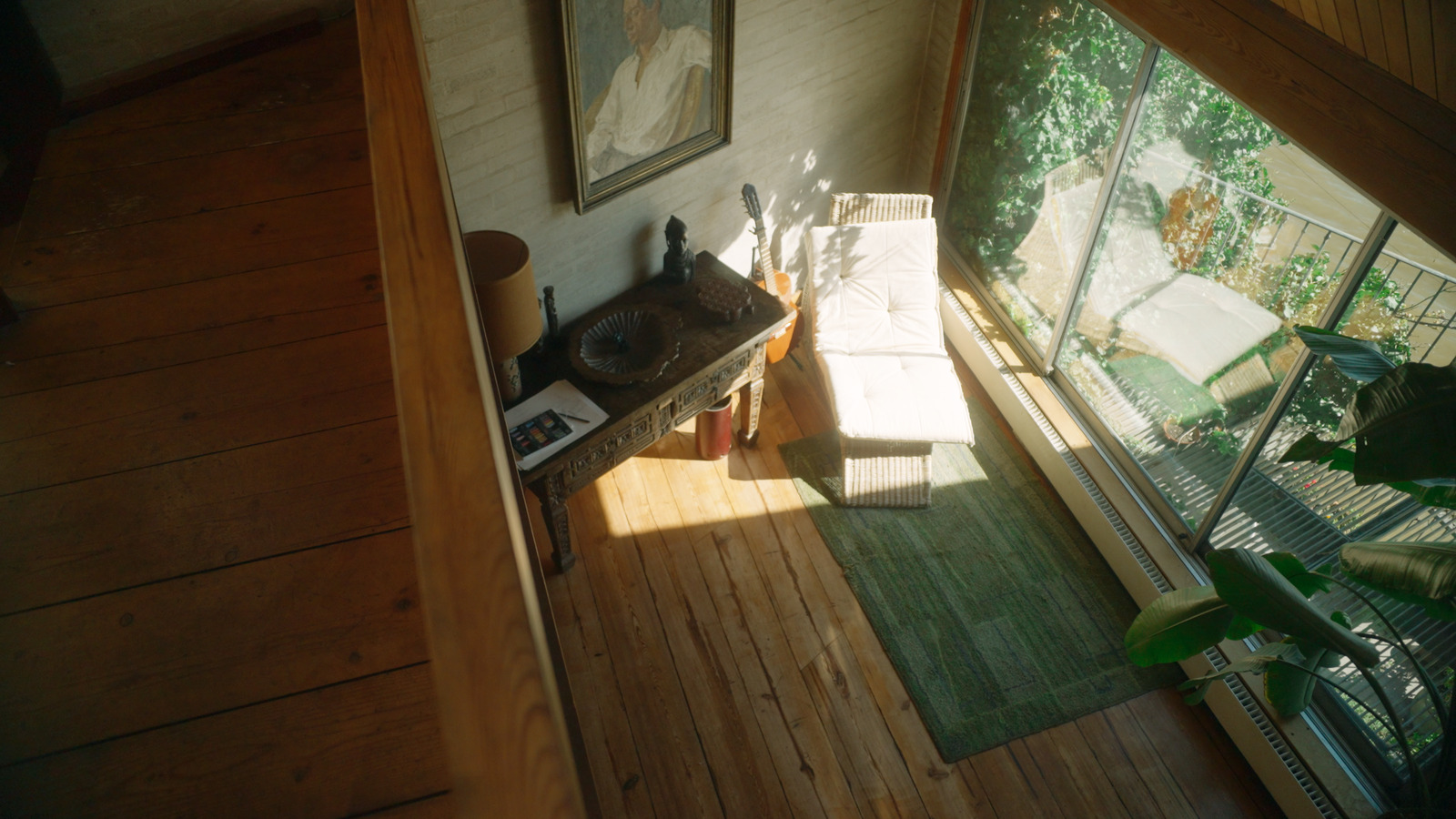
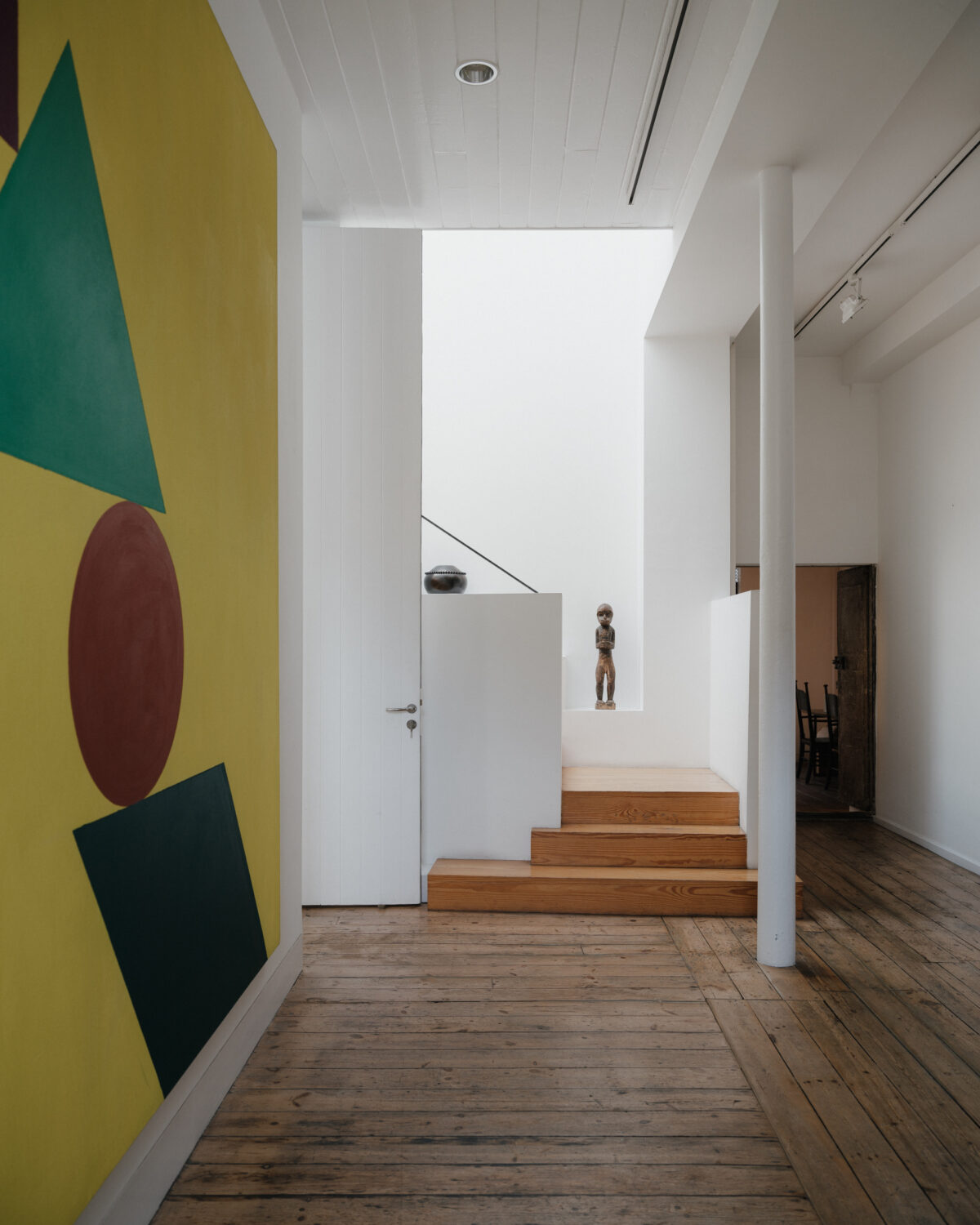
Paul’s paintings, they agreed, would inform much of the design. Practically, that meant first of all a studio with enough natural light. “MJ was a past master at putting light into rooms,” Susie says, showing me where, over what had been a “rickety old staircase” splitting the building into two halves, Long brightened a new stairway with skylights, and cleverly borrowed some of that light for the studio below via a glazed opening running along one side of the stairs.
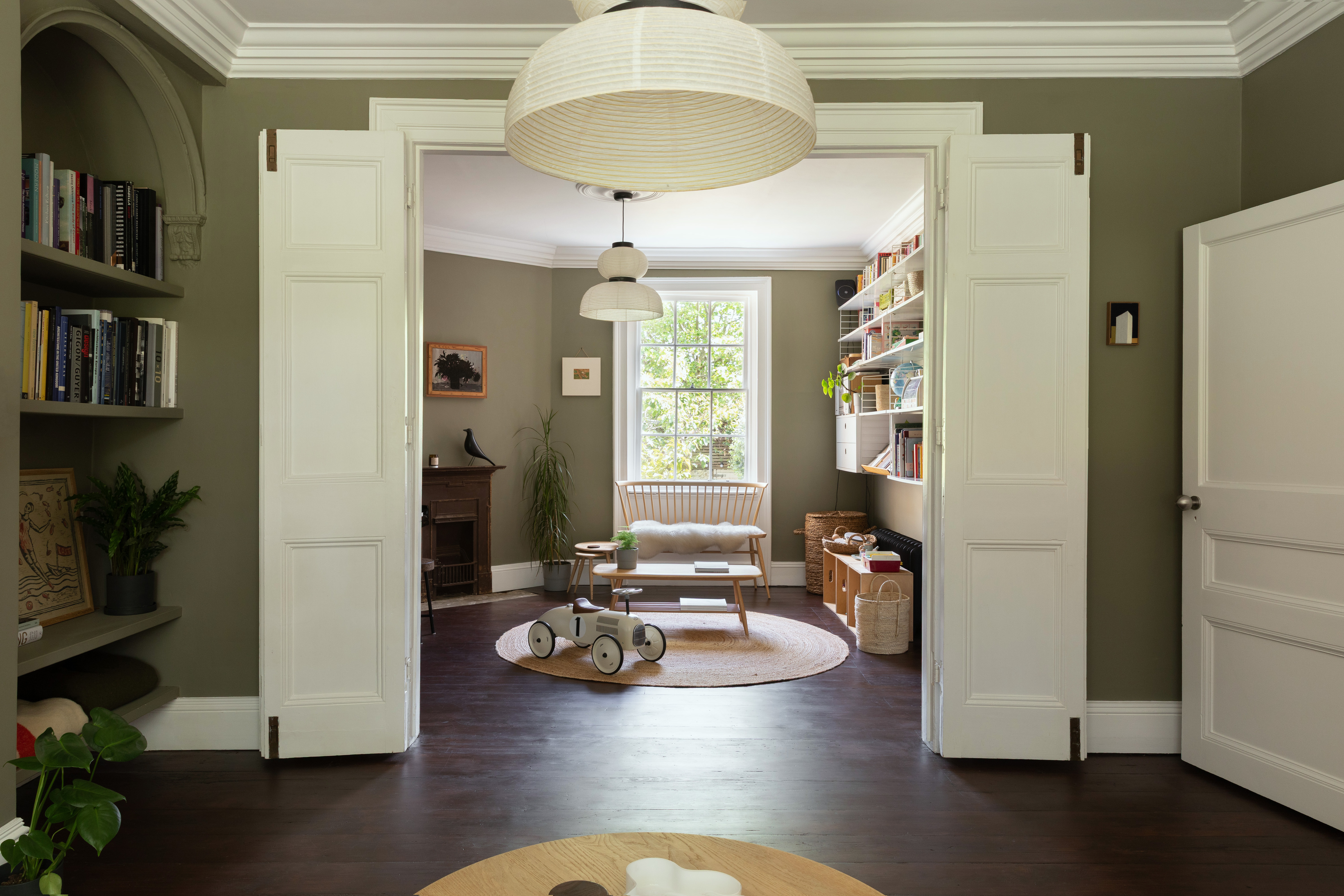
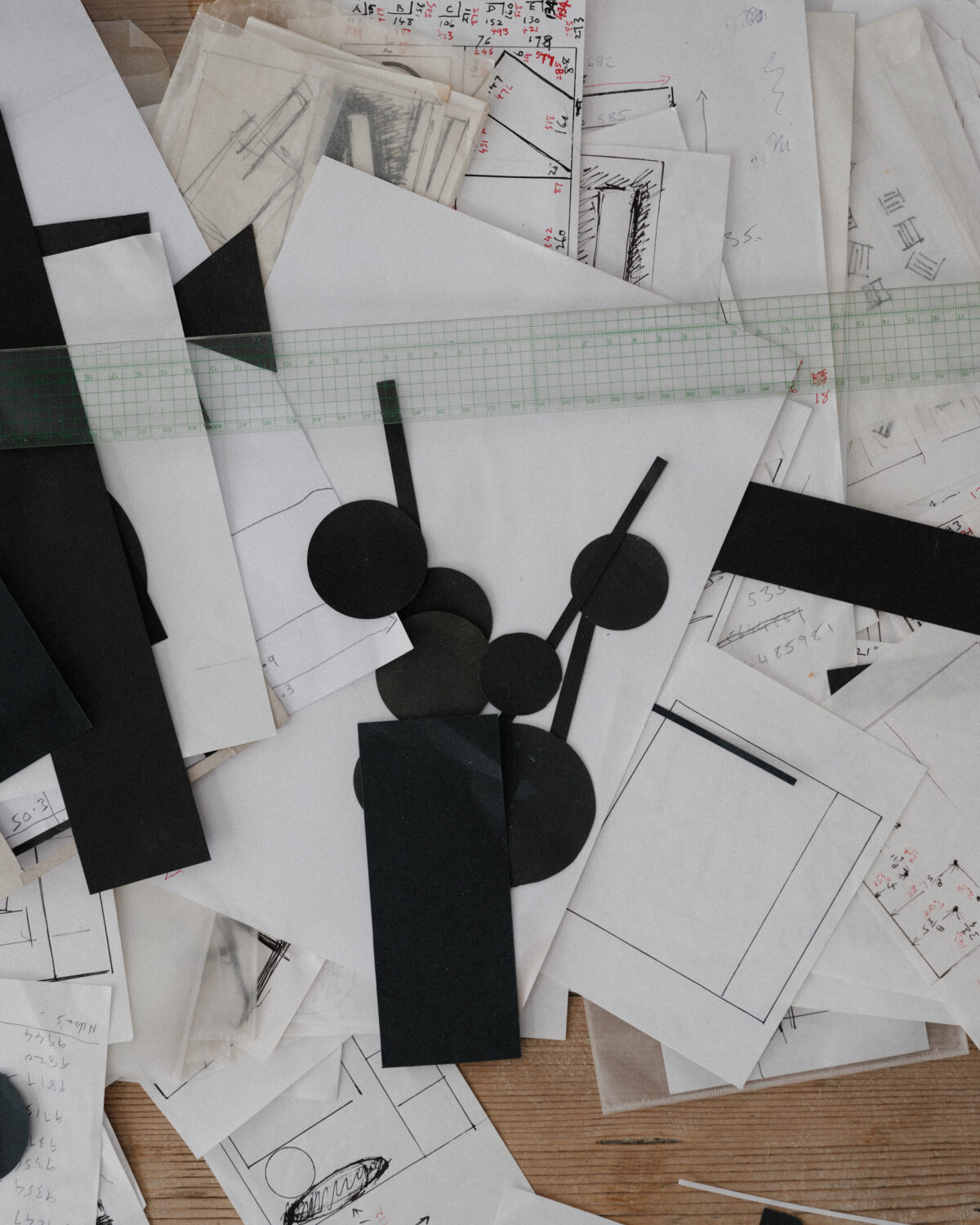
In the studio itself, whose main source of light comes from a row of windows facing the street, the largest canvases date from Paul’s formative time in New York in the 1960s. There, as well as befriending figures such as Lee Krasner, Robert Motherwell and Helen Frankenthaler, he rented a loft studio that allowed him to make vast, 9ft-squared paintings. His most recent ones, which he works up to in stages, starting with a notepad and pen, are not much smaller (though he can no longer flip them around like he used to, and is helped by his son Nelson, who works with him in the studio). Another practical note for Long, then: tall doors – and throughout the house, so that the paintings could be displayed and rotated as desired. “That’s been the joy of living here,” Paul says. “Previous places I have lived – an Edwardian house, for instance – I tried to hang my own work on the wall occasionally and didn’t like doing so. There was a division between work and home. Only when I moved here could I happily put paintings on the wall that looked right to me.”
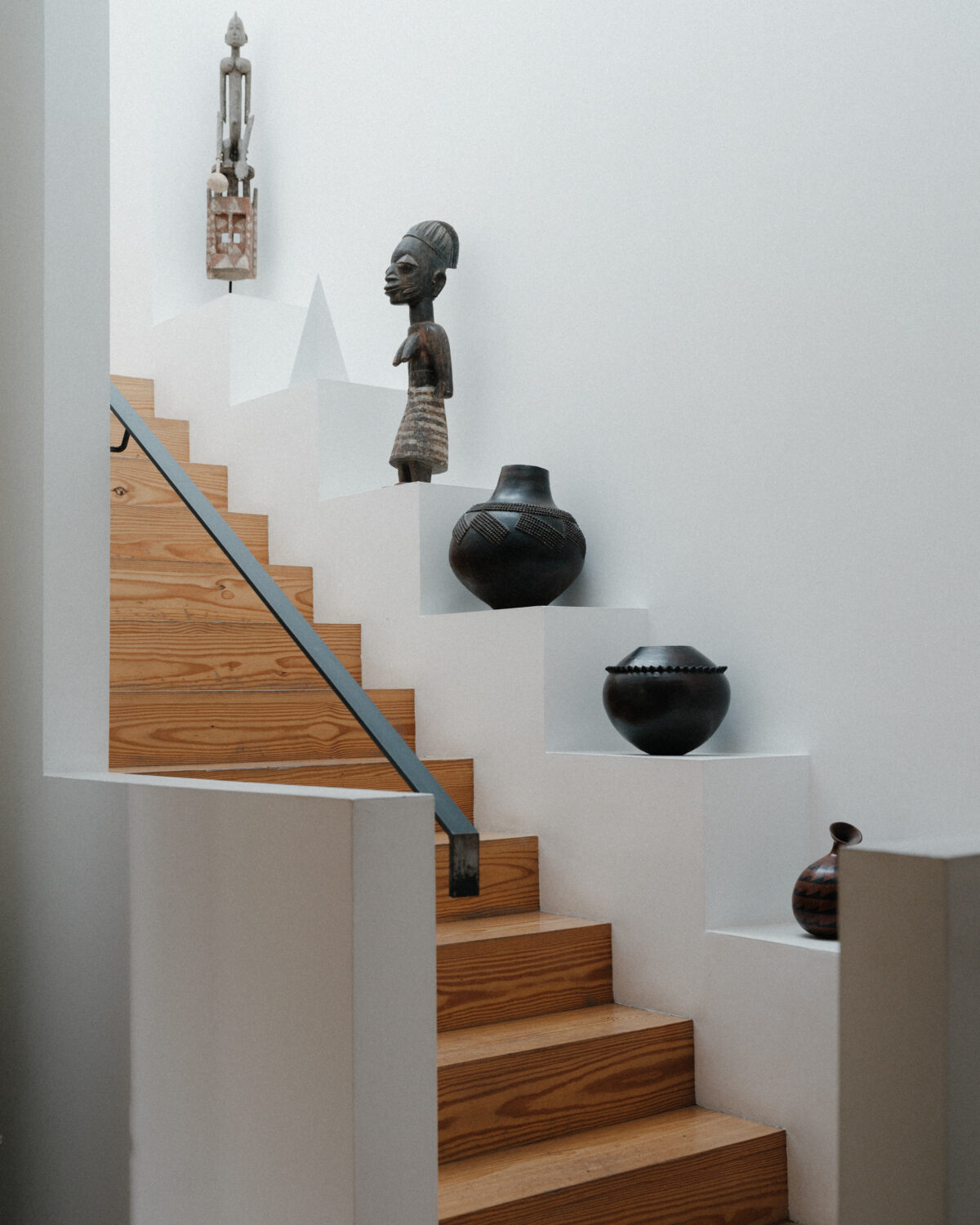
The fact that Long was, with Wilson, a great collector of 20th-century British art can’t have hurt. (Their collection is now held by Pallant House Gallery, whose 2006 extension the couple designed with Long’s architectural partner, Rolfe Kentish – and where, in 2001, Paul inaugurated the tradition of a temporary installation on the gallery’s staircase.) One of Long’s architectural flourishes in the house is a ziggurat-like feature running up alongside the stairs, which makes a good display for Paul and Susie’s African sculptures, but also nods to the pronounced geometrical elements in Paul’s paintings.
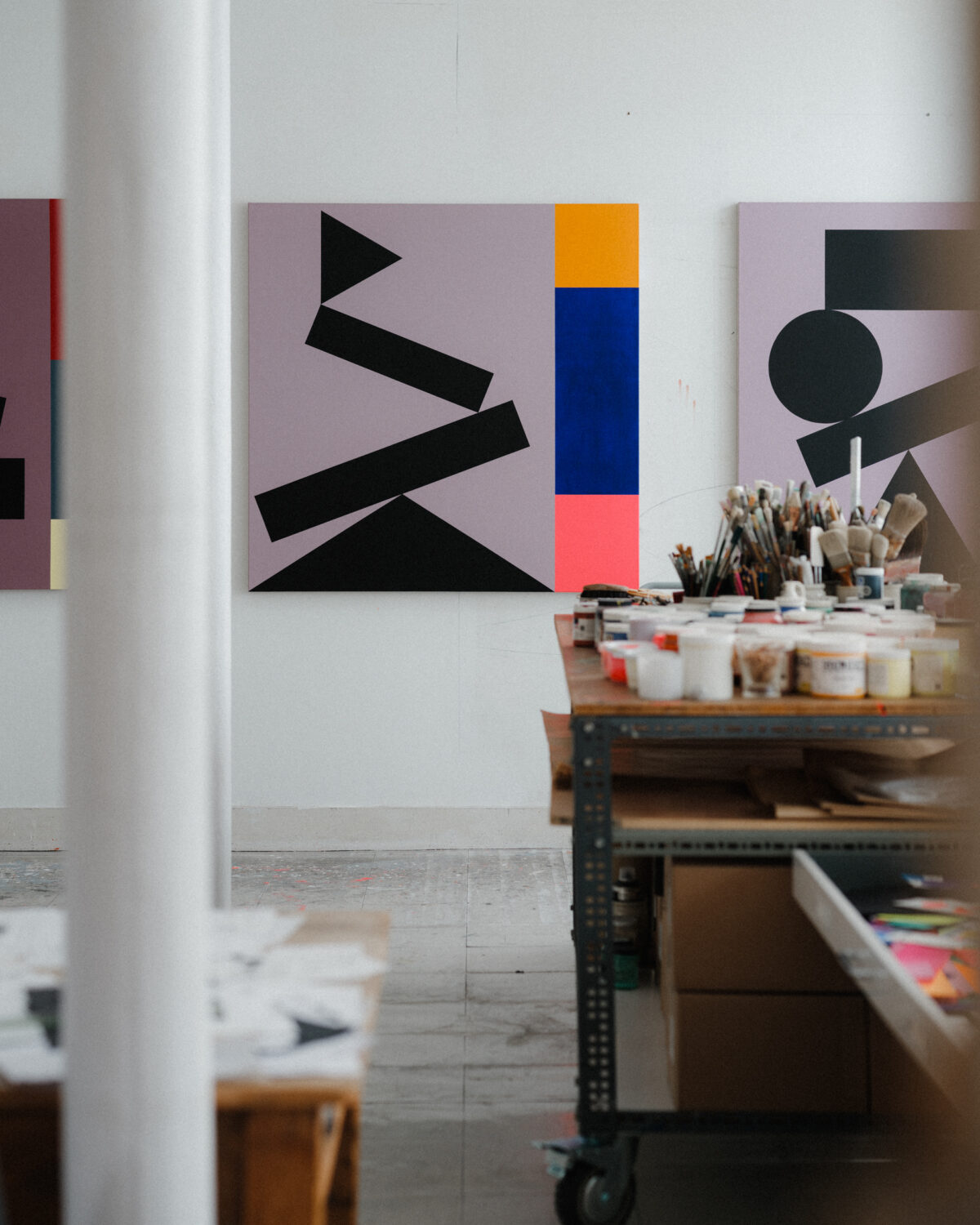
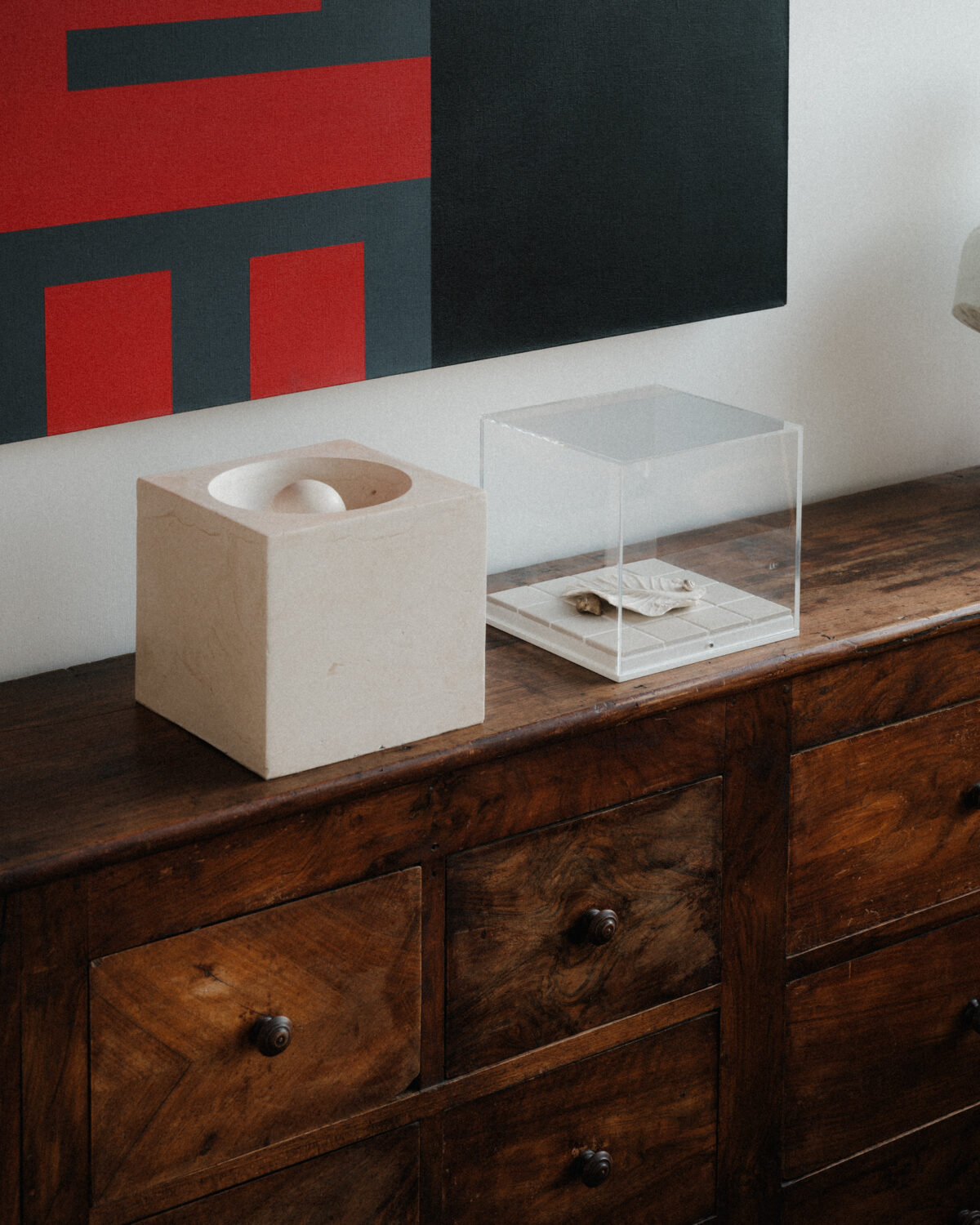
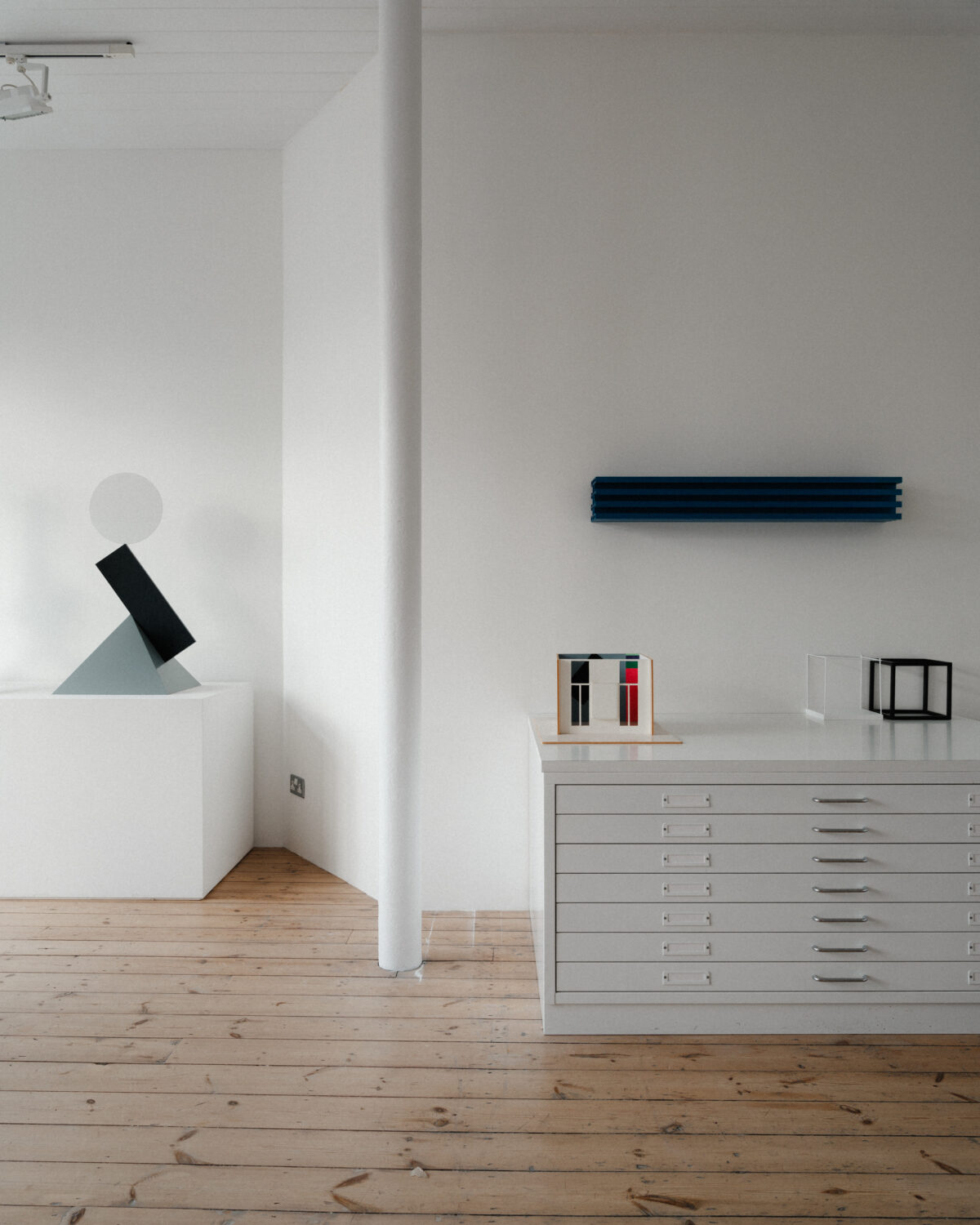
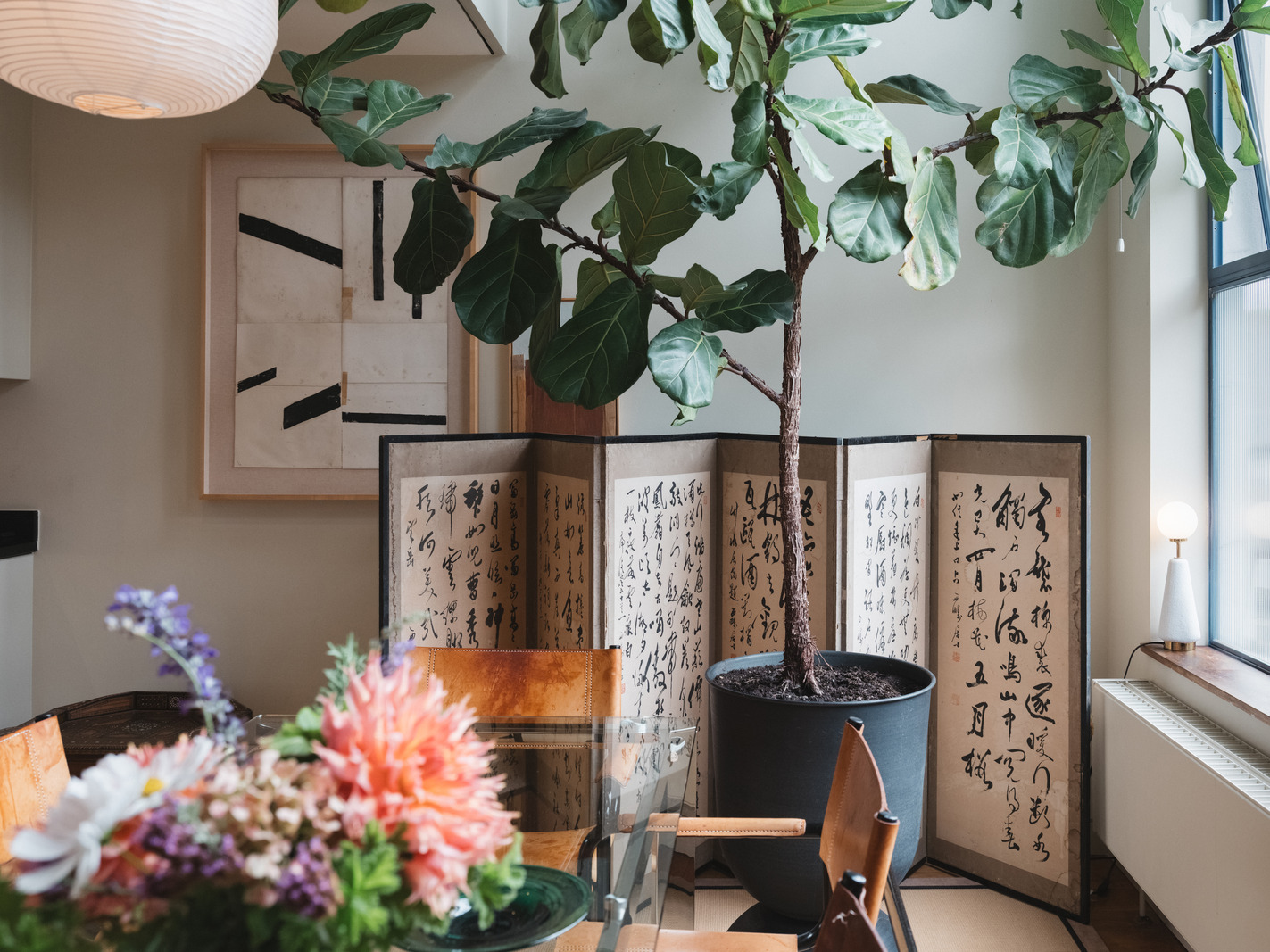
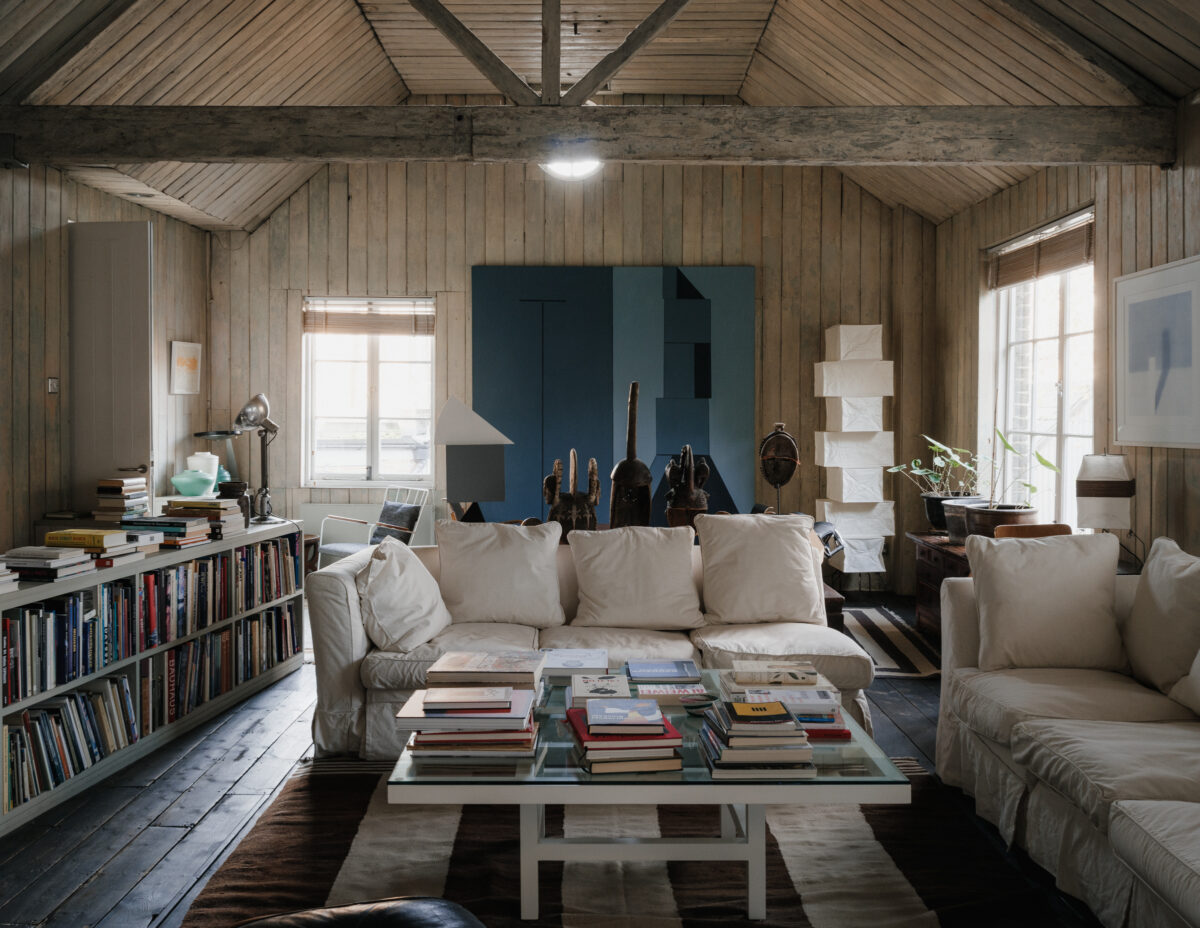
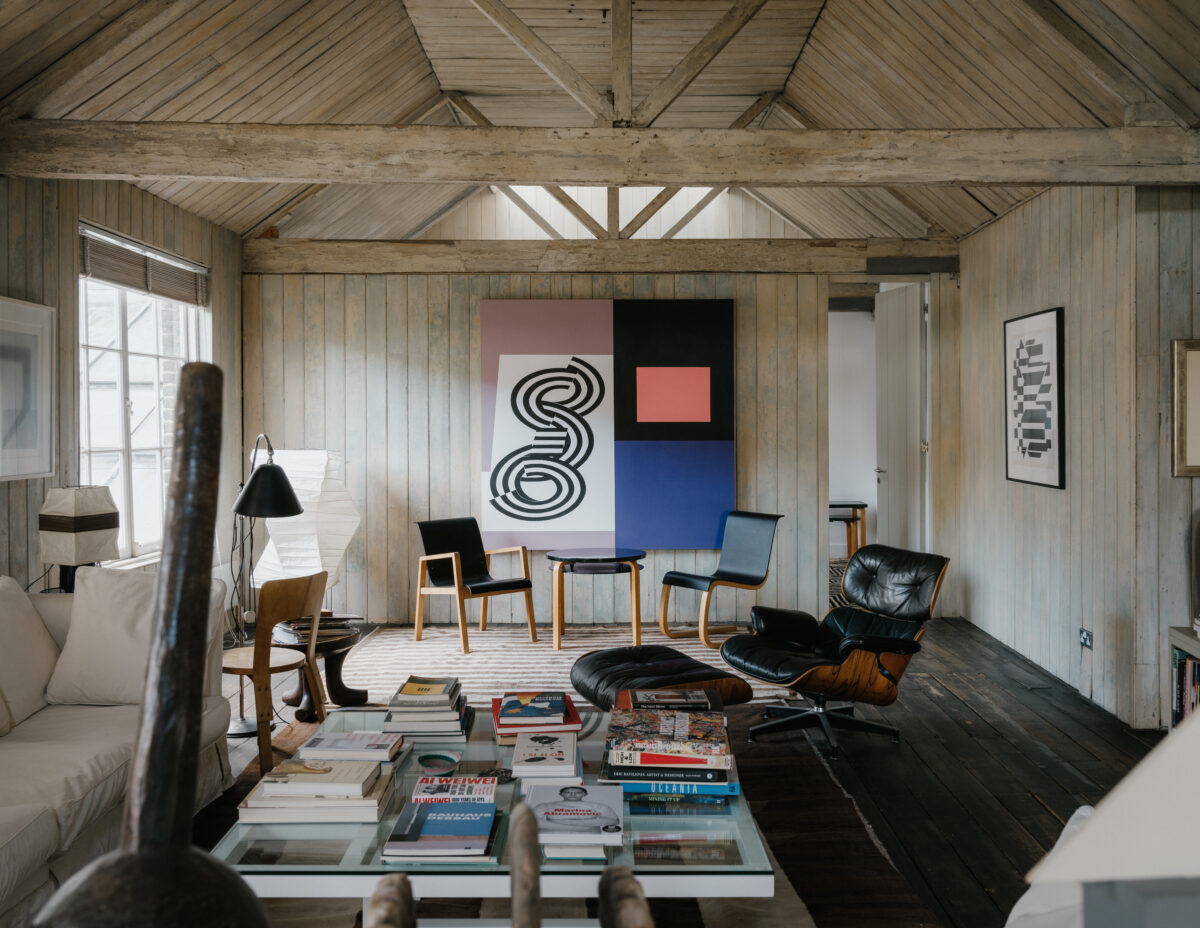
And if the architecture here is harmonious with Paul’s work, the pair in turn enjoy arranging objects and furniture to chime with the art on the walls. Up in the sitting room – a late Georgian part of the building that has the feel of a boathouse – the stacked cubes of a Noguchi floor lamp echo the forms in a 1978 blue-and-grey painting by Paul nearby. Meanwhile, the bold stripes of the room’s rugs pick up the graphic concentric semicircles of a 2001 painting from his Proteus series at the other end of the room. “We like playing with things,” Paul says. “We switch things around a lot in this house.”
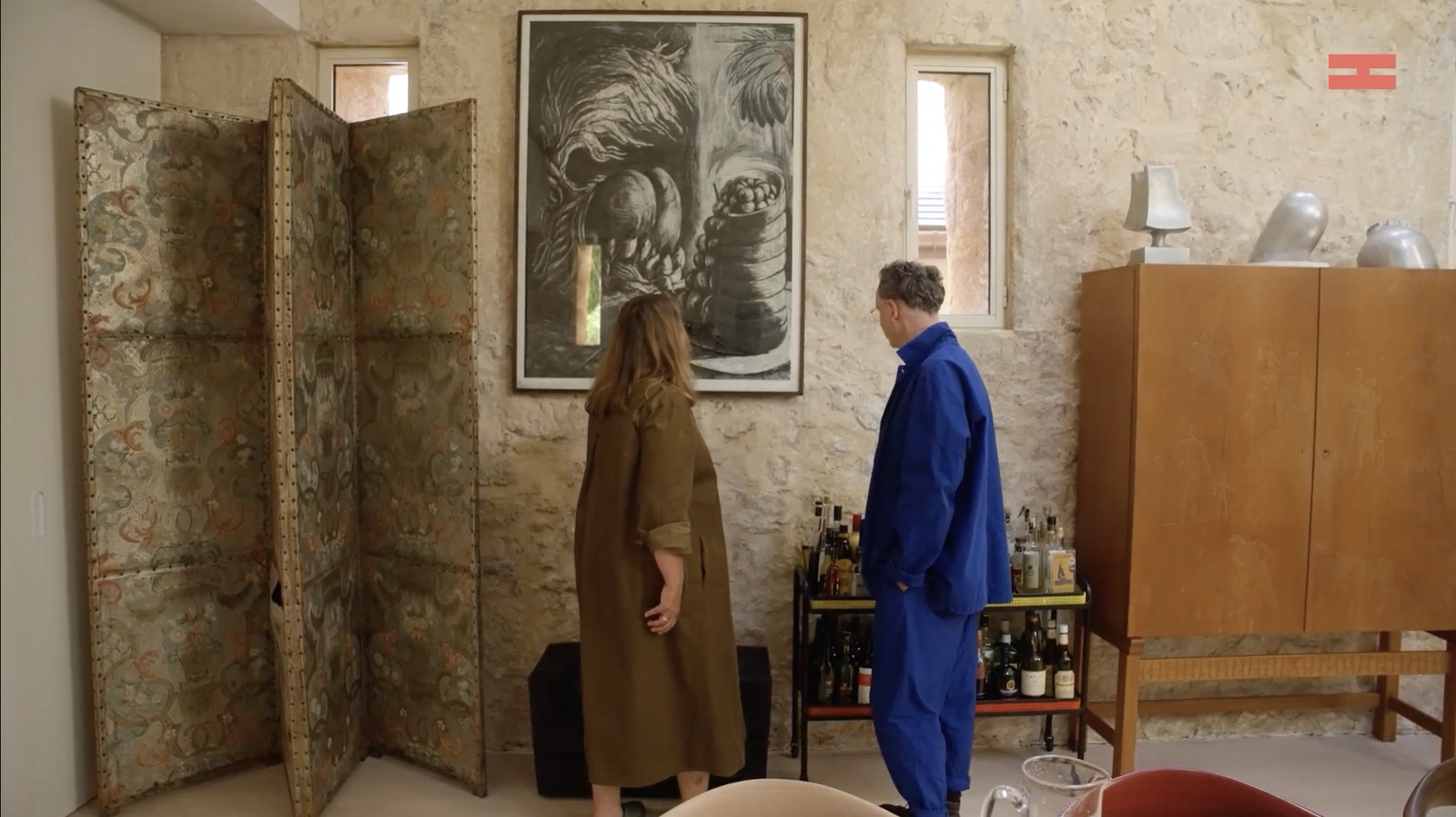
While there are some fairly “serious” pieces here – a Sol LeWitt coffee table, for instance, a rare lithograph by Picasso, even a Donald Judd wall sculpture – Susie insists: “We don’t think of ourselves as collectors at all, but we do enjoy finding things.” Much of the Aalto furniture they own, she says, was “picked up in markets. This one somebody didn’t know what they had, we couldn’t believe it.” Similarly, Susie bought her first Keith Murray vase at a boot fair in Scotland as a teenager. “I got it for about 50p – then when Paul and I started liking them much later I said, ‘I’m sure I’ve got something like this somewhere…’”
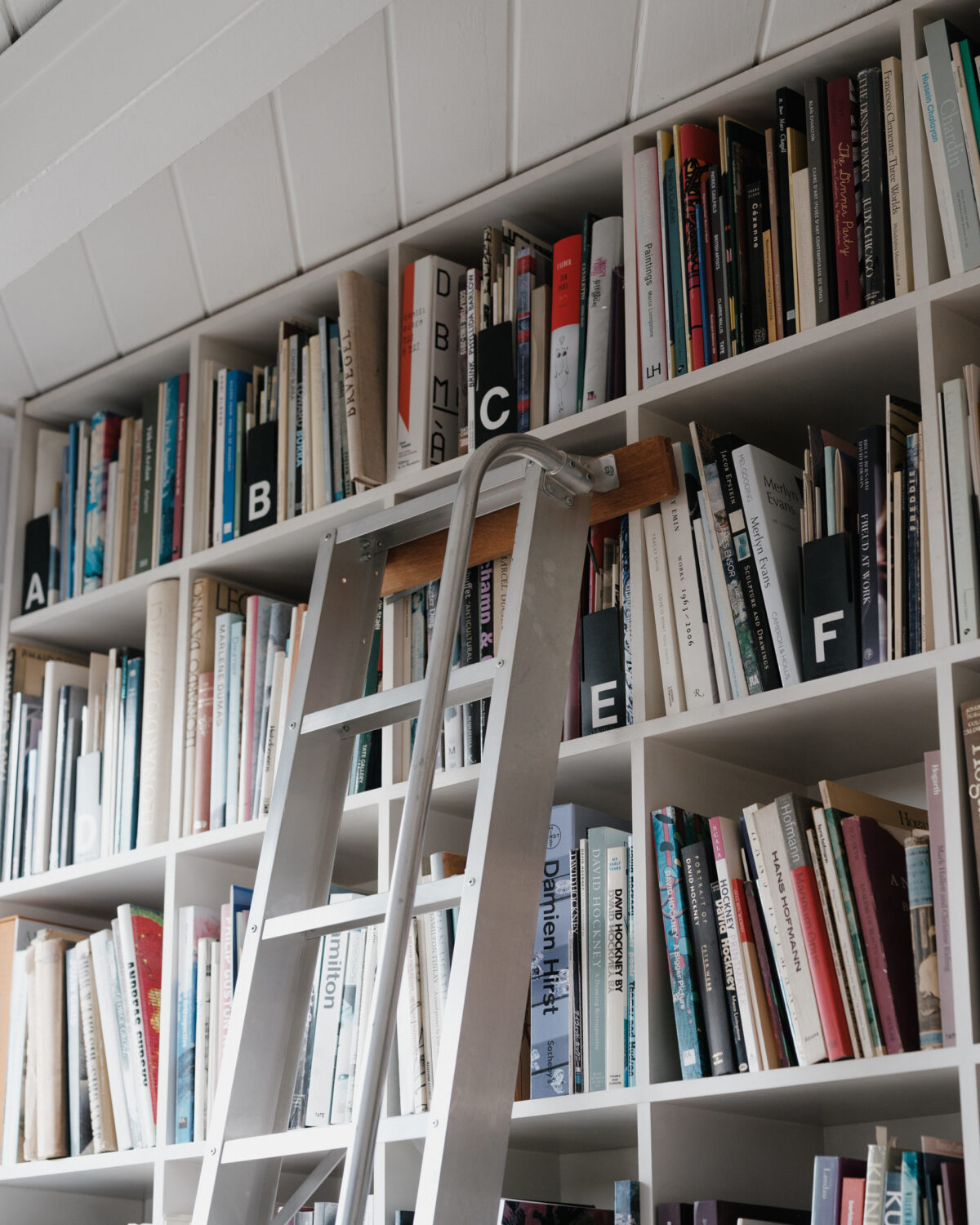
At the top of the stairs, Susie’s library is a repository for more playful finds, from a miniature version of the Jeff Koons Puppy to toy robots and a little ceramic monkey (“We’re huge fans of the boot fair in Chiswick”). Here, too, are small-scale works by Peter Doig, Terry Frost, Vanessa Jackson, David Nash, and others. “I love working here,” Susie says, “though I have to be careful not to just spend my time gazing at the books.”
There seems little risk of that, with Susie kept busy by Artwise, the curatorial practice she founded in 1996 with Laura Culpan. Back in the kitchen, she shows me a minimalist piece that will be included in the selling exhibition ‘Cure3’ at Bonhams in February, which, to raise money for Cure Parkinson’s, invites artists to make original work incorporating a 20cm3 Perspex box. “It’s by a recent graduate, Georgia Boardman,” Susie enthuses, “she’s the youngest artist we’ve ever had in the exhibition.” Nearby are two other boxes in neat conversation with each other: one by Paul, who has transposed the precariously balanced shapes that appear in many of his paintings into three dimensions within the Perspex cube; and one by his old studio mate Phillip King, who deployed Yves Klein blue and his signature conical motif to dazzling effect within the contained space. “I was so excited when that didn’t sell in a previous year,” Susie says, “I bought it for Paul.”
With Blake and Johnson still occupying their studios across the courtyard, the collective spirit in which this project came about three decades ago seems alive and well. “We had Paul’s 80th birthday party here a few years ago,” Susie says, “about 250 people, and spilling into Ben’s studio too. This was always meant to be a fun place to live and work.” It certainly seems to have fulfilled that promise.