Cocktails, cats and dinner parties: a remarkable Peter Aldington-designed house, now for sale
February 25th, 2026
Words Sophie Sims
Photography French & Tye
“Peter was supposedly very hands-on while Diggs Field was being built,” says Heidi, the marvellous mid-century home’s most recent custodian, along with her husband, Andy, and their two “naughty” sausage dogs, Tetley and Marmite. It shows: the house embodies much of what his best-known project and family home, Turn End, does so well – not least an unfaltering connection with its acre-strong garden. Now for sale, Heidi and Andy reflect on their time in the house, from a years-in-the-making chance encounter, to pottery-making, birdwatching and stargazing on the regular.
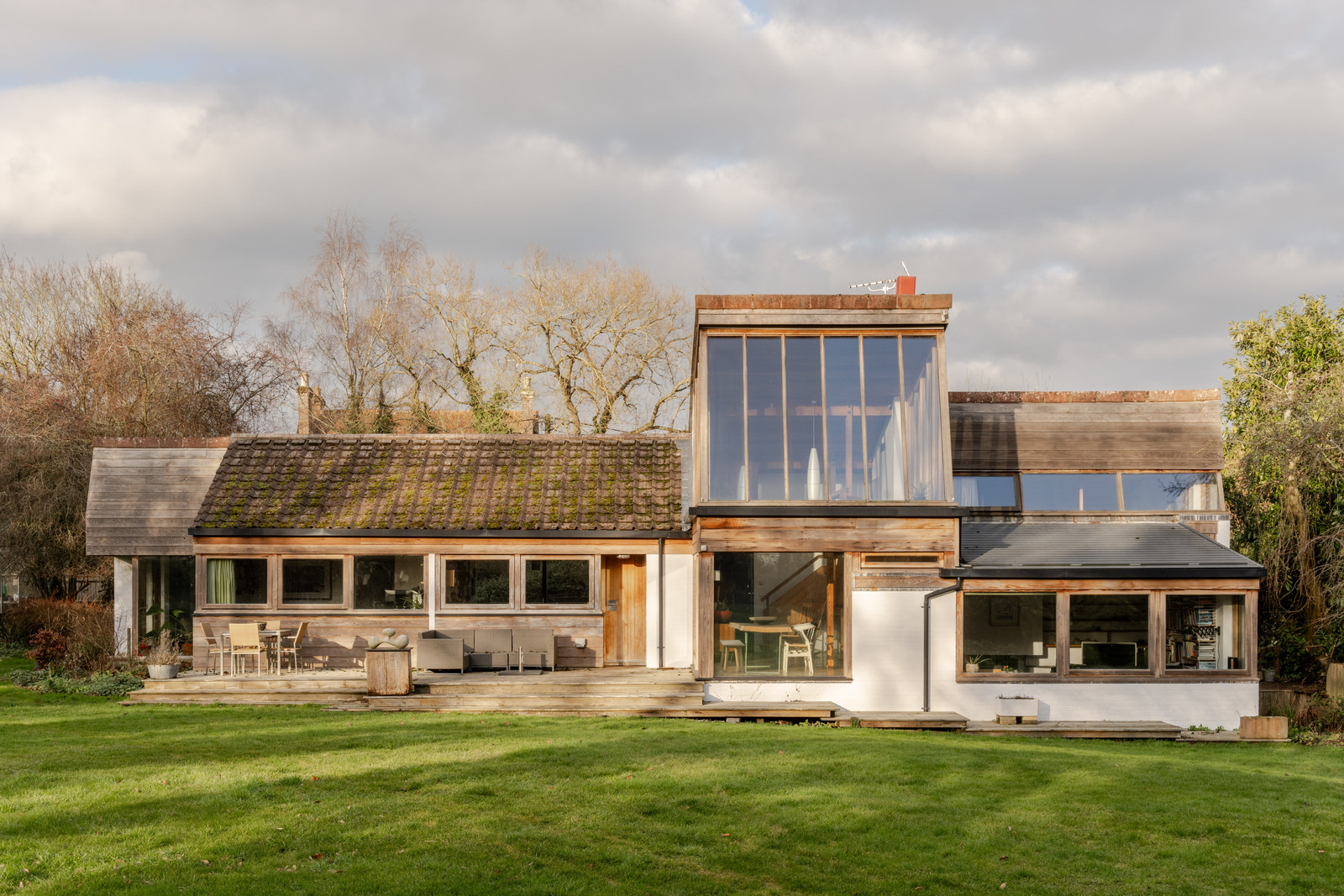
In 1967, Diana Alderson commissioned Diggs Field as a home to live in with Mr and Mrs Leslie, a couple she had lodged with during the second world war. Distinct areas were created for Alderson and the Leslies to live separately: “Her idea was that she would occupy one side, they’d occupy the other, and the kitchen and summer room would become a shared space. Part of the brief was that she wanted a house for small dinner parties of no more than six people, to accommodate some cats and some cocktail parties – I think it’s brilliant,” says Andy.
Diana spent the rest of her life at Diggs Field. It was decades later, in 2021, that Heidi and Andy came across it: partly by chance, partly by years of unintentional manifestation, if that’s possible. “When we did our first project, a coach house in north London, I kept coming across Peter’s work. When some of his houses came up for sale, we went to see them – which was very naughty as we couldn’t afford them. (I probably shouldn’t admit that …)
“Years later, we’d been looking at houses in Haddenham. The estate agent told us she had a house coming on in a few weeks’ time – she didn’t even say it was modernist, she just said there’s a house with an acre of garden. But I knew of this house before because I had all of Peter Aldington’s books. She said it was listed, but I had a feeling it wasn’t an old house. So I just asked outright, ‘Is it Diggs Field?’ She almost fell off her chair from shock, apparently.
“I said, we need to see it today. She spoke to the owners and we got in there in the afternoon. We literally bought the house after the viewing, when we were still sat on the driveway. It never went on the market! We went from living in London, where we had a stamp of garden, to an acre of outdoor space here.”
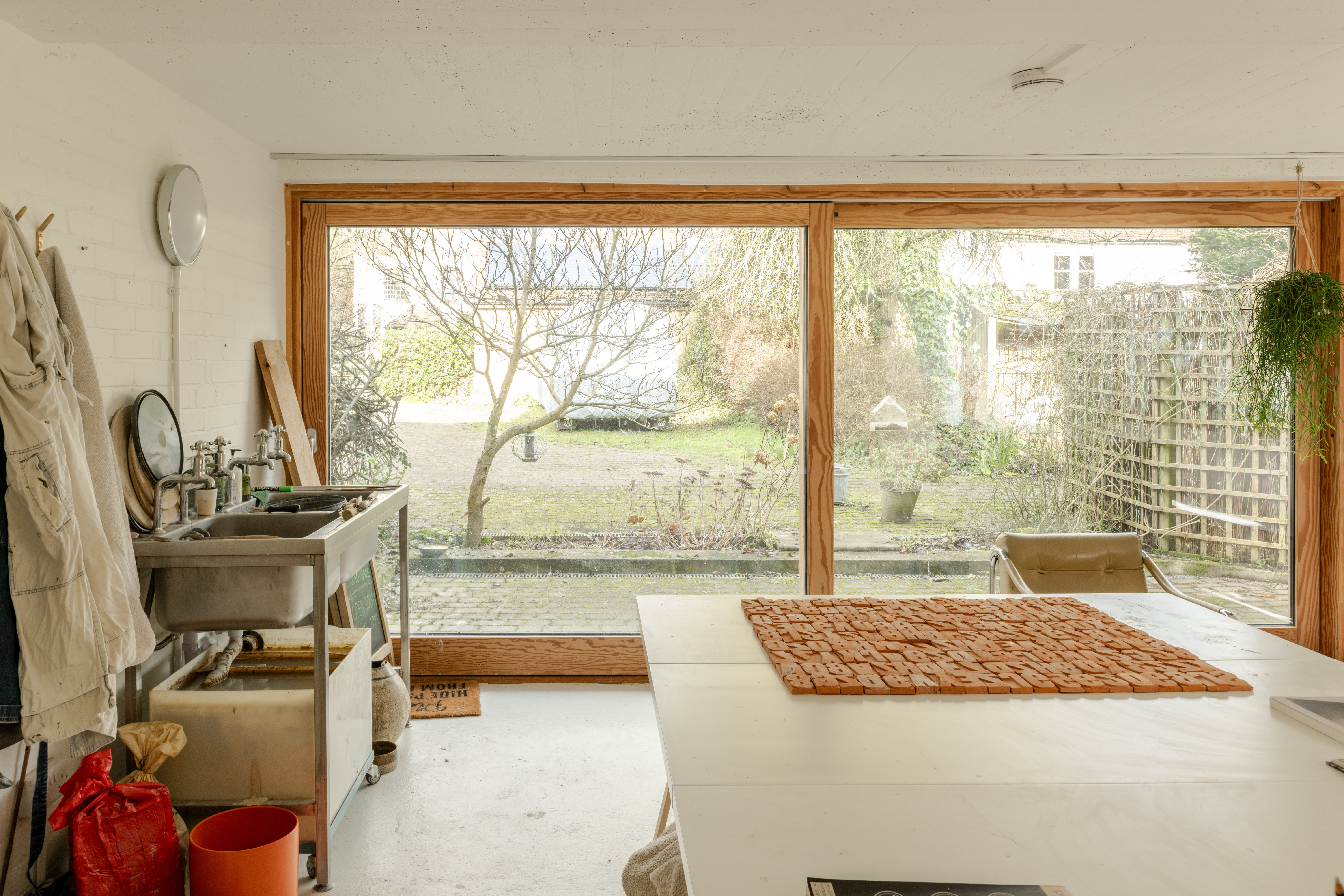
The move was partly fuelled by the need for more space, particularly for Heidi’s blossoming ceramic work. Her early career had been spent as a graphic designer, which led her to the BBC and, later, the Canary Islands. When she moved back to the UK, she had every intention of doing a photography degree, but was waylaid by interior design requests. “After our first renovation project, people kept asking me to do their kitchens and bathrooms. At the same time, I was having pottery lessons from a neighbour, and later good friend of mine. It was always a hobby, until one day it took over. Here, there’s an outbuilding near the front gate where I’ve put my kilns; they run off the solar panels in the day.”
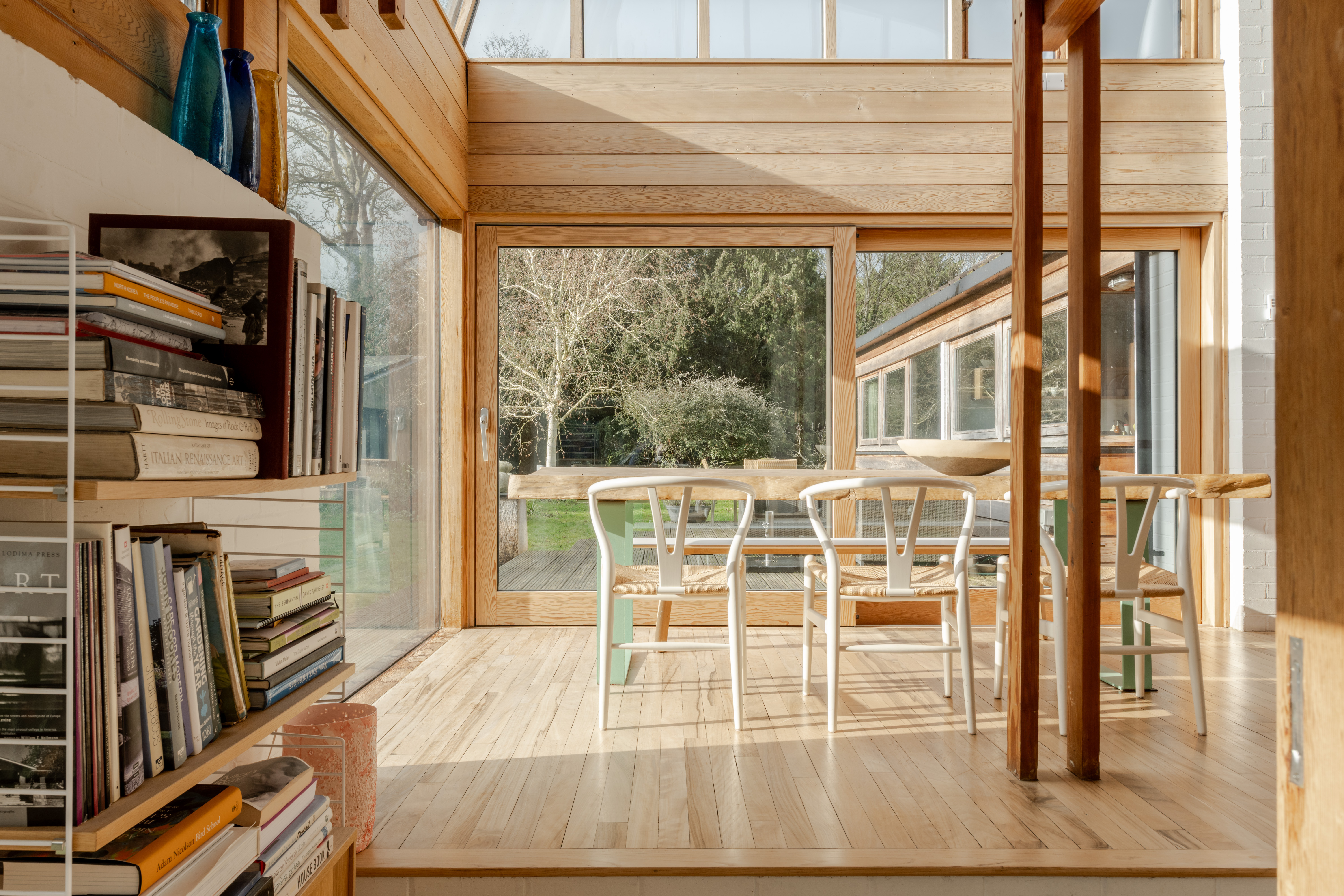
For a listed house, and one that upholds its mid-century character with such persuasiveness, Diggs Field is remarkably eco-conscious. The previous owners, with the help of architects 5th Studio, overhauled the house: “They spent nearly two years getting the planning permission in place to make it completely airtight – almost like a Passivhaus. They didn’t have an easy ride of it, though – they had to work within tight guidelines. But now it has triple glazing and underfloor heating – it’s so warm. It looks authentically 60s and performs better than most modern houses.”
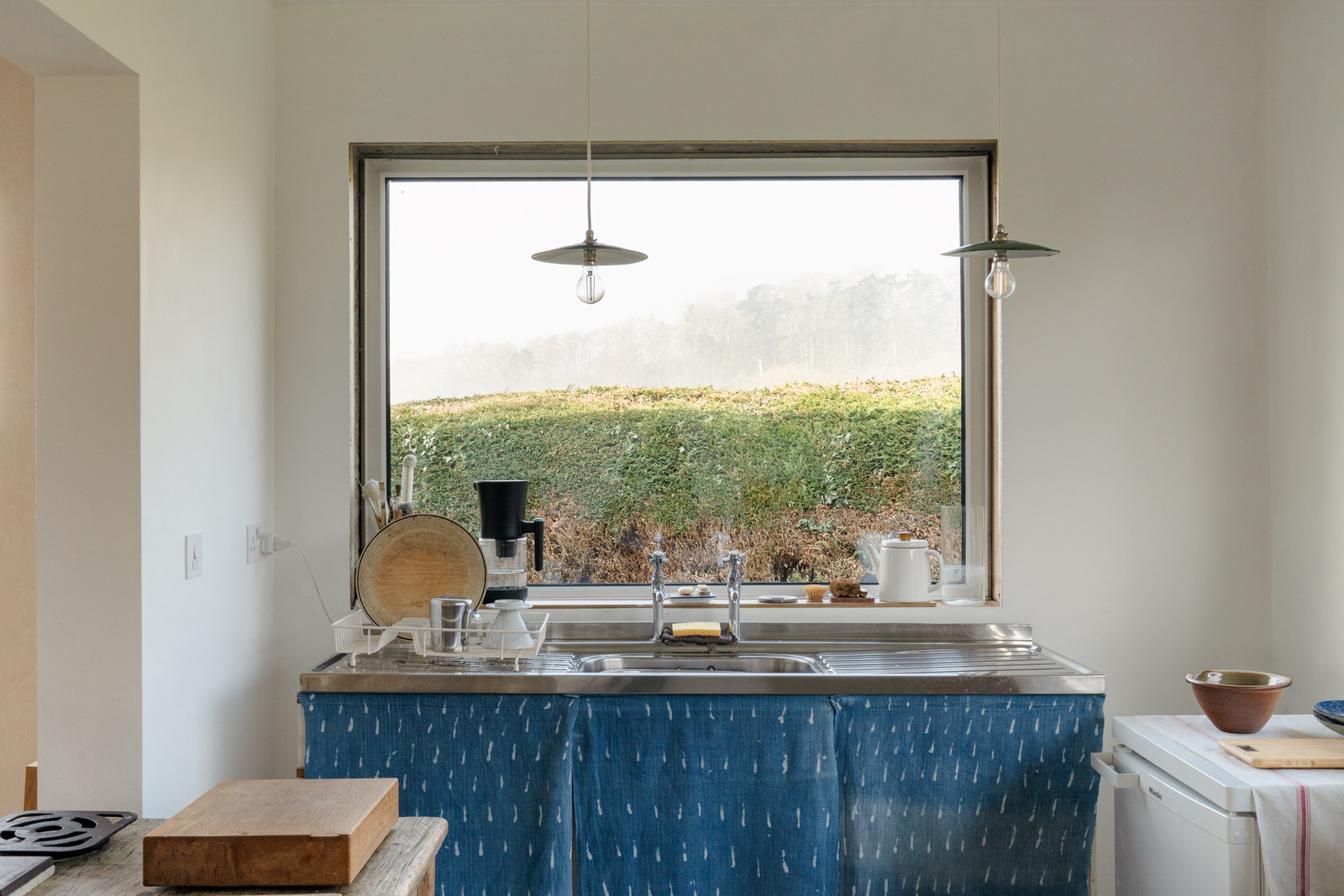
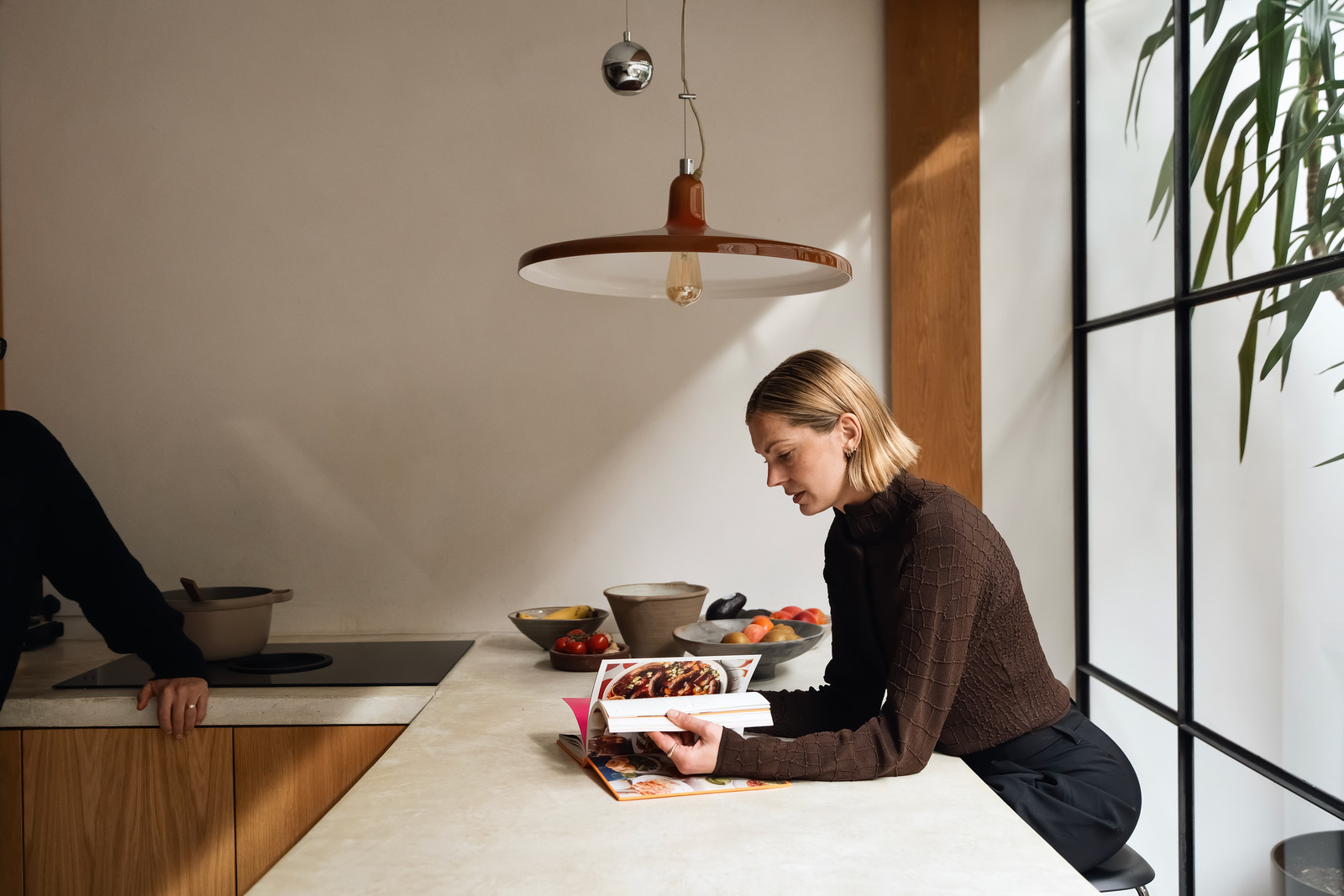
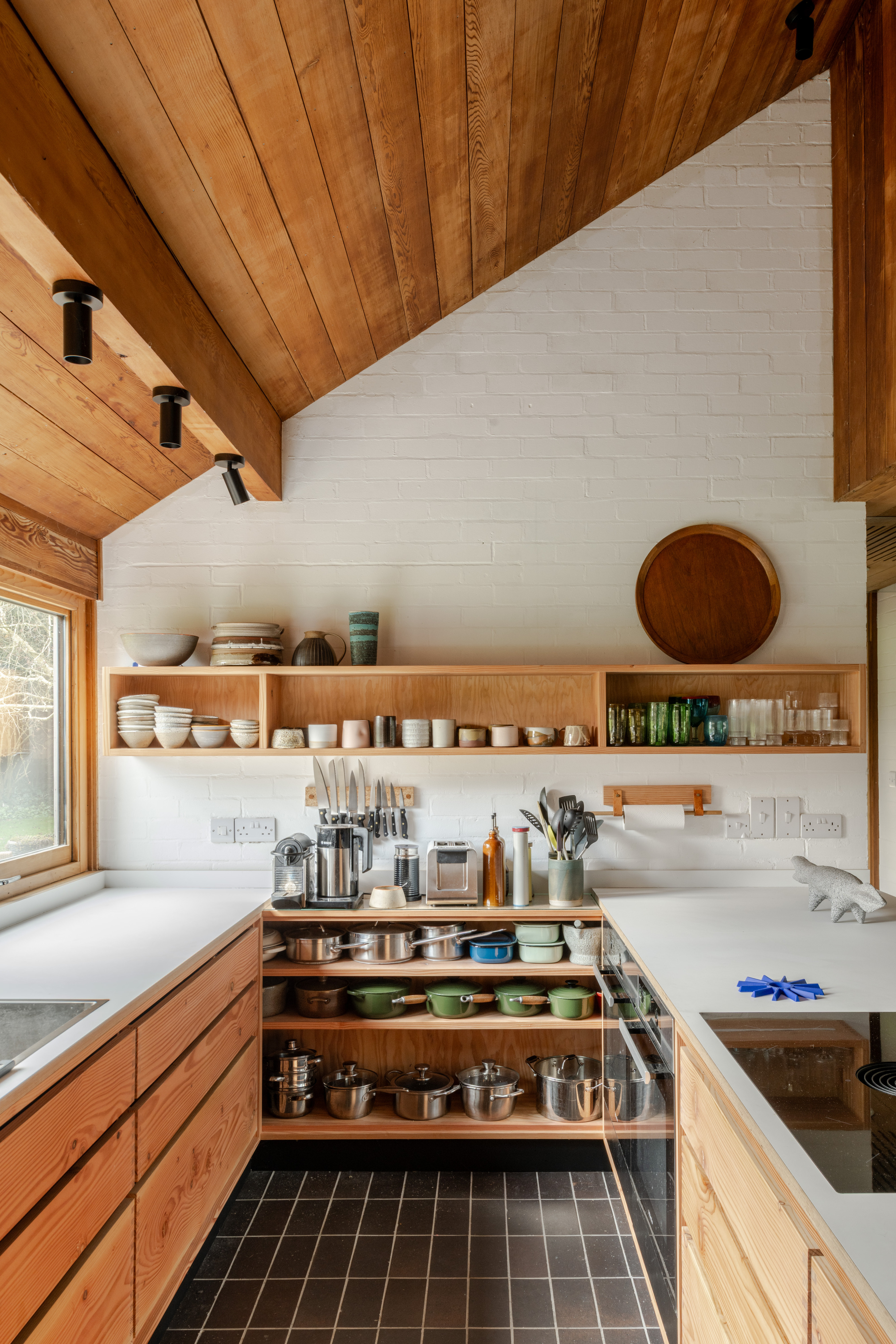
Thanks to this earlier set of works, when Heidi and Andy moved in there wasn’t much to do. They did, however, rejuvenate the kitchen: “We wanted a proper craftsman to do it. After searching, we found a guy in Wales who travelled to the house most mornings. He also reinstated a Formica countertop, the same style as Peter had added in the 60s. We also wanted to echo some of the amazing attention to detail seen elsewhere, so we added the same finger joints used on the staircase to the drawers. We’re really pleased with it – it’s an incredible kitchen – and we’d love to take it with us if we could.”
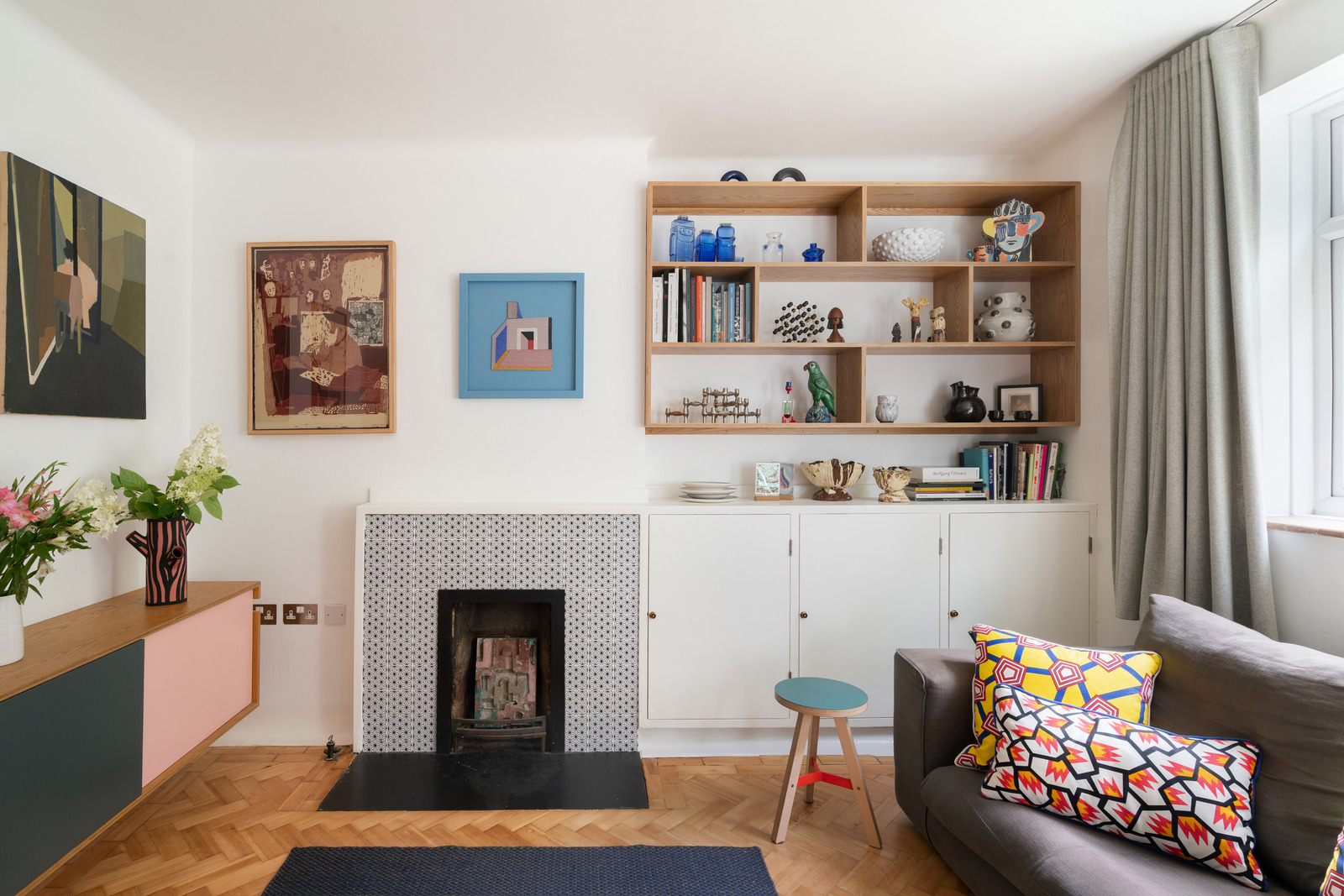
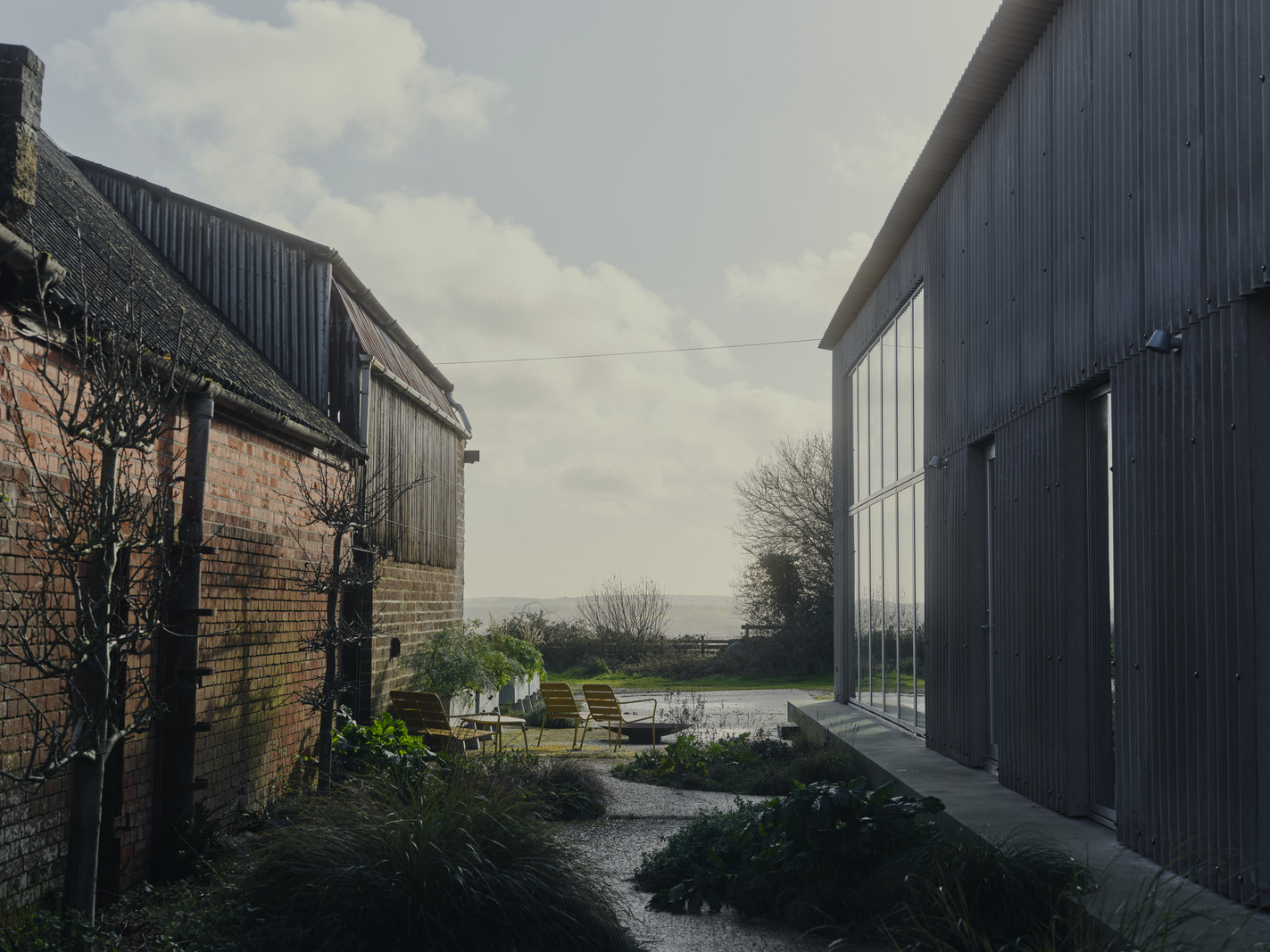
That the house was designed in such an idiosyncratic way, but has suited Heidi, Andy, Marmite and Tetley to a tee, is a testament to its adaptability. “It’s a very reconfigurable space: you can use the rooms for almost anything, really,” says Andy. Originally designed to have four bedrooms, the previous owners divided the largest bedroom into two, and added a self-contained annexe room in the garden – a peace-and-quiet retreat for visiting guests (or older children) amid a fringe of mature trees. The old garage was also converted into a living room that now serves as Heidi’s studio.
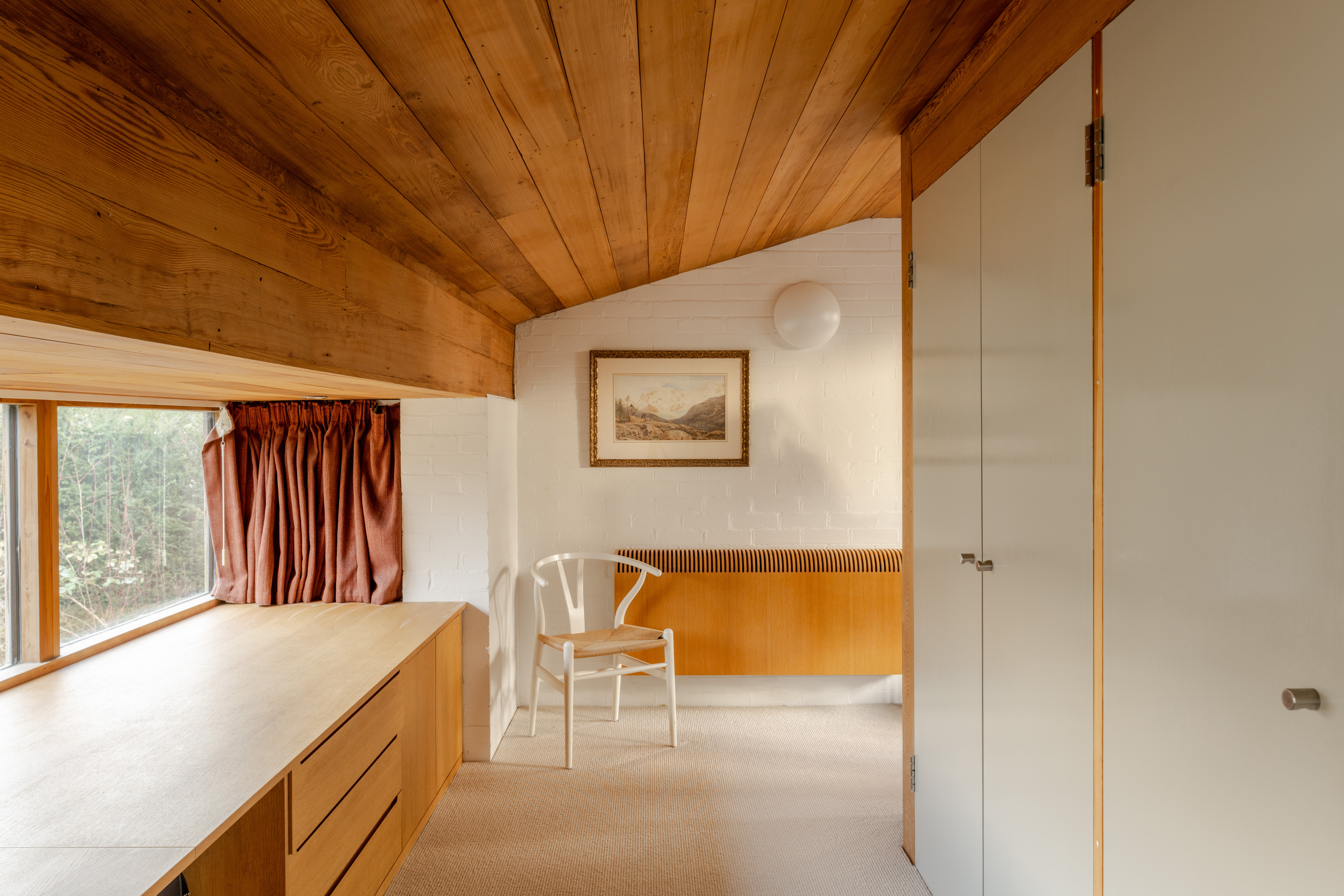
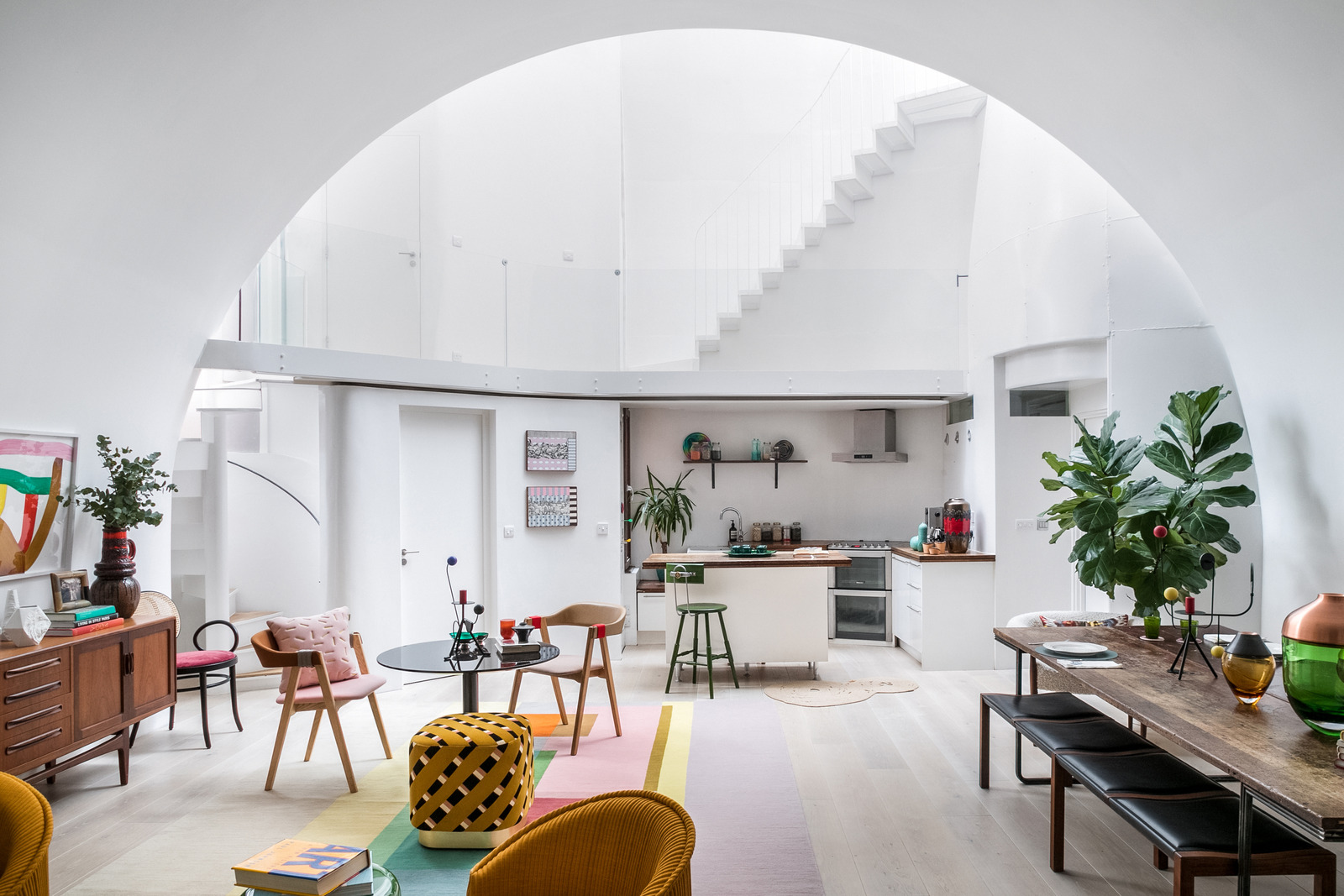
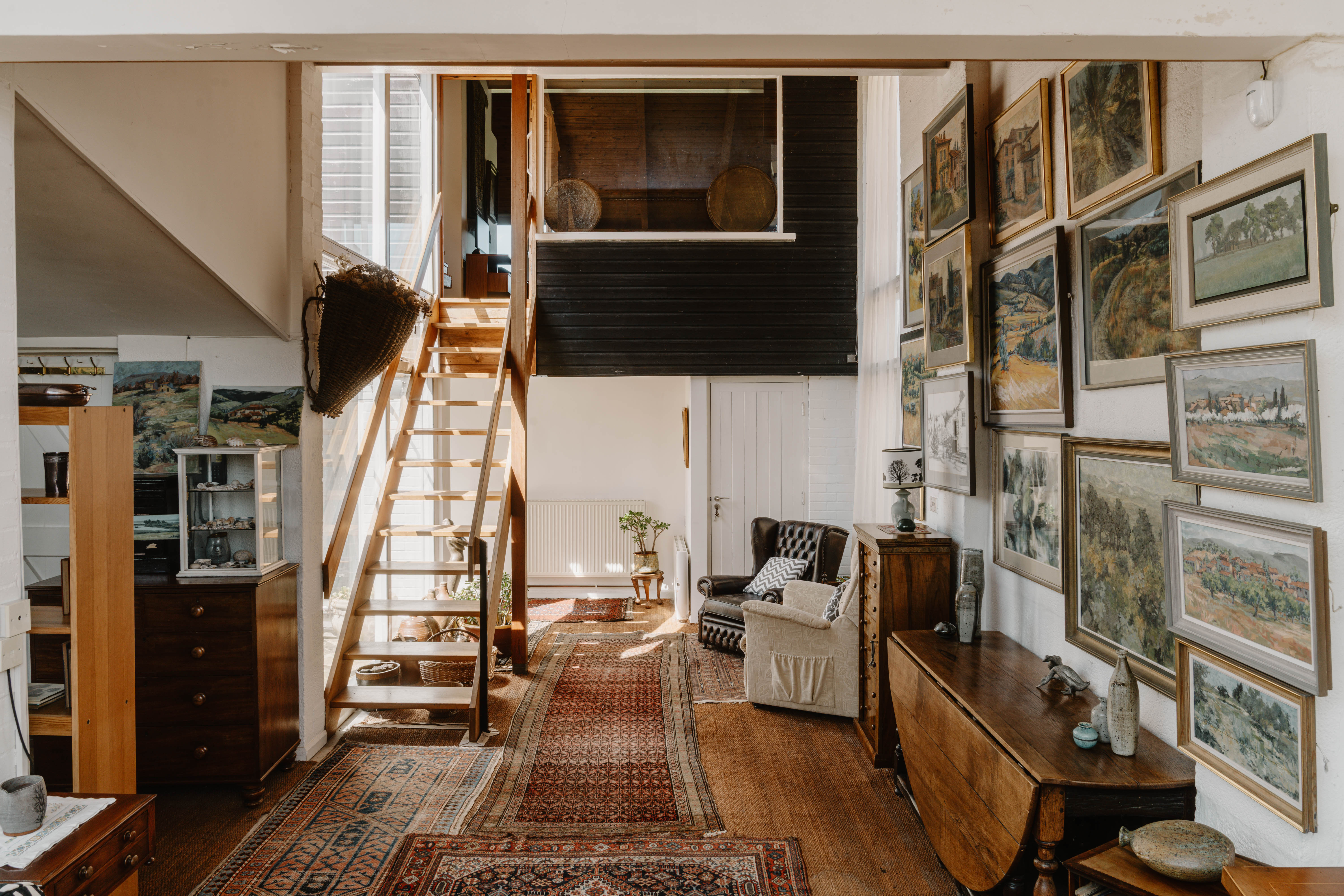
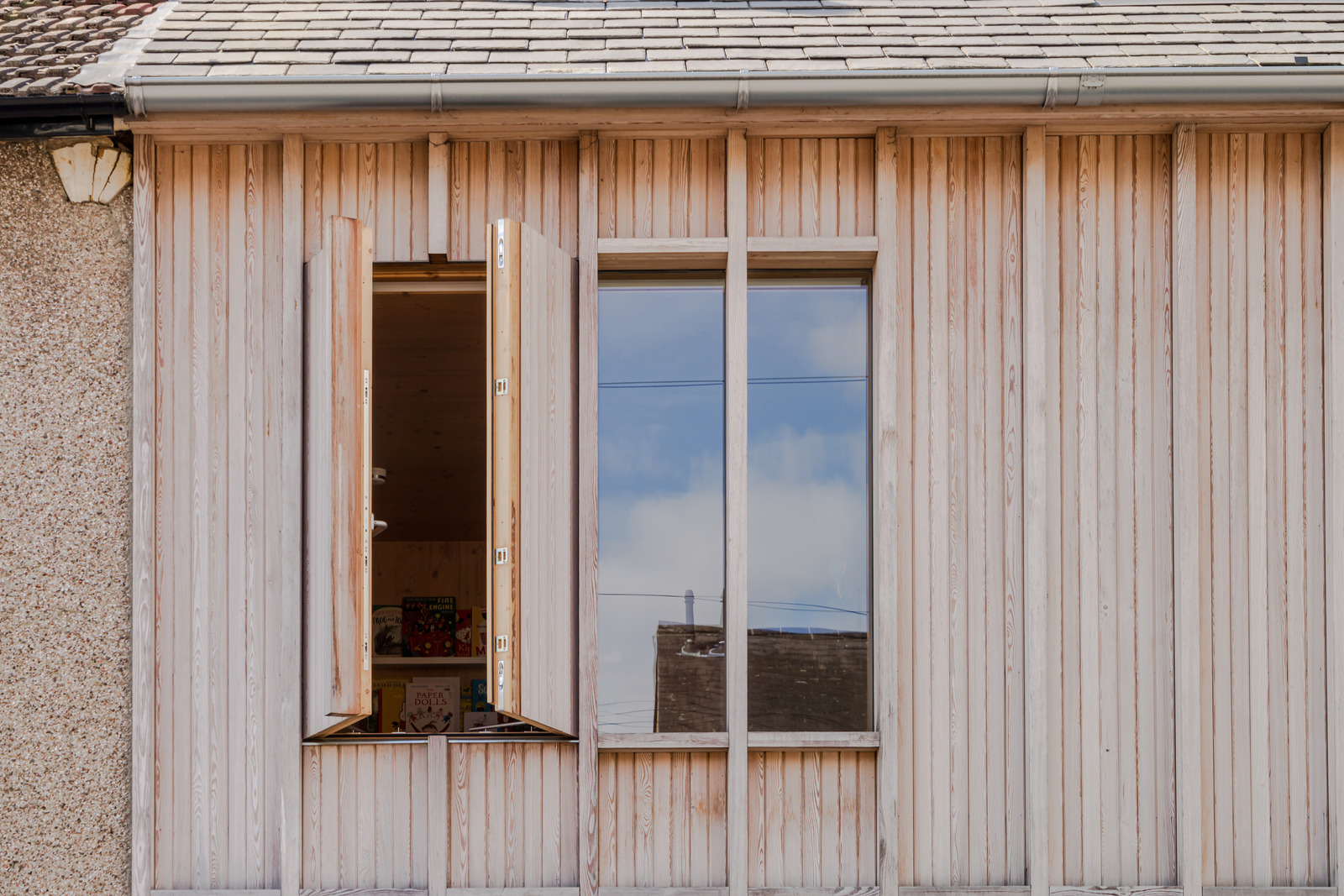
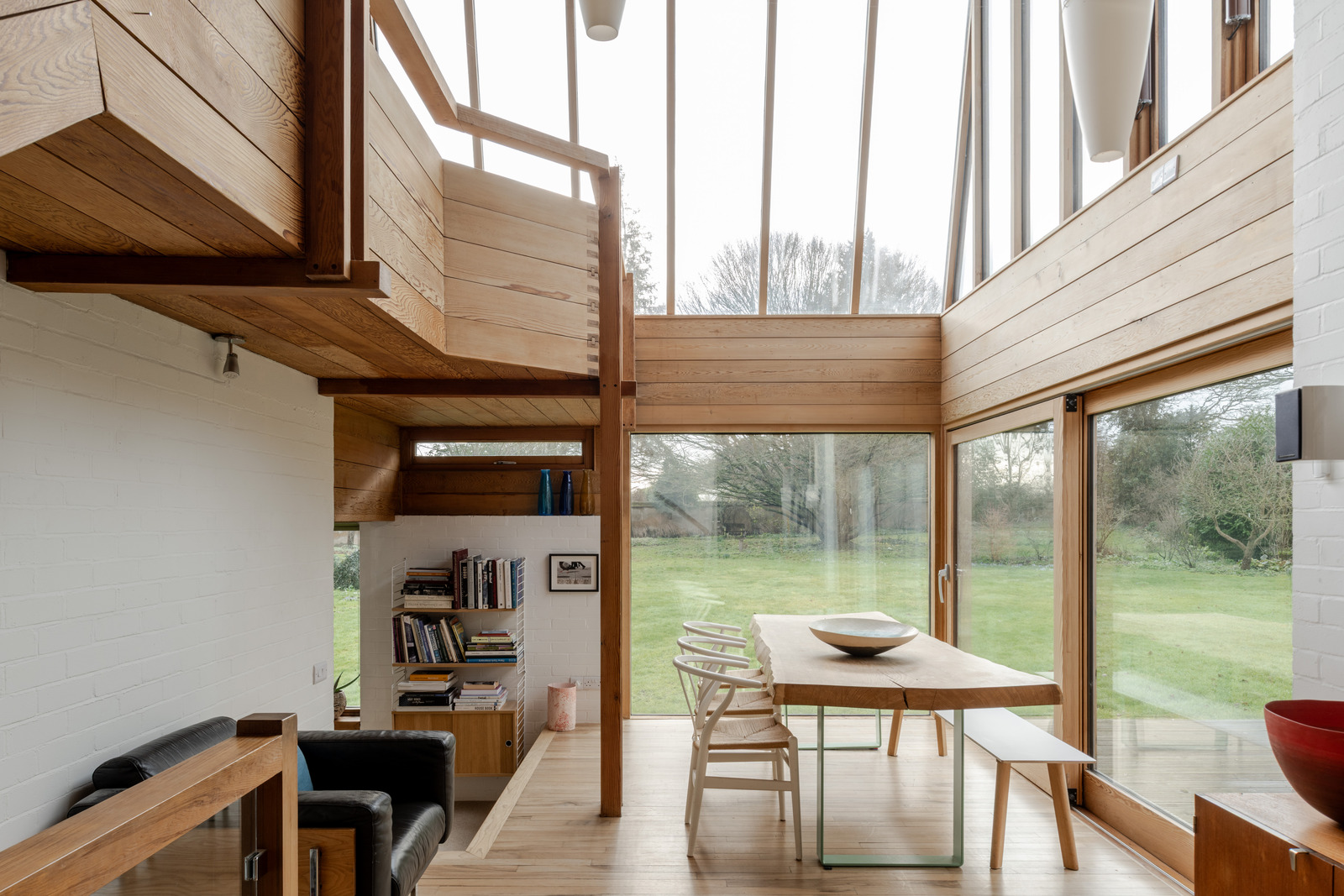
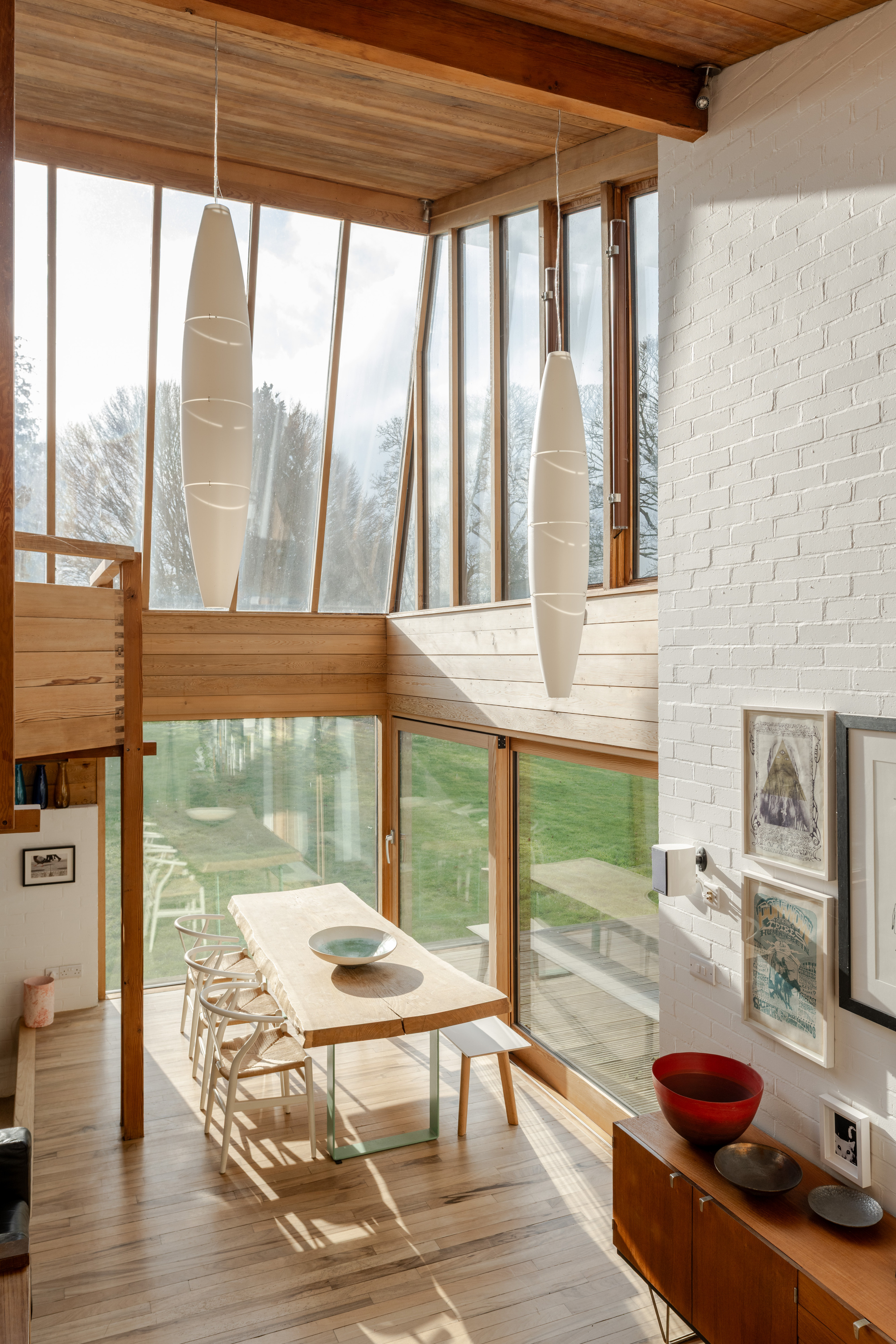
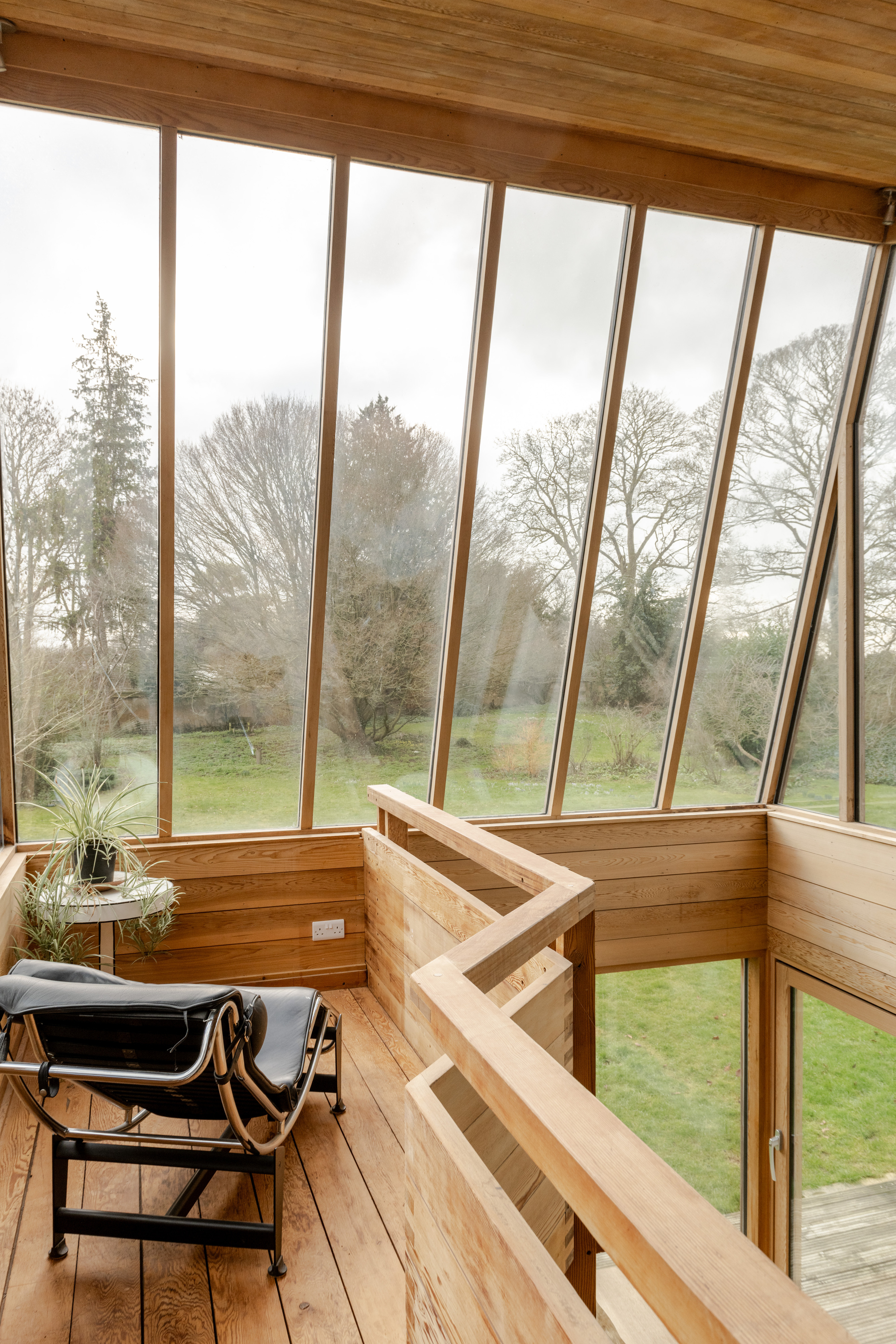
From the front façade, only a little of the home’s subsequent magic is given away – like its lateral design, and its motif-like combination of white paint and exposed timber. But it is decidedly mid-century, and unmistakably Peter Aldington – not least from the architect’s signature porch light, thought to have been made locally in Haddenham. It is this demure, low-lying profile that makes the entrance even more arresting, “very sort of Frank Lloyd Wright,” as Heidi puts it, where a low ceiling all of a sudden opens up, giving way to a double-height atrium. “The mezzanine here acts as a viewing point – Andy goes up there a lot and stargazes while listening to music,” says Heidi. Andy confirms: “When you stand up on the mezzanine at night, when it’s hammering down with rain, or there’s some lightning, it’s just so amazing.”
As much as the house is fixated on framing what extends above, it is also tethered inextricably to the surrounding greenery – an example of Aldington’s interweaving of indoor and outdoor space. “It’s really built around the garden. All of the windows face the outside – it’s sort of like looking out onto a nature reserve. Goodness knows how many types of birds you see in the day … woodpeckers, and red kites sometimes. At night, you can hear the owls.”
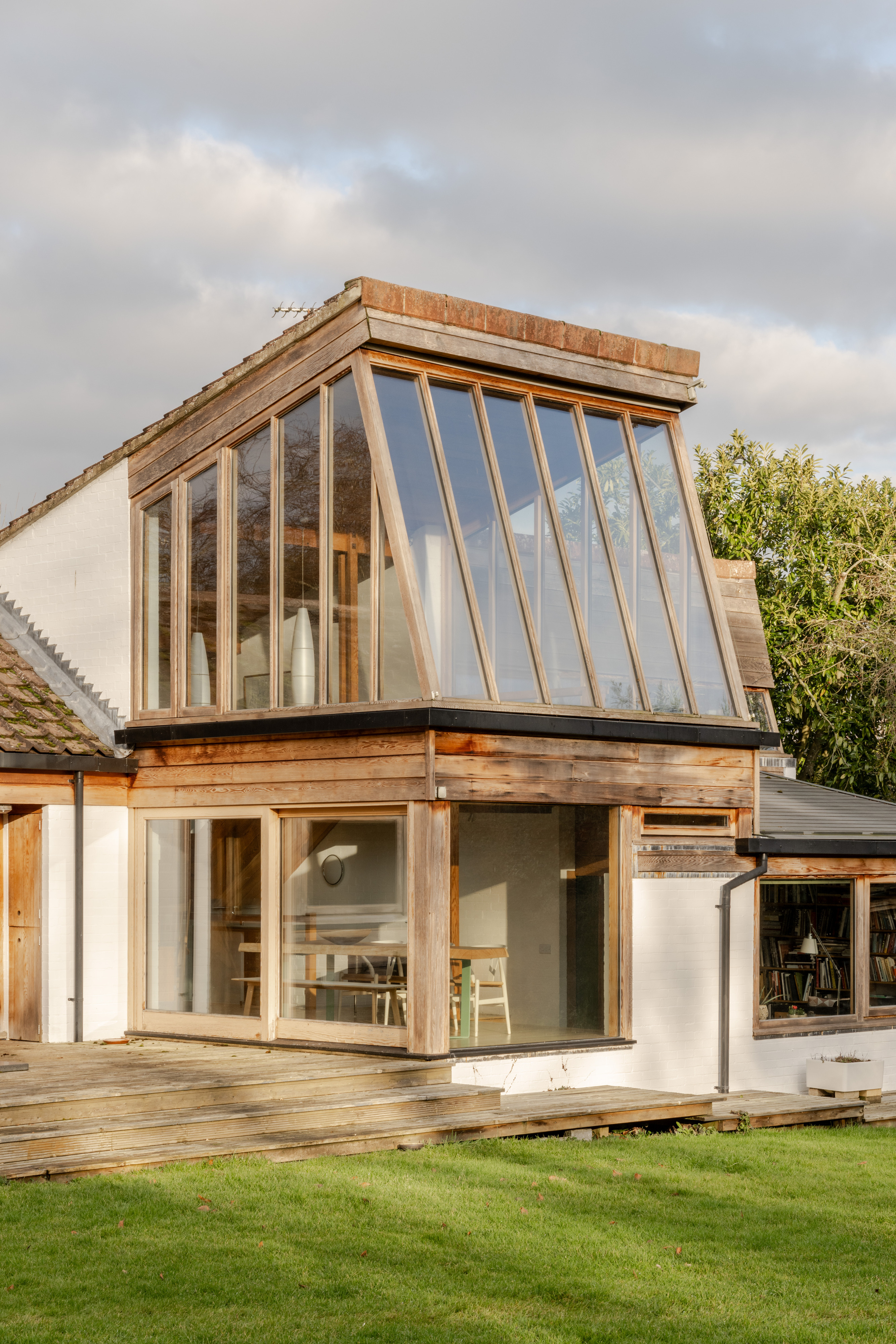
Living in Haddenham has also informed Heidi’s creative practice. “I’ve really experimented with textures since living here. There’s a lot of clay locally, which I tried to use on the wheel, but it’s so rough it’ll take your skin off,” she laughs. “Living here has inspired my work in other ways: there’s a lot of ochre and terracotta colours locally, which have all worked their way into my pottery. We used to live in the Canary Islands, so I also use some of the volcanic clays from there. I’ve been very influenced by the places I’ve lived.
“I’ve really connected with nature while we’ve been here. It’s not hard to, because it’s right in front of you. You can hear the birdsong even through the triple glazing. It feels so private – but you’re in the heart of the village. It’s a very quirky and pretty special house, really – it’ll be very difficult to leave it.”