A delicate balance: Six Pillars, a modernist house in Dulwich, now for sale
February 10th, 2026
Words Yuki Sumner
Photography Dan Glasser
Portrait photography Sam Grady
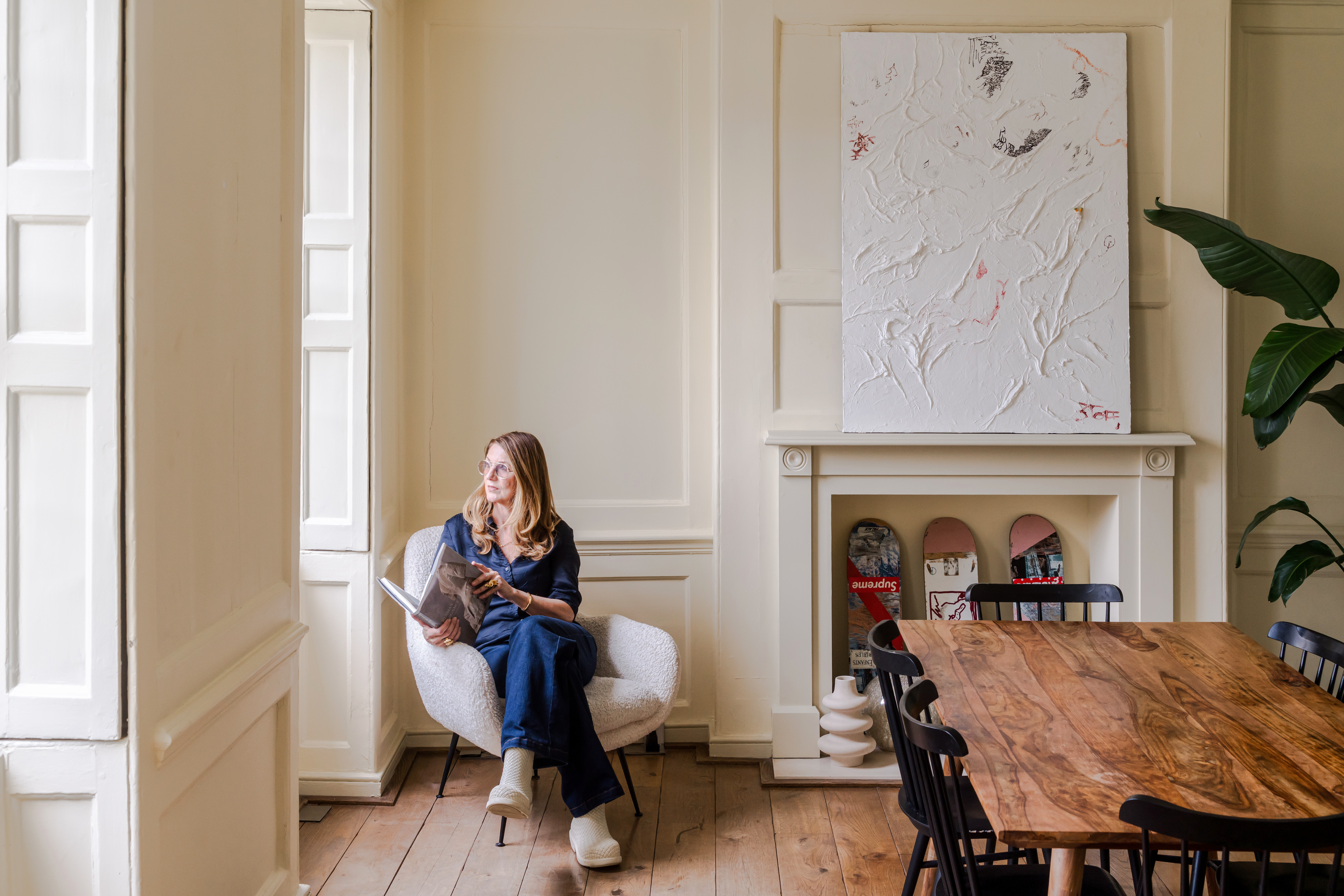
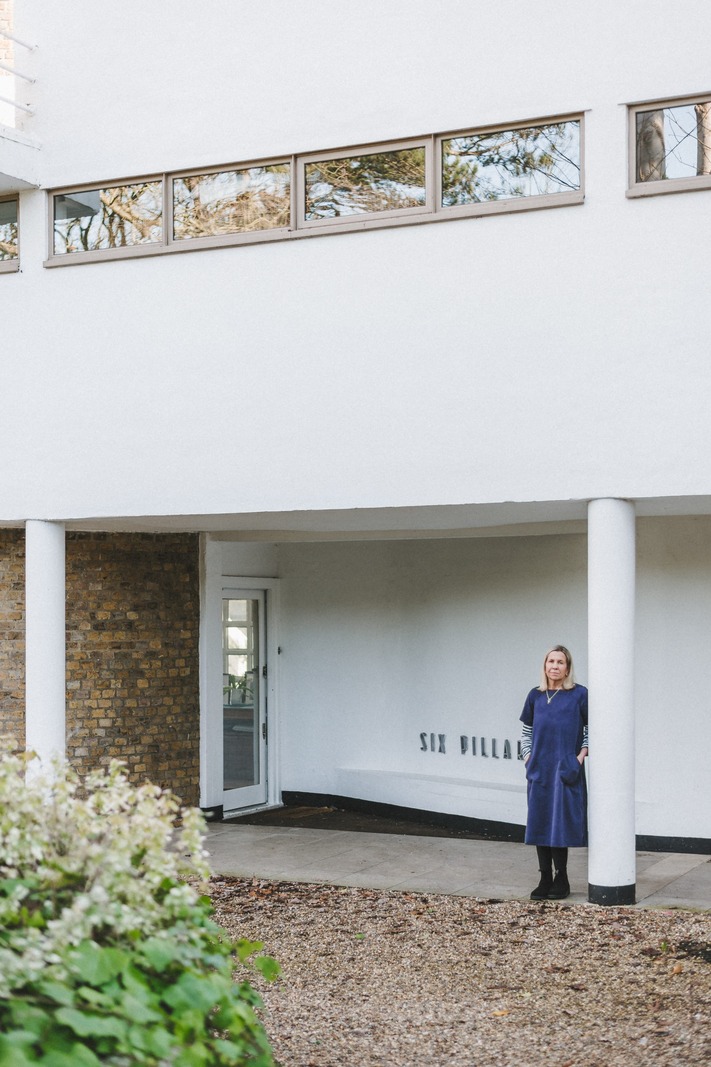
“I fell in love with the architecture of the house,” says Bridget Lazarides, an art teacher now in her first year studying architecture at Kingston University. She and her husband Marcus, a fine artist-turned-barrister, have lived in the house since 2007 and raised four children there. “We had spotted the house as some close friends lived nearby. We then discovered that the house was for sale and, remarkably, we were able to sell and buy within a week ...”
Completed in 1935 and now Grade II-listed, the house stands apart from its neighbours without drawing undue attention to itself – a white, three-storey structure that brings continental ideas into a leafy south London setting. It was designed by Val Harding, then a partner at Tecton Group, the practice founded by Berthold Lubetkin, responsible for the Penguin Pool at London Zoo.
Despite its architectural pedigree – and the fact that it was the first listing handled by The Modern House when the agency launched in 2005 – Six Pillars remains discreet and little known. From the street, much of the house is hidden behind a semicircular front garden planted with tall trees and dense foliage. A low white fence mirrors the colour of the façade. Narrow strip windows give little away.
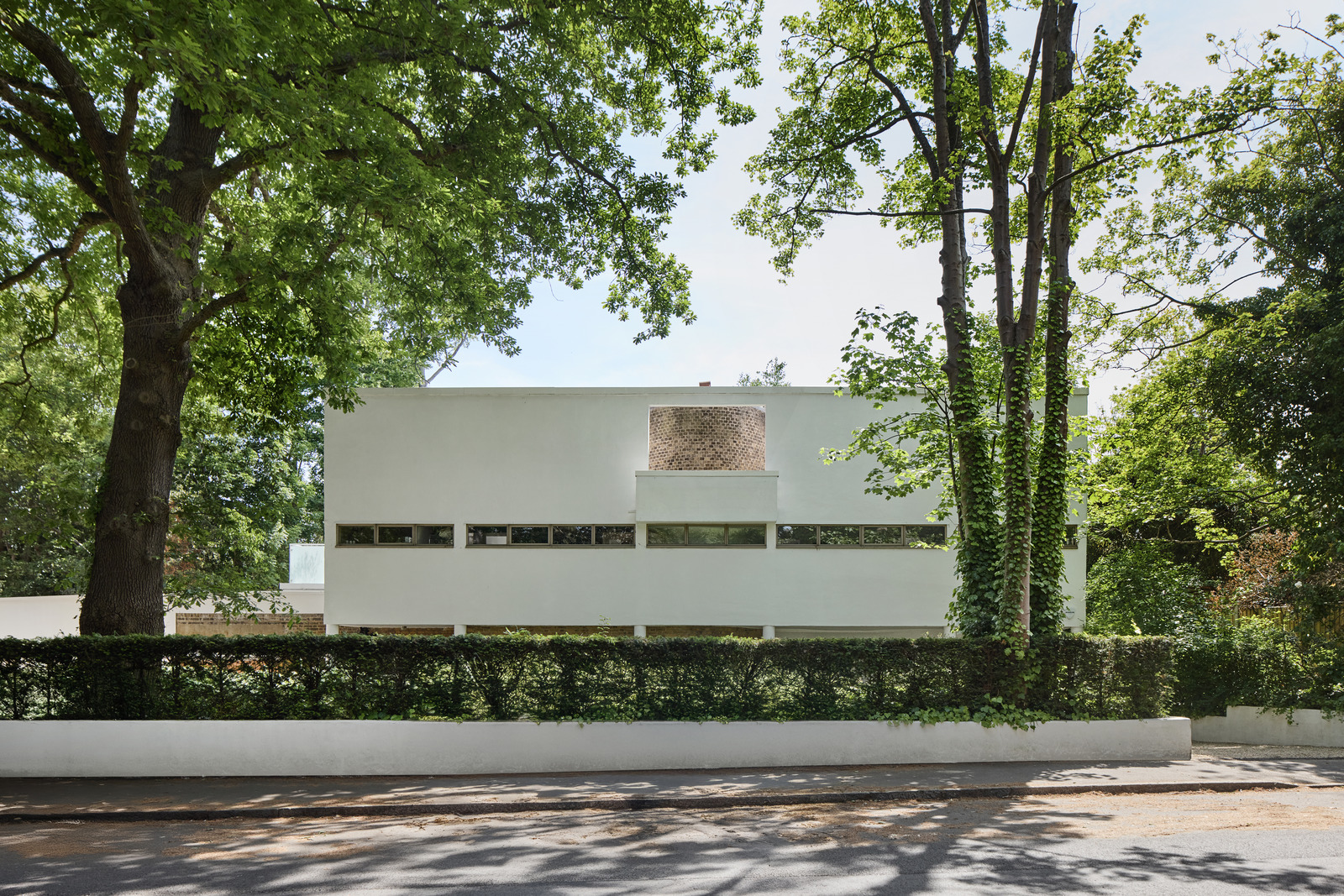
The entrance is not visible from the pavement. Set perpendicular to the street, the front door is concealed behind the six pillars that give the house its name. The only strong gesture facing the street is an angular balcony that projects from the centre of the façade, its square opening framing the curved brick wall of the spiral staircase behind it.
“We love the absolute simplicity and integrity of the house as it faces the street, and the surprise of the back of the house, which is quite majestic but very much on a domestic scale,” Bridget says. “Marcus and I both decided we would do everything we could to move here. It was also about its location, its closeness to the woods, to the train station, to the high streets and the parks … We thought it would make a wonderful house to bring up a family.”
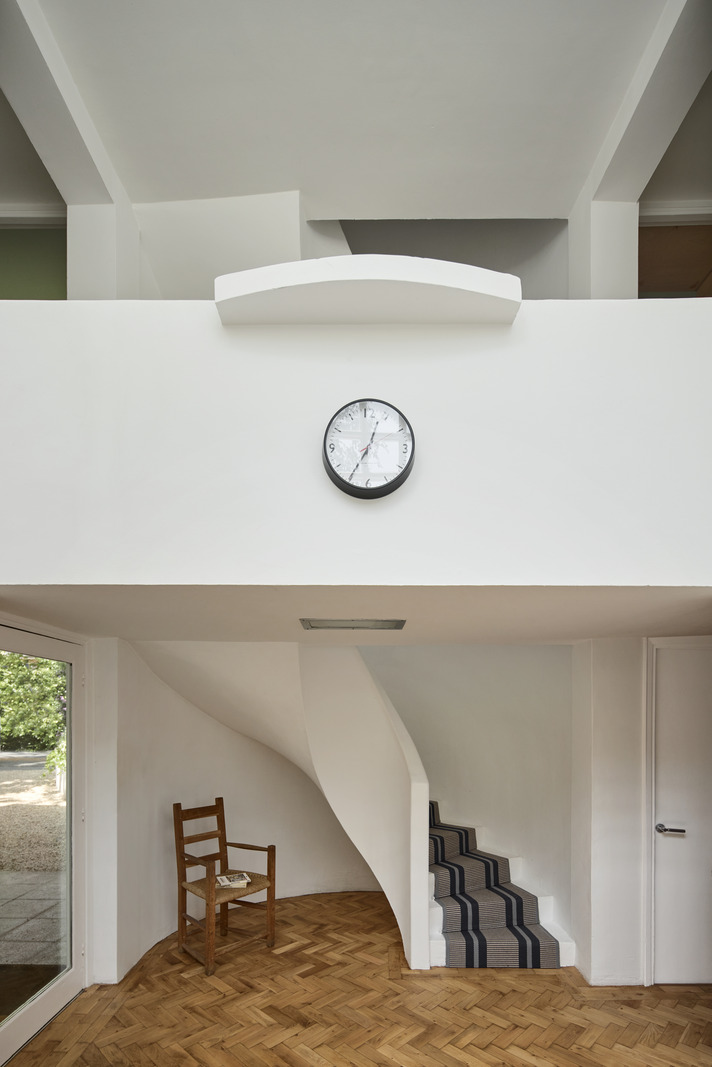
The double-height entrance hall is more modest than its exterior might suggest. Natural light enters through a tall glass-box window, while a white-painted concrete spiral staircase anchors the space. The influence of Le Corbusier’s Villa Savoye is evident, though here it is adapted to a more intimate scale.
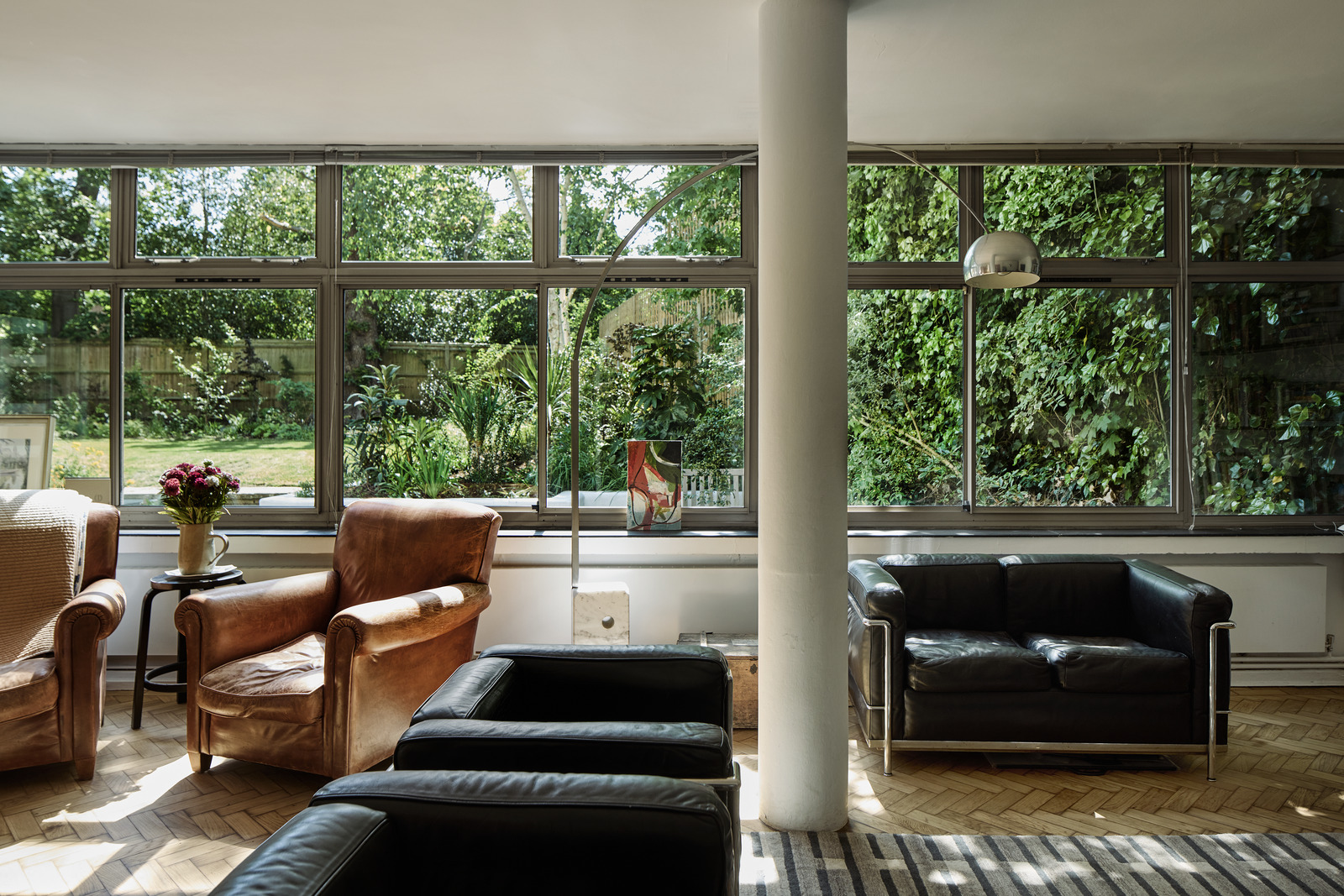
In the drawing room, a quiet secret: a seventh pillar, unacknowledged in the house’s name and absent from the lettering beside the entrance. Whether this was an intentional reference to the biblical Seven Pillars of Wisdom or simply the result of a structural necessity remains unclear.
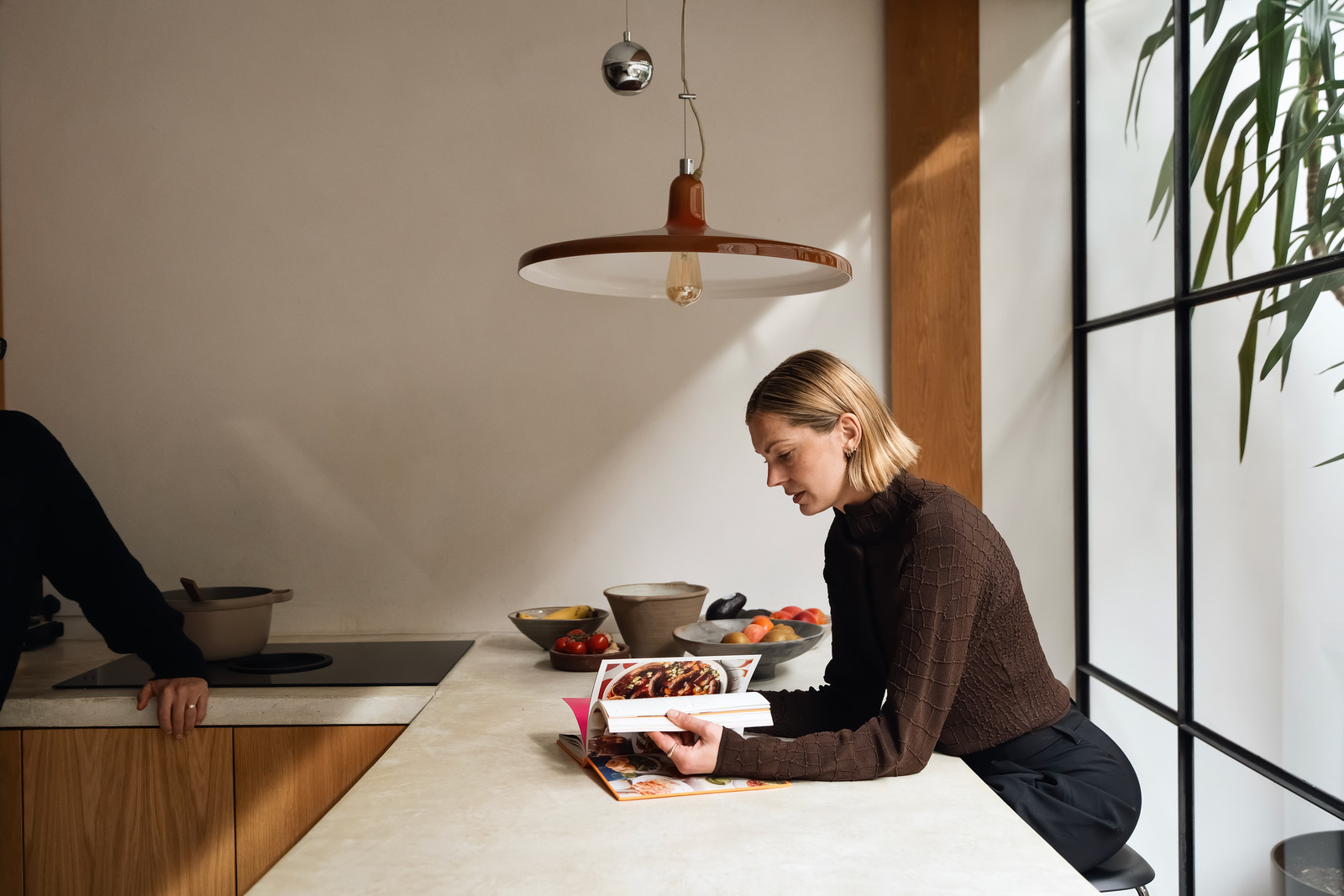
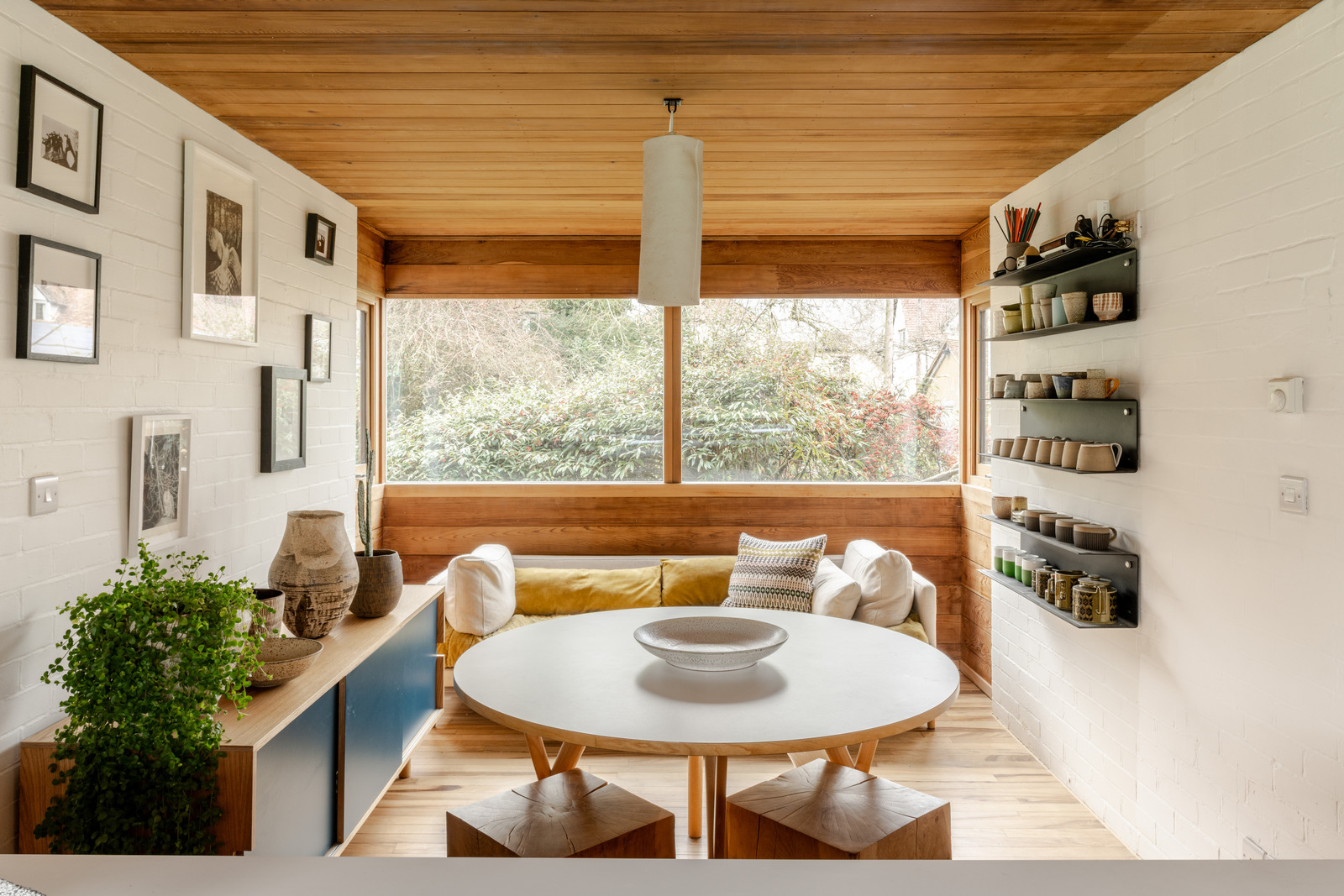
Bridget Lazarides: “The house had been looked after magnificently by the previous owners, who had done various alterations with the architect John Winter, who had worked for Erno Goldfinger. It had been rented for a while and needed refurbishing. We moved in straight away and just moved around the house as the work was being done. The main goal was to create a large family space, so we removed the wall between the kitchen and the dining room. We wanted to embrace the garden and have more flexibility.”
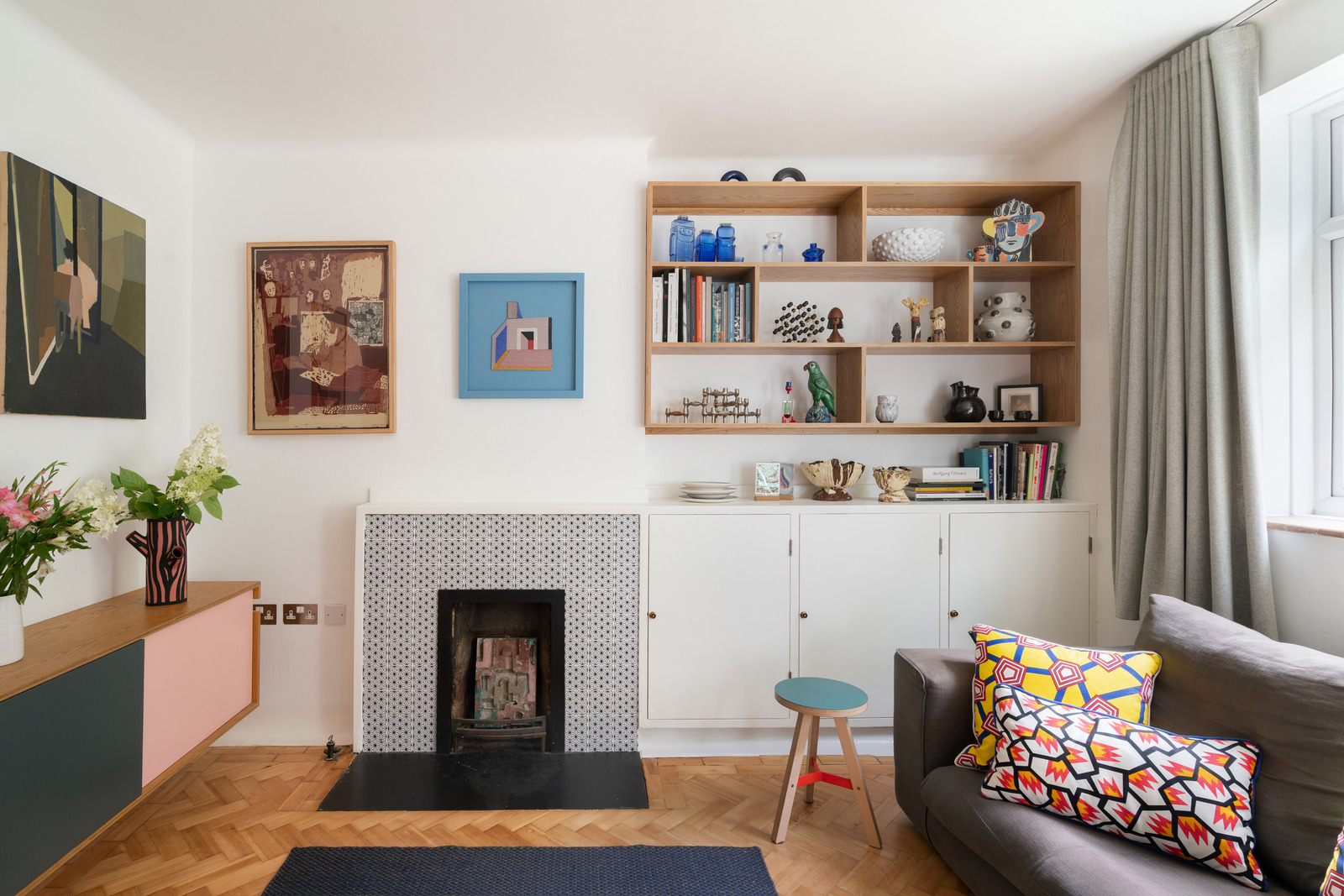
“Plywood joinery responds to the original design. We inherited beautiful Lucienne Day curtains, which we will leave behind. The Arco Floor Lamps by Achille Castiglioni work very well in our living room as it’s a large room and you can change the direction of the light with these lamps very easily. Marcus loves Corbusier’s Cassina sofas. We also have textiles by Eleanor Pritchard and recently commissioned two Albrect desks by John Weaver.”
“It is important to keep the mid-century feel as these pieces are relevant to the period when the house was built and they continue to work well within the space. They are also just so beautiful.”
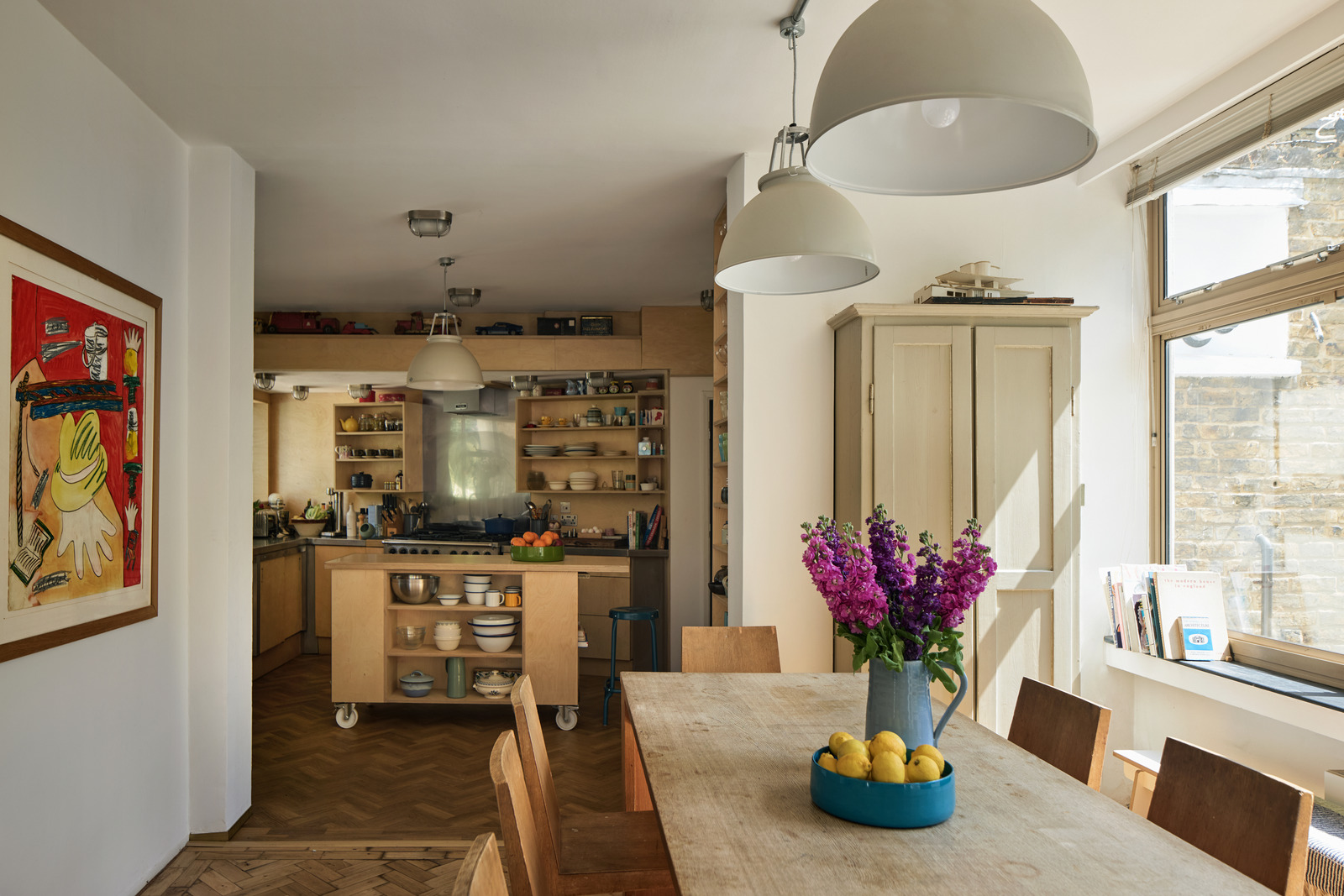
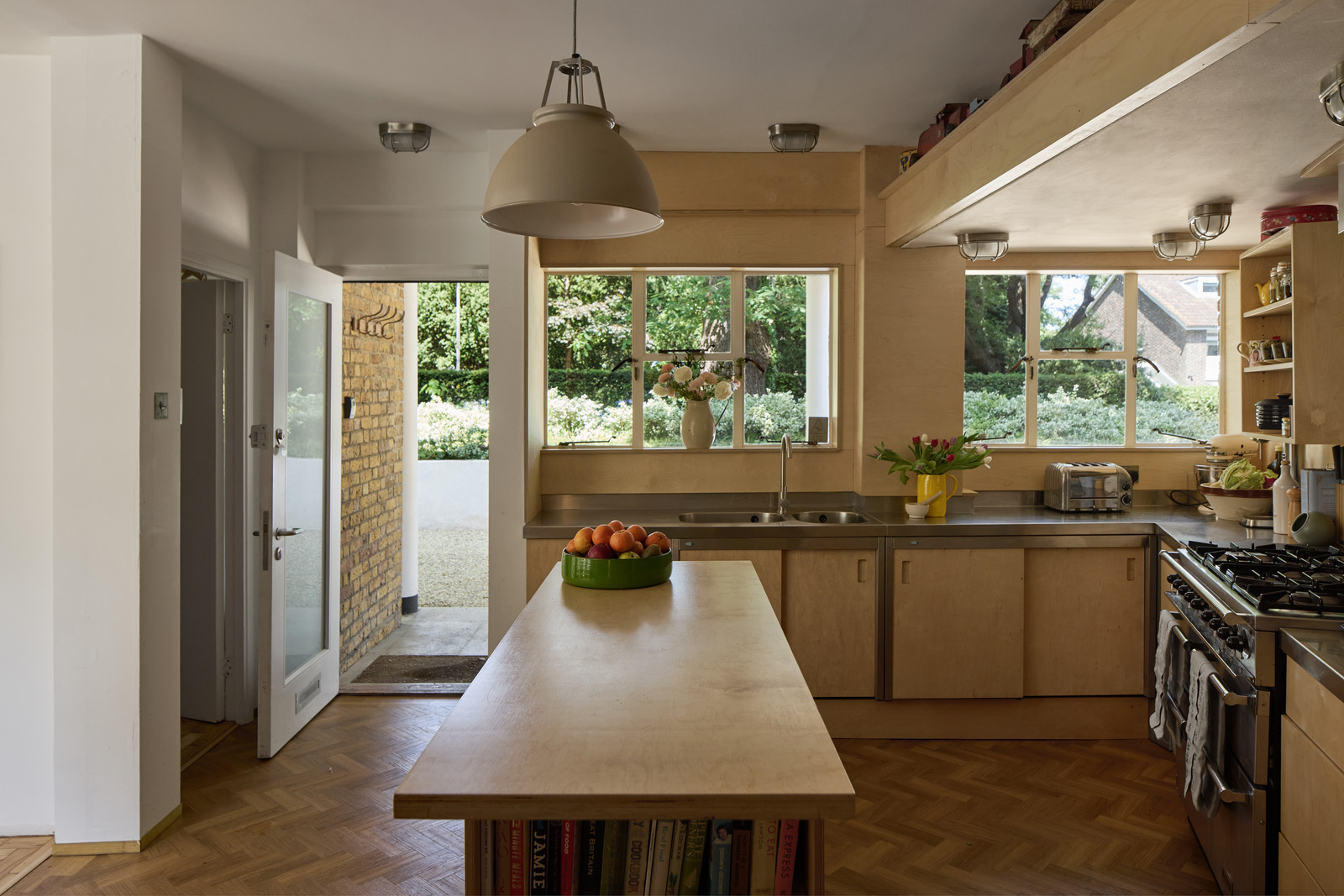
“The house’s listed status presented no obstacle. Planning permission was granted quickly, with changes discussed closely with conservation officers. They knew that it was important to us to maintain the integrity of the house.”
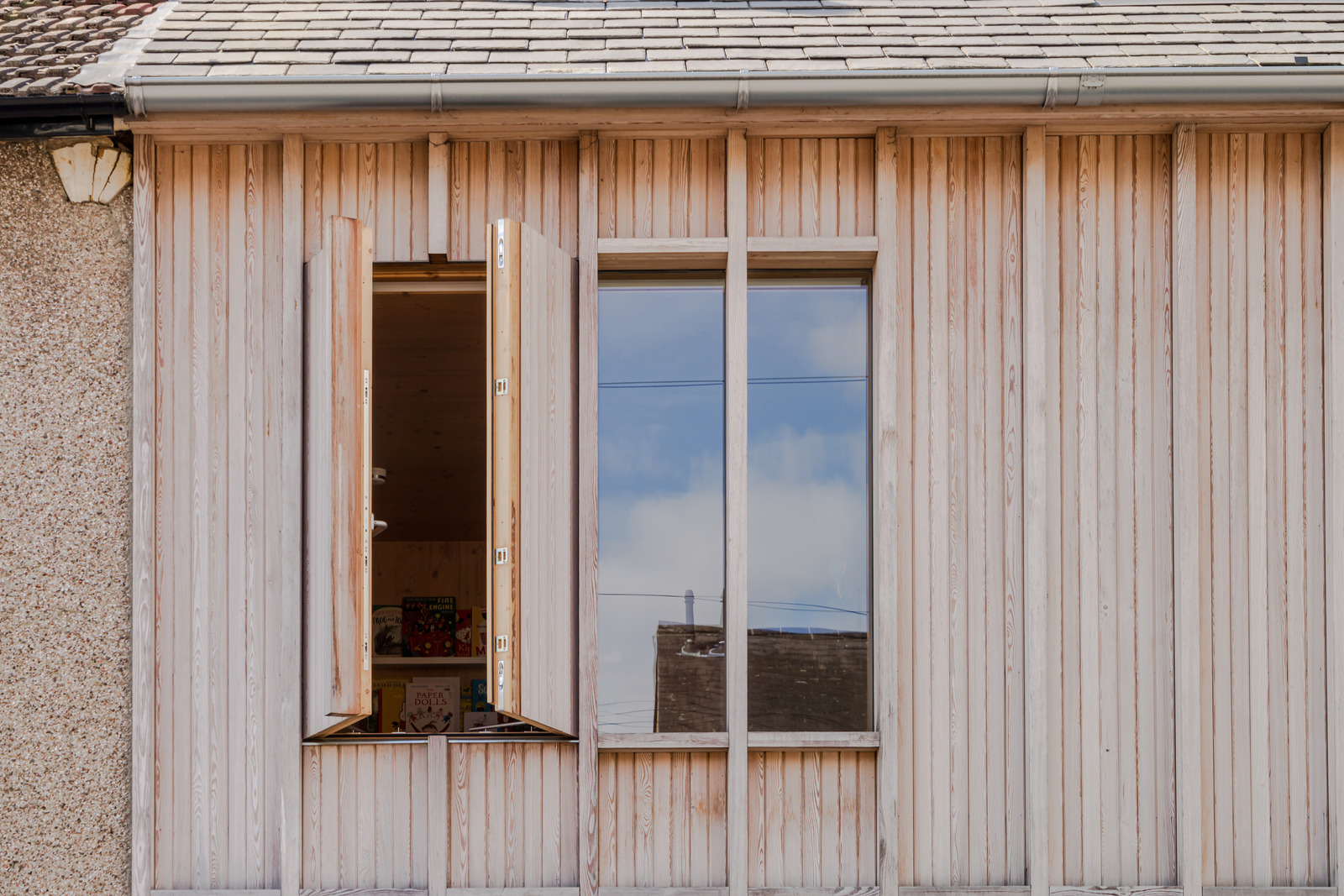
"An outdoor stair connects the garden to a roof terrace above what was originally a servant’s quarter at the end of the L-shaped plan. This area has since been extended and converted into a self-contained two-bedroom flat for extended family use. Brick strip windows are set high, bringing in light while maintaining privacy."
“Our architect Michael Brooke of Smith Brooke Architects was exceptional in helping us get what we needed to create a spacious self-contained flat next door. The most significant change, however, has been the garden, redesigned by Marc O’Neil, and now central to everyday life.”
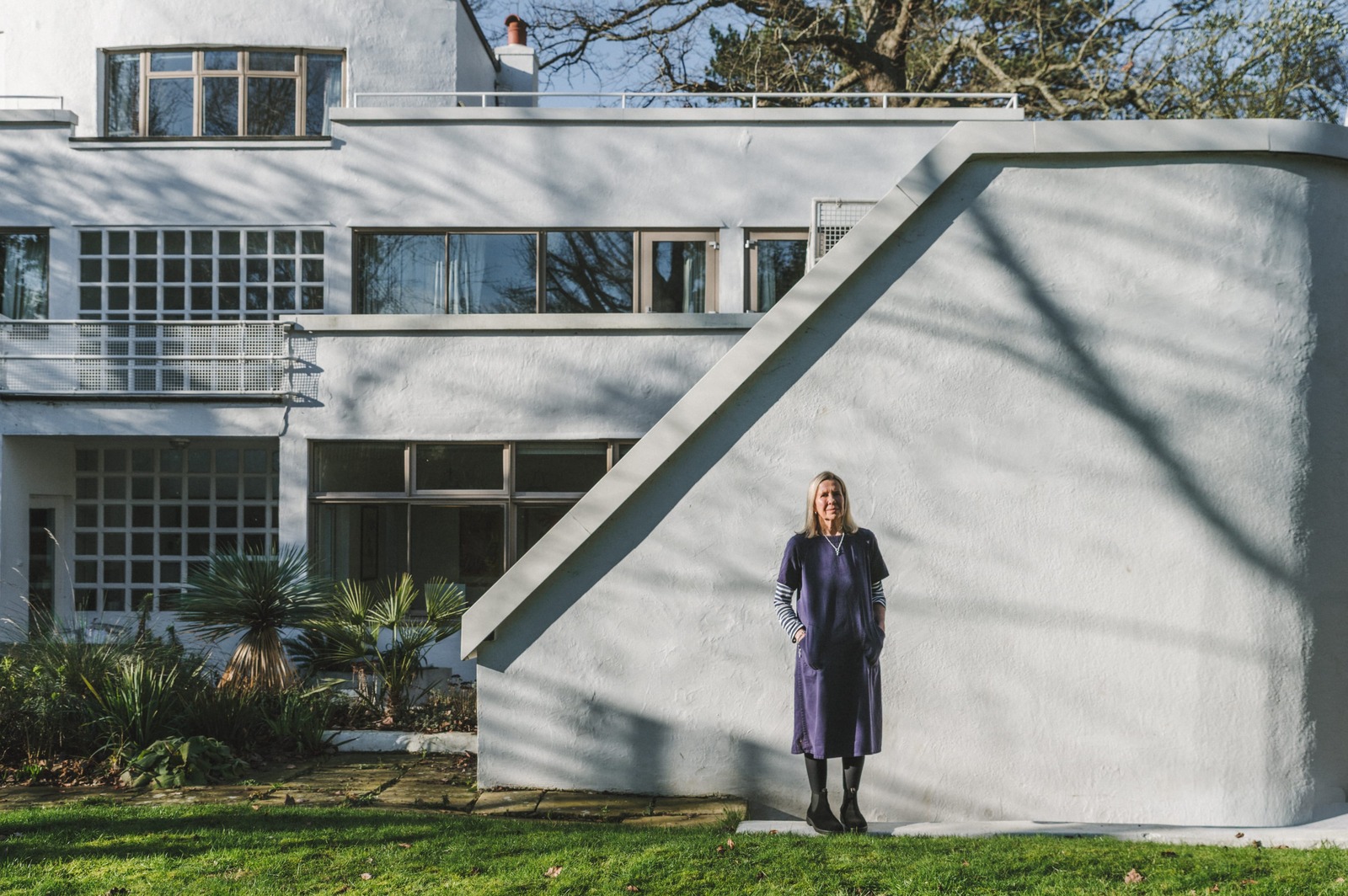
"It’s going to be incredibly difficult to move out of here. We are very attached to the house. We moved here because we loved the design of the house but what sets Six Pillars apart is how well it accommodates family life. The house has a wonderful history and it has been a privilege to be part of this, but above all, it’s a family home for us. We have always wanted it to be living and thriving, full of love, not a museum piece. We hope the changes we made to the house over the years reflect this view.”